Archive: Global Health to Launch Hub at UCSF With $20 Million Gift
UCSF has received a $20 million gift from philanthropist Chuck Feeney to build a new hub for Global Health Sciences at the UCSF Mission Bay campus.
University of California San Francisco
Give to UCSFUCSF has received a $20 million gift from philanthropist Chuck Feeney to build a new hub for Global Health Sciences at the UCSF Mission Bay campus.
A common bacteria ever-present on the human skin and previously considered harmless, may, in fact, be the culprit behind chronic sinusitis, a painful, recurring swelling of the sinuses that strikes more than one in ten Americans each year, according to a study by scientists at UCSF.
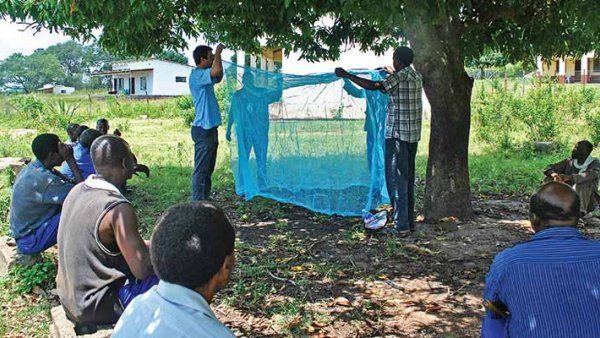
Despite nearly three decades of conflict, Sri Lanka has succeeded in reducing malaria cases by 99.9 percent since 1999 and is on track to eliminate the disease entirely by 2014.
<p><span>Doug Eckman works at the intersection of dual bureaucracies. As director of operations for UCSF School of Medicine, Dean’s Office at San Francisco General Hospital and Trauma Center (SFGH), Eckman must navigate both the university and the city’s Department of Public Health. Despite the complexity and perhaps because of it, Eckman loves his work.</span></p>
<p>A proposed new treatment to help HIV/AIDS patients suffering from Kaposi’s sarcoma, the most common form of cancer in people with HIV, is now one step closer to becoming a reality thanks to a program that supports promising early-stage research.</p>
<p>UCSF's Resource Allocation Program (RAP), which incorporates a single online application for 30 different research grants, is now requesting applications for the Fall 2012 Cycle.</p>
A novel virus has been identified as the possible cause of a common but mysterious disease that kills a significant number of pet snakes all over the world, thanks to research led by scientists at the University of California, San Francisco (UCSF)—and three snakes named Juliet, Balthazar and Larry.
Scientists at the UCSF-affiliated Gladstone Institutes have discovered that an FDA-approved anti-epileptic drug reverses memory loss and alleviates other Alzheimer’s-related impairments in an animal model of the disease.
The UCSF Science & Health Education Partnership's (SEP) High School Summer Internship program prepares students for college through hands-on laboratory experience alongside a mentor.
As mothers have always known, a good night’s sleep is crucial to good health — and now a new study led by a Robert Wood Johnson Foundation Health & Society Scholar at UCSF and UC Berkeley shows that poor sleep can reduce the effectiveness of vaccines.
<p>Aoife O’Donovan, PhD, a Society in Science: Branco Weiss Fellow in psychiatry at the San Francisco VA Medical Center and UCSF, was presented with the Neal E. Miller New Investigator Award for 2012 by the Academy of Behavioral Medicine Research.</p>
Adults with HIV in rural sub-Saharan Africa who receive antiretroviral drugs early in their infection may reap benefits in their ability to work and their children's ability to stay in school, according to a first-of-its-kind clinical study in Uganda that compared socioeconomic outcomes with CD4+ counts — a standard measure of health status for people with HIV.
<p>The AIDS drug Truvada, approved this week for prevention of HIV infection in uninfected people at high risk, may benefit many uninfected women whose male partners have HIV, including pregnant women, who may be at higher risk.</p>
<p>A perspective published in the <em>New England Journal of Medicine</em> this week by professors at UCSF and the Johns Hopkins University asserts that it is now possible to begin to end the AIDS epidemic by widely and strategically applying existing tools.</p>
Lennart Mucke, MD, a professor of neurology and the Joseph B. Martin Distinguished Professor of Neuroscience at UCSF who directs neurological research at the UCSF-affiliated Gladstone Institutes, has received the Khalid Iqbal Lifetime Achievement Award for his exceptional contributions to Alzheimer’s disease research.
<p>Smokers can begin loosening the tight grip of nicotine addiction by smoking low-nicotine cigarettes, without lighting up any more than they usually do, according to recent research led by long-time UCSF nicotine researcher Neal Benowitz, MD. </p>