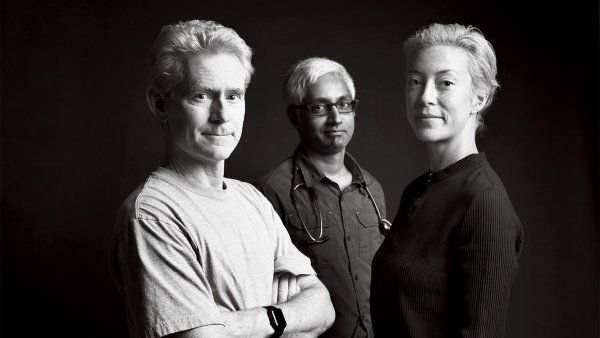
Archive: New Genetic Models of Autism Point to Cellular Roots of Disease
Researchers at UCSF have developed a new genetic model of autism, using neurons created in the lab from patients’ own skin cells.
University of California San Francisco
Give to UCSFResearchers at UCSF have developed a new genetic model of autism, using neurons created in the lab from patients’ own skin cells.
Maternal stress during the second trimester of pregnancy may influence the nervous system of the developing child, both before and after birth.
The UCSF Weill Institute for Neurosciences has awarded funding to 11 UC San Francisco scientists seeking to support the Institute’s mission to improve the lives of people with brain diseases and disorders through innovative projects that unite the scientific disciplines of neurology, psychiatry and neurosurgery.
UCSF researchers are leading several initiatives that aim to see how dozens of seemingly unrelated genes and proteins involved in a disease are in fact all part the same interconnected biological pathway.
Researchers at UCSF have shown how the Bengalese finch can learn to tweak its song depending on context, which could shed light on how the human brain learns to apply different rules depending on the situation.
UCSF has ranked in the top 10 for seven specialties in 2017 Best Global Universities rankings released Tuesday by U.S. News & World Report.
Researchers at UC San Francisco, the University of North Carolina-Chapel Hill, and Stanford University report a major step toward designing more powerful psychiatric drugs with fewer side effects.
Matthew State is one of three recipients of the 2017 Rhoda and Bernard Sarnat International Prize in Mental Health given by the National Academy of Medicine.
Two UCSF faculty are among the 70 new members and 10 international members elected to the National Academy of Medicine for 2017.
A new UC San Francisco–led study shows that failure to follow this basic principle of population science can profoundly skew the results of brain imaging studies.
UCSF scientists have successfully completed a Phase II clinical trial showing that an FDA-approved antihistamine restores nervous system function in patients with chronic MS.
Two UCSF scientists have been awarded NIH New Innovator Awards, which support unusually innovative research from early career investigators.
UCSF researcher Saul Kato is using a new high-resolution whole-brain imaging technique to see how the entire nervous system of a worm works together to generate behavior.
UCSF researchers have discovered that two molecular partners interact at synapses to maintain stable neuronal function.
A new test that combines the effects of more than two dozen genetic variants, does a better job of predicting which cognitively normal older adults will go on to develop Alzheimer’s dementia than testing for APOE E4.
Ketogenic diets — that have long been known to benefit epilepsy and other neurological illnesses — may work by lowering inflammation in the brain, according to new research by UCSF scientists.
Protein engineers and neurobiologists at UCSF have teamed up to create a biological light saber — an engineered protein that can slay specific cells simply by exposing them to light.
Researchers at UCSF have identified specific gut microbes associated with MS in human patients, showing that these microbes take part in regulating immune responses in mouse models of the disease.
UCSF researchers have identified a protein that links alcohol consumption with structural changes in one of the “reward centers” in the mouse brain.
The mechanisms by which the brain regulates breathing are still a mystery, one that UCSF physiologist Kevin Yackle is tackling with the latest tools of molecular biology.
Researchers at UCSF have identified neurons in the human brain that respond to pitch changes in spoken language, which are essential to clearly conveying both meaning and emotion.
The Global Brain Health Institute has brought in its first class of Atlantic Fellows. The 32 fellows are taking a range of classes and pursuing projects with the goal of returning to their communities with knowledge and skills to implement changes impacting brain health.
The benefits of a good night’s sleep have become widely known, and now neuroscientists at UCSF have discovered that the animal brain reinforces motor skills during deep sleep.
Scientists at UC San Francisco have found that administering a fragment of the klotho protein to young, aging or impaired mice rapidly improves their cognitive and physical performance.
Rare deletions or duplications of about 600 genetic “letters” in a region on chromosome 16 confer a high risk of autism spectrum disorders (ASDs) and other neurodevelopmental conditions.