UCSF Immunology, Neuroscience Research Highly Ranked Among US News’ Best Global Universities
Seven UCSF research subject areas were ranked in the top 10 globally by US News & World Report.
University of California San Francisco
Give to UCSF
Seven UCSF research subject areas were ranked in the top 10 globally by US News & World Report.
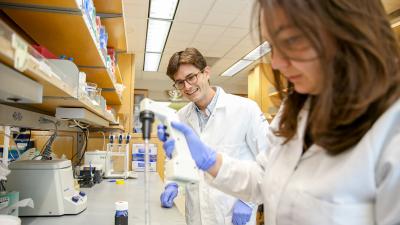
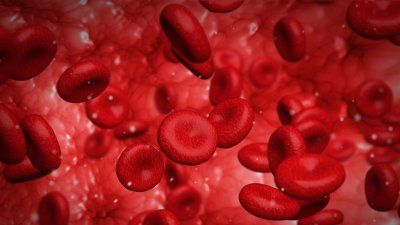
In new studies conducted at UCSF, a novel oxygen-delivery therapeutic restored the function of oxygen-starved heart tissue in an animal model of global hypoxia.
UCSF researchers discovered a gene that plays an essential role in noise-induced deafness.

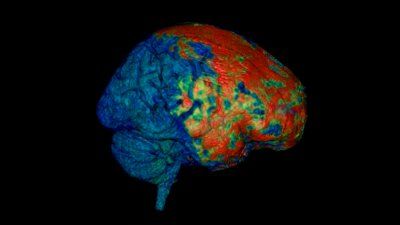
UCSF scientists are working to understand how concussions cause long-term cognitive damage – and how they might be treated.
UCSF’s Shuvo Roy has spent the better part of a decade working on technology that could lead to a a surgically implantable bioartificial kidney. Now he is also working with UCSF colleagues to turn that technology into an artificial pancreas.
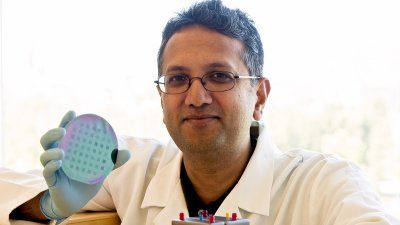
These results confirm that the HPV virus causes head and neck cancer by inactivating the same proteins that are mutated in smoking-induced cancer.
Researchers at UCSF and the Gladstone Institutes have received an $18 million grant from the National Institutes of Health to launch the Psychiatric Cell Map Initiative.

Built on a foundation of scientific thinking, and one that exposes students to the latest questions in research and patient care, the School of Pharmacy’s new curriculum differentiates UCSF’s PharmD degree program from the growing number of programs nationwide.
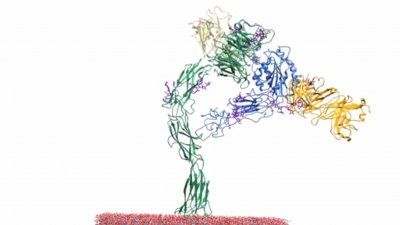
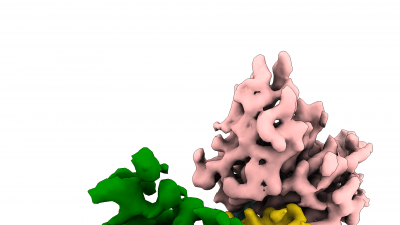
A collaboration between three labs at UCSF has resulted in an unprecedented look at a member of a vital and ubiquitous class of proteins called integrins.
UCSF scientists have used a high-throughput CRISPR-based technique to rapidly map the functions of nearly 500 genes in human cells, many of them never before studied in detail.
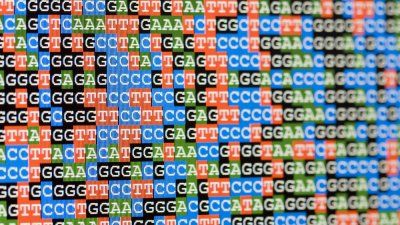
Although CRISPR has made headlines as a powerful system for editing genes, it actually evolved as way for bacteria to defend themselves against infection by viruses.
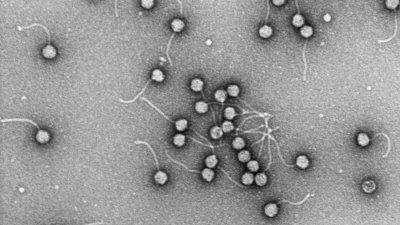
In an achievement that has significant implications for research, medicine, and industry, UCSF scientists have genetically reprogrammed human immune cells without using viruses to insert DNA
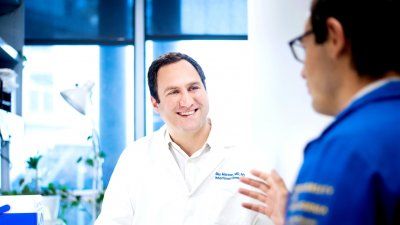
Experiments using parasitic worms in the mouse gut have revealed a surprising new form of wound repair, a finding that could help scientists develop ways to enhance the body’s natural healing abilities.
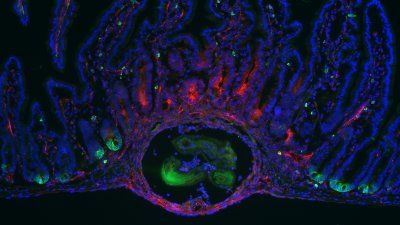
For the first time, a drug derived from marijuana has been approved by the Food and Drug Administration, and it may soon offer relief to children with hard-to-treat seizures.

A so-called “jumping gene” that researchers long considered either genetic junk or a pernicious parasite is actually a critical regulator of the first stages of embryonic development.
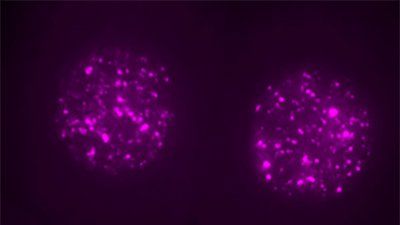
Scientists have used ultra-high-resolution cryo–electron microscopy to capture the most detailed portrait ever of an opioid drug triggering the biochemical signaling cascade that gives it its power.
The journey from discovering and developing effective, precise medications to using them correctly and safely in patients is hardly fast and easy. Nor is it a straight shot. Scientists in the UCSF School of Pharmacy are challenging the status quo every step of the way.
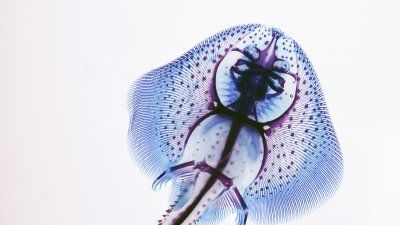
UCSF researchers have discovered that shark and skate electrosensory systems have distinct specializations that match how the animals use their electrical sense in the wild.
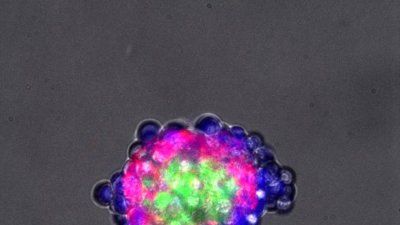
Researchers have demonstrated the ability to program groups of individual cells to self-organize into multi-layered structures reminiscent of simple organisms or the first stages of embryonic development.
A UCSF researcher is among scientists who discovered the specific bacterial enzyme found in the human gut that can render a common heart drug ineffective.

Study led by UCSF scientists shows that brain cells react differently to opioid substances created inside the body than they do to purely synthetic opioid drugs.
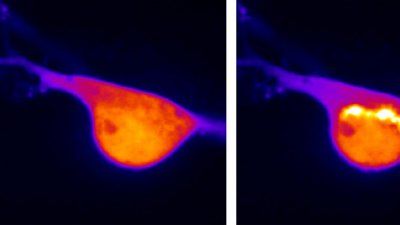
UC San Francisco researchers have discovered a promising new line of attack against lethal, treatment-resistant prostate cancer.
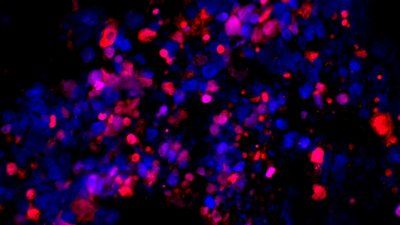
A new study finds that a common cancer-causing mutation in a GTPase called Gαs subverts the model for this type of growth switch in cancer.

UCSF researchers have shown that an experimental brain boosting drug, ISRIB, acts like a molecular staple, pinning together parts of a much larger protein involved in cellular stress.
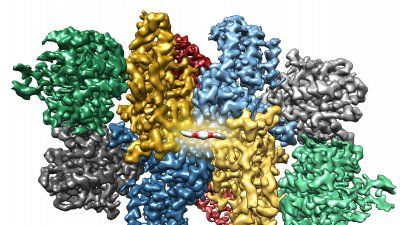
The use of newer blood-thinners for patients at risk of stroke may lead to two fewer days in the hospital for those who experience complications, with the same survival rate as the older drug warfarin.
UCSF’s School of Medicine placed in the top five nationally in this year’s U.S. News & World Report survey of best graduate and professional schools. UCSF’s biomedical science PhD programs were among the top 10, and the School of Nursing was also highly ranked.

The largest-ever whole-genome sequencing study of drug response in minority children has revealed new clues about why the front-line asthma drug albuterol does not work as well for minority children.

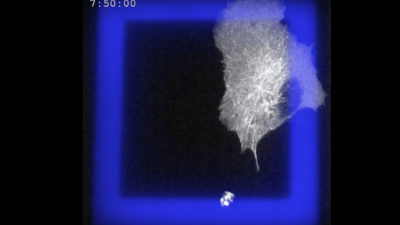
UCSF scientists have invented a technique that lets them precisely and reversibly disrupt the action of specific cellular proteins at a microscopic scale by making them split apart when illuminated with blue light.
Researchers at UCSF have found a way to attack one of the most common drivers of lung, colorectal, and pancreatic cancer by targeting the proteins it produces on the outside of the cell.

UCSF have taken the first step toward a comprehensive atlas of gene expression in cells across the developing human brain.
