Why You Might Not Find Your Favorite Cold Meds at the Pharmacy
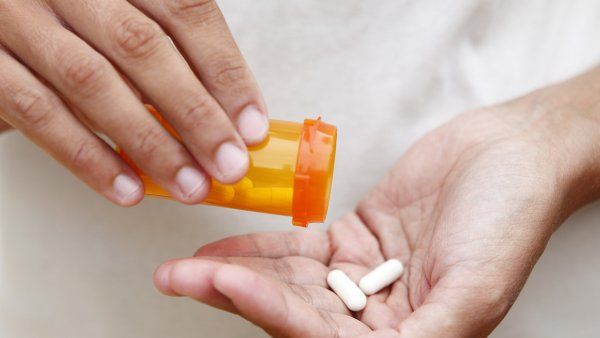
The FDA's recent ruling of phenylephrine as ineffective has led major pharmacies and retailers to pull common cold medicines from their shelves.
University of California San Francisco
Give to UCSFThe FDA's recent ruling of phenylephrine as ineffective has led major pharmacies and retailers to pull common cold medicines from their shelves.
Thirty-two UCSF scientists are among the most influential individuals in their respective fields, according to the most recent analysis of research citations by the science and intellectual property company, Clarivate.
A phase 1 trial shows promise in treating metastatic prostate cancer with a single priming dose of radioligand therapy and immunotherapy.
UCSF's Adam Boxer, MD, PhD, and Harvard neurologist Reisa Sperling, MD, review the history of clinical trials over the past 30 years in Alzheimer’s research with what was learned and how new biomarkers and clinical trial approaches are being used to find more effective treatments in a more efficient way than in the past.
UCSF researchers developed a new neighborhood-based model of care that brings medicine to people immediately after being diagnosed with hepatitis C.
A study found that children who were recently diagnosed with type 1 diabetes need less supplemental insulin to keep their blood sugar in a healthy range if they use the immunotherapy drug teplizumab.
UCSF experts to discuss amyloid therapies and dementia research at CTAD conference, addressing equity, novel treatments, and innovative studies.
A new study will combine an Alzheimer’s medication that slows disease progression in some patients with two other drugs to see if their effects can be amplified.
Patients of acute kidney injury might not need as much dialysis as patients with end-stage kidney disease, and might benefit more from weaning off dialysis to avoid risk for heart disease, infection, organ damage and death.
With fentanyl overdose deaths at an all-time high, a successful UCSF-funded pilot project to distribute fentanyl test strips is being expanded by California Gov. Gavin Newsome as part of his plan to address the crisis.
FDA approves palovarotene (Sohonos) for rare FOP, reducing HO by 54%. Significant step in improving lives of affected patients.
Zuranolone (Zurzuvae), the first pill for patients suffering from postpartum depression, is expected to be available by the end of 2023. Though it may relieve depressive symptoms, it has some drawbacks such as sedation and dangers in breastfeeding.
A clinical trial showed that MDMA, the so-called psychedelic drug also known as "ecstasy" or "molly," can be a powerful new tool in treating people with moderate-to-severe PTSD.
Three injectable medications, Wegovy, Ozempic and Mounjaro, are often taken as weight management drugs. UCSF health experts weigh in on the benefits and risks of taking the medications for obesity.
UCSF researchers are working across disease specialties. Diabetes researchers are looking at how oncologists use CAR T-cell therapy to reprogram a person’s immune system to attack cancer cells, for example. They hope to similarly reprogram the immune system to fight diabetes.
People looking to cut back on binge drinking alcohol can take a single pill of naltrexone right before drinking to curb consumption.
A new Alzheimer’s drug is expected to be approved by the Food and Drug Administration (FDA). However, the medication works best mostly for those in the earliest stages of Alzheimer’s.
A short course of antibiotics, Doxy-PEP, can prevent some STIs after condomless sex.
UCSF’s Nevan Krogan, PhD, is taking aim at the world’s deadliest diseases by uniting scientists and the biomedical industry to speed treatments.
Engineered immune cells. Supercharged scans. Drug implants. Gene manipulators. Blood biopsies. Read how these breakthroughs are transforming cancer care.
Two UCSF scientists – James Gardner, MD, PhD, and Rebeca de Pavia Fróes Rocha, PhD – have received Pew awards for their work in immunology as part of a program that supports promising early-career investigators.
UCSF researchers developed an approach to measure an over-the-counter allergy medication’s effectiveness in repairing brain damage from multiple sclerosis (MS), making it possible to also assess future therapies for the disorder.
Oncology specialists from around the globe will gather for the American Society of Clinical Oncology (ASCO) Annual Meeting to discuss the latest cancer therapies, technologies, research and education.
UCSF researchers discover how gabapentin interacts with calcium channels, opening doors for more effective treatments in epilepsy and Lupus by influencing channel biogenesis.
UCSF faculty members Walter G. Gonzalez and Angela Phillips have been selected as Howard Hughes Medical Institute (HHMI) Freeman Hrabowski Scholars. With up to $8.6 million in support, they will conduct research, create inclusive lab environments, and make a significant impact on the future of science. Both scholars are committed to fostering diversity and promoting scientific breakthroughs.
A traditional African psychedelic plant medicine called ibogaine is the blueprint for two new drug candidates that could treat addiction and depression.
In a first, UCSF scientists created a molecular-level, 3D picture of how an odor molecule activates a human odorant receptor.