

In his 2025 State of the University address, UC San Francisco Chancellor Sam Hawgood, MBBS, reflected on the pivotal moment UCSF faces as it ascends a curve of remarkable success — a critical inflection point where the university must prepare to transition to its next phase of growth or risk stagnation.
In his address, titled “Continuum,” Hawgood drew on a construct from futurist Ian Morrison called The Second Curve, which describes an organization’s evolution in successive phases. The first curve is marked by a period of growth and maturity, but organizations risk stagnation or obsolescence if they do not recognize and leverage the emergence of powerful external forces.
Successfully navigating the technological, political, and societal changes reshaping the environment, Hawgood said, will propel UCSF onto The Second Curve: a period defined by renewal, innovation, and sustained excellence. He pointed to several forces that demand UCSF’s attention:
- Changes in the decades-long social contract with the federal government for health insurance, clinical reimbursement, and research funding
- Decreased trust in institutions, in expertise, and in science itself
- Vast opportunities in new technologies like AI
Watch: UCSF | 2025 State of the University Address | Continuum
He called on UCSF to do what it does best — innovate to meet the needs of its patients, employees, and communities, while acknowledging political and financial headwinds.
“Our response to the current uncertainty is an ongoing commitment to our values and our missions,” Hawgood said. “Through changes in policy and priorities, sustained excellence and innovation is the best and only strategy for us to pursue.”
In his address, delivered in-person at Cole Hall on the Parnassus Heights campus, Hawgood touted UCSF’s history of medical and scientific breakthroughs, exemplary educational programs that produce scientists, clinicians, and health leaders who push the frontiers of their fields, and a thriving health system that provides access to care for more patients than ever.
These attributes will enable UCSF to prevail against current headwinds. Hawgood likened the current moment in UCSF’s history as an opportunity to build, prepare, and transition to The Second Curve that Morrison described.
Philanthropic support matters
Philanthropy has always been the seed funding for our most high-risk, high-reward science.
SAM Hawgood, mbbs
Hawgood acknowledged that access to federal funding for research is uncertain, making partnerships and philanthropy more important than ever to support UCSF’s mission. He cited a $100 million matching grant from the Weill Family Foundation that this year launched the Weill Cancer Hub West, a collaboration with the UCSF Helen Diller Family Comprehensive Cancer Center and the Stanford Cancer Institute. This project unites some of the nation’s most talented scientists to accelerate discoveries and the development of therapies for patients.
Another $100 million gift came from the Edward Fein Charitable Trust, which will support clinical care, education, and research related to memory loss and dementia.
“Philanthropy has always been the seed funding for our most high-risk, high-reward science. But now, more than ever, it is needed to allow our researchers to do the early work needed for ever more competitive follow-on federal funding,” Hawgood said.
Build for the future
The chancellor also underscored UCSF’s commitment to the infrastructure required to support that cutting-edge research, education, and care.
Hawgood named the new UCSF Clinical and Life Sciences Building at the Dogpatch Power Station as an example of a facility that will expand UCSF’s research and clinical capabilities by housing one of the largest academic life sciences incubators in the country. It will also house a center for proton beam therapy, a highly precise treatment that is currently only available in Southern California and Seattle on the West Coast.
The new Bakar Research and Academic Building (BRAB) at the Parnassus Heights campus, currently being built, will provide vital collaborative space for innovation, scientific research, and education.
Nearby, construction continues on the new state-of-the-art UCSF Health Helen Diller Hospital at Parnassus Heights, a $4.3 billion project that is set to open in 2030.
Work is also underway on the $1.6 billion modernization of UCSF Benioff Children’s Hospital Oakland, also slated to open in early 2030.
UCSF’s newly named Stanyan and Hyde hospitals are being upgraded to the systemwide electronic health record platform and have received upgrades to the facilities and technology to serve patients who need complex care.
The value of a UCSF education
Hawgood encouraged the UCSF community to work to elevate and demonstrate the value of professional and graduate degrees and the positive impact UCSF graduates have on society to combat the growing mistrust in higher education institutions.
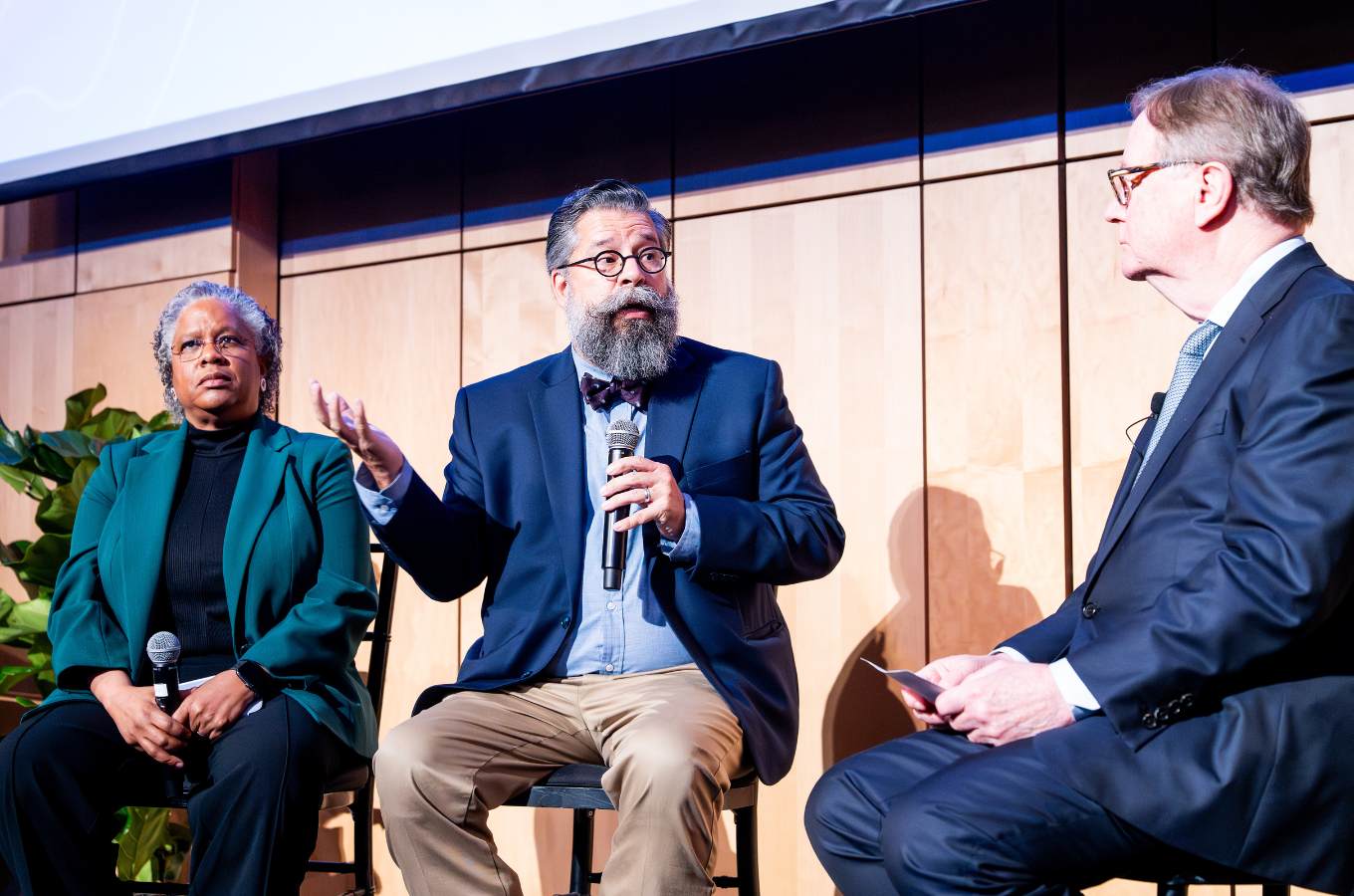
He cited the School of Nursing’s Bachelor of Science in Nursing (BSN) to Doctorate of Nursing Practice (DNP) pathway, as example. The pathway offers an accelerated doctorate program, and it welcomed its second cohort this year. He also mentioned the School of Pharmacy’s new Pharm Tech to PharmD pathway program, created to help pharmacy technicians prepare for competitive admission into doctoral programs.
Finally, Hawgood congratulated UCSF Fresno on its milestone 50th anniversary this year, and praised it for its collaboration with UC Merced through the PRIME program, which aims to develop a pipeline for Central Valley high school students to become much-needed physicians in their communities.
Technological advances
While Hawgood discussed the burgeoning field of AI in research, education, and medicine in his 2023 State of the University address, he said the rapid adoption of these tools at UCSF in the last two years surprised and impressed him.
As a part of that growth, Hawgood announced that UCSF — building on the success of the Versa platform — is making an enterprise version of OpenAI’s ChatGPT available at UCSF early next year.
“Our deployment will have enterprise-level safeguards in place to support HIPAA compliance and will enhance AI capabilities across all our mission areas and administrative functions,” he said.
Our continuum is made possible by your unwavering commitment to our collective mission.
SAM HAWGOOD, MBBS
Other examples of AI integrated in education include a School of Nursing program to train students to better communicate with adolescent patients by practicing on AI personas; the School of Medicine’s work to integrate AI into every facet of teaching, learning, and scholarship, and the School of Pharmacy’s first Master of Science program in Artificial Intelligence and Computational Drug Discovery and Development, which is the first of its kind in the U.S.
Robotic surgery is another innovative technology that UCSF leads in. To expand this expertise, the School of Medicine developed the nation’s first certification for medical students as bedside assistants for robotic surgery. UCSF medical students can now graduate with hands-on experience in technology that will define their careers.
From robotics and AI to basic science research and clinical cures for disease as well as increased access to care in health care deserts, UCSF is holding fast to its commitment to improve the lives of its communities despite the headwinds.
And, as UCSF transitions onto its Second Curve of innovation and growth, through incremental and transformational jumps, “our continuum is made possible by your unwavering commitment to our collective mission,” Hawgood said.
Meet Chancellor Sam Hawgood
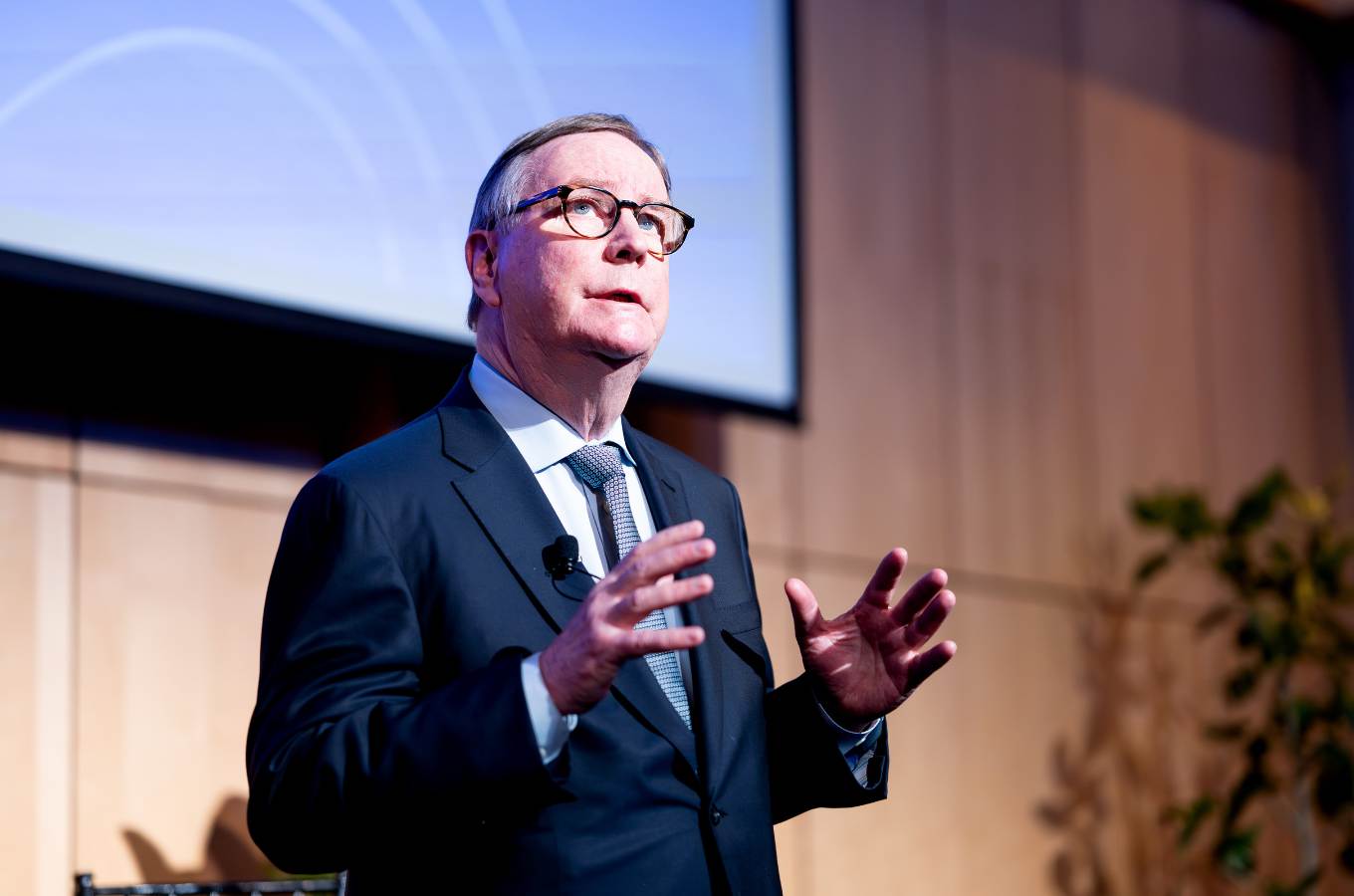
A renowned researcher, professor, academic leader and pediatrician, Hawgood holds the title of Arthur and Toni Rembe Rock Distinguished Professor. The native of Brisbane, Australia joined UCSF in 1982 as a research fellow, later serving as chief of the UCSF Division of Neonatology, chair of the UCSF Department of Pediatrics and physician-in-chief of UCSF Benioff Children’s Hospital before being appointed dean of the UCSF School of Medicine.
Read More