

3 Learners and Alum Explain How a DNP Helps Improve Patient Care
This accelerated doctoral program trains nurses how to improve care in hospitals and clinics using evidence-based protocols.
One was a nurse in the U.S. Air Force. Another immigrated to the U.S. as a child and was treated at a safety-net hospital, serving underinsured and uninsured patients, for a pediatric condition. A third is the fourth generation in her family to pursue a career as a health professional. All three are practicing nurses with a passion for the profession. But they want to have a greater impact.
That includes the ability to make clinical decisions about their patients’ care. They also want to shape and implement heath policies based on their clinical experience as nurses, to enhance their patients’ hospital stays, and, ultimately, improve patients’ health care outcomes.
So, they enrolled in UC San Francisco School of Nursing’s BSN Entry to DNP pathway, the first class of the accelerated program for students holding a Bachelor of Science in Nursing (BSN) to earn a Doctor of Nursing Practice (DNP).
“I want to make and implement policies, but I want to keep my hands-on contact with patients,” said Jamie Austin, RN, a student in the program. “I want to be an agent for necessary change while still staying grounded with my patients.”
In 2018, the UCSF School of Nursing launched the first DNP program in the University of California system, preparing nurses who hold a master’s degree to earn the DNP. This program is ranked No. 1 in the state by U.S. News and World Report. Last year, the school added the accelerated BSN Entry to DNP pathway. The new program aligns with industry trends and enables BSN students to earn their professional doctorate in only three years, compared to four years to complete a master’s degree followed by a doctorate program.
Language barrier to better care
With a BSN and four years of nursing practice under her belt, Tiffany Wang, RN, enrolled in UCSF’s BSN Entry to DNP pathway program to elevate her role and her responsibilities with her patients.

“I’ve seen the impact of unequal access to health care in clinical settings due to language barriers,” Wang said. “This degree will help me master the tools to mitigate disparities by providing better access to care.”
Embarking on a health profession was in Wang’s DNA. Three generations of her family were nurses, physicians, and surgeons in China. A volunteer stint at a Florida hospital in high school solidified her decision to become a nurse.
“I think preventive care is important, but people with language barriers are resistant to see their primary care providers and often arrive at the emergency department with acute conditions,” said Wang, who chose the program’s Adult-Gerontology Primary Care Nurse Practitioner specialty.
“This results in inequities in the health of those groups. But with my experience and new skills, I’m hoping I can minimize some of the barriers and encourage my patients to see their primary care providers to maintain their health.”
From serving in the U.S. Air Force to serving veterans
With his sights once set on joining the Air Force’s Special Warfare, Pararescue unit, which rescues military personnel all over the world in extreme environments, Brian Cairns, RN, stumbled into nursing and it stuck.
Cairns ended up missing out on the Pararescue unit, but became an aerospace medical technician, the Air Force equivalent of an emergency medical technician (EMT), and registered nurse (RN), while treating military veterans at Travis Air Force Base, David Grant Medical Center in Fairfield, California.
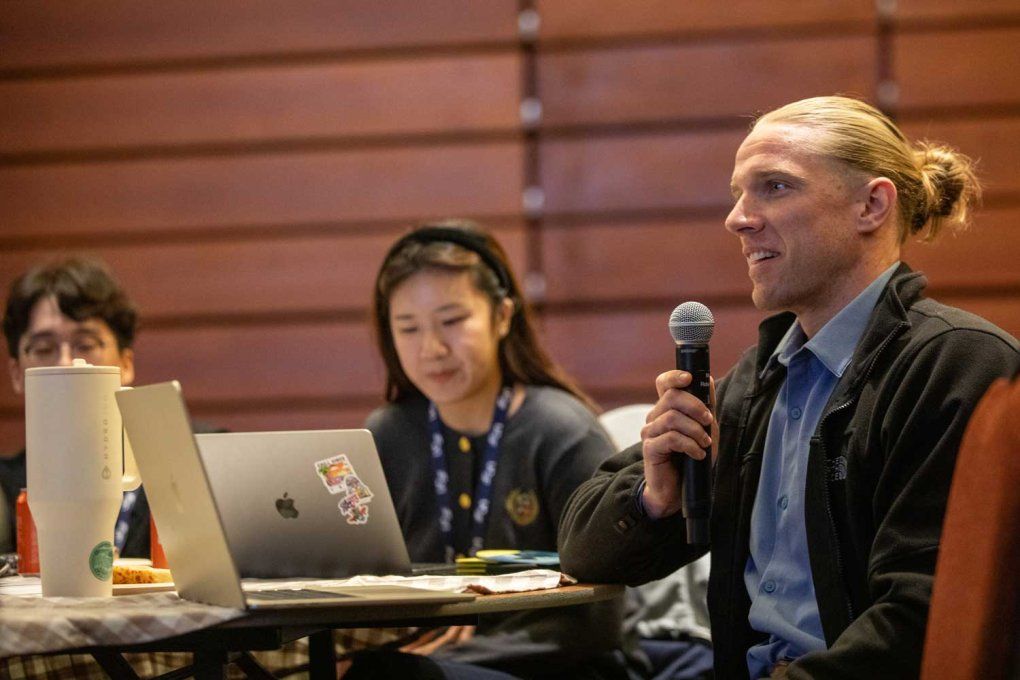
Caring for wounded veterans while listening to their recollections of active duty, prompted Cairns to take the next step by enrolling at UCSF and pursuing a specialty as a Psychiatric Mental Health Nurse Practitioner.
“I’m really interested in serving veterans with PTSD and learning about some of the breakthrough alternative treatments methods that are out there, and researchers at UCSF are leading that charge,” Cairns said.
He is hoping to eventually work at the San Francisco Veterans Administration Hospital, where UCSF placed him for his second-year clinical rotation.
“I want to be the best provider I can be, and to give myself as many tools as I can,” Cairns said. “This program is arming my toolkit.”
“Knew I was needed most”
As a trauma nurse at Oakland’s Highland Hospital, Jamie Austin, RN, is surrounded by patients with limited resources who are admitted for conditions that could have been treated sooner.
“I’ve seen that there is so much room for improvement at a safety-net hospital with limited resources and a steady stream of patients,” Austin said. “My goal with this degree, is to develop the skills to make improvements where necessary and to lead efficiently.”

The gap between settings with resources and those without surfaced for Austin after she briefly left her position as a trauma nurse at Highland, a safety-net hospital, for a similar role at Stanford Hospital in Palo Alto. But she returned in less than a year “to the place where I left my heart and knew I was needed most.” Except, this time she was armed with her acceptance to UCSF and a determination to make a lasting impact.
The autonomy that comes with a DNP fueled Austin’s choice to pursue an Adult Gerontology-Acute Care Nurse Practitioner specialization. The program’s mentorship and network opportunities with health care leaders are what Austin values most, followed by the time it is providing her to refine her skills.
“In this program, you are surrounded by nursing scholars,” she said. “And by networking with them, you can actually learn and uncover solutions. This is a golden opportunity.”
A better way to diagnose Morgellons disease
With her doctorate already in hand from UCSF’s Post-Master’s Entry to the DNP pathway, nursing alumna Melissa Fesler, DNP, RN, FNP-BC, can speak to the advantages of a doctorate on her career.
“UCSF’s DNP program was eye-opening,” Fesler said. “It gave me the confidence of knowing what steps I needed to take to implement policy changes. I learned that to establish credibility, I needed to perform quality improvement research and publish papers.”
For her scholarly project, a requirement of the UCSF DNP program, Fesler developed a preliminary protocol for the diagnosis of Morgellons, a tick-borne disease that is caused by untreated Lyme disease. This protocol is now implemented at her clinic, Union Square Medical Associates in San Francisco, and she plans to publish future studies in hopes it will become widely adopted.
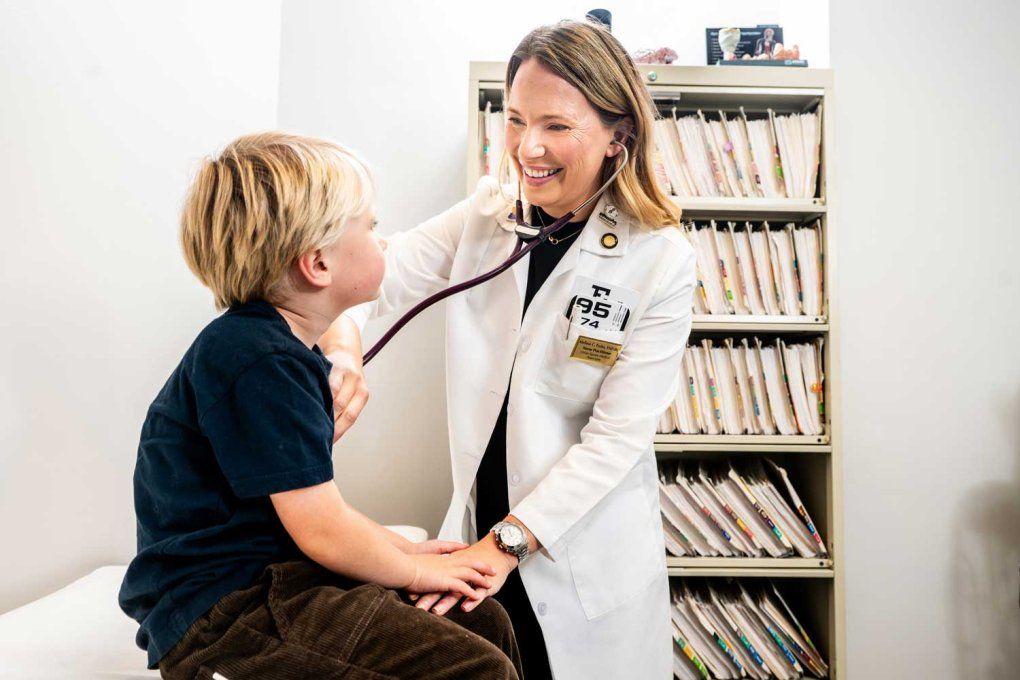
Recently, she launched subsequent research digging deeper into the potential diagnostic markers of Morgellons, demonstrating it is physical not psychological, a common misdiagnosis.
With an undergraduate degree in medical microbiology, Fesler had a proclivity for infectious diseases and jumped at the opportunity to study Morgellons, a dermatologic condition primarily affecting middle-aged women. Morgellons causes acute chronic skin wounds, many of which contain protruding fibers. Patients claim feeling like something is crawling under their skin and are most often initially referred for psychiatric treatment.
Horrified by the misdiagnosis and the debilitating nature of the condition, Fesler dedicated her scholarly project to developing a protocol for accurately diagnosing the condition. She tested and refined her work with feedback from physicians who reported it improved their knowledge and confidence in diagnosing Morgellons when examining patients with skin conditions.
“What drove me to my DNP at UCSF was that I saw the need to change the way policies and guidelines were being used for this patient population, and I didn’t know how to use evidence-based literature to move forward to implement changes,” Fesler said. “The DNP program taught me the steps to make change happen on a micro and macro level.”