
Displaying 2761 - 2790 of 17007
-
-
Archive: Not ‘Brains in a Dish’: Cerebral Organoids Flunk Comparison to Developing Nervous System
Widely used organoid models fail to replicate even basic features of brain development and organization, much less the complex circuitry needed to model complex brain diseases or normal cognition.

-
Archive: UCSF Health Opens New Clinics on Peninsula
The clinics enable patients to receive UCSF primary, specialty and cancer care in convenient locations close to home.
-
Archive: UCSF Health Affiliates with Circle Medical for Primary Care
The affiliation will launch with two clinics, on Divisadero Street and in downtown San Francisco, and is expected to expand quickly into a network throughout the Bay Area.
-
Archive: Simple Test Identifies Patients at High Risk for Future Dialysis or Transplant
A low-cost test that screens for excess protein in the urine has been shown to accurately identify patients at higher risk for progressive kidney disease after being hospitalized for acute kidney
-
Archive: As Mysterious Coronavirus Spreads, An Infectious Disease Expert Explains What You Should Know
Just weeks since the viral illness was first reported in Wuhan, China, health experts globally are working on containing and treating it.To put the latest news in context, we asked UCSF infectious disease expert Charles Chiu, MD, PhD, about the origins of the Wuhan virus and public health risks going forward.
-
Archive: The simple design change that could help doctors prevent opioid addiction
-
Ernest Goodson, DDS, Resident Alum: Shining a Light on Dentists
-
Human Nature: How Will CRISPR Change our Relationship with Nature?
How will the gene-editing tool CRISPR change our relationship with nature? Will it affect human evolution? This documentary explores these questions through interviews with the pioneering scientists who discovered CRISPR, the families whose lives are altered by this new technology, and the bioengineers who are testing it. UCSF alumna Sarah Goodwin, who earned her PhD in cell biology, is the leading science adviser on the film, as well as a producer.
-
Elderhood: Redefining Aging Transforming Medicine, Reimagining Life
“Society has turned old age into a disease…a condition to be dreaded, disparaged, neglected, and denied,” award-winning author Louise Aronson, MD, told the Bay Area Reporter. In her latest book, Elderhood, Aronson, a UCSF geriatrician, shares stories from her 25 years of caring for patients to weave a different vision – one that, as she puts it, is “full of joy, wonder, frustration, outrage, and hope.”
-
The Case of the Elusive Infection
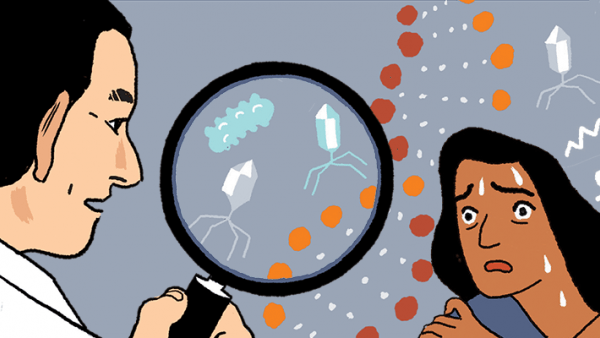
For 15 years, nobody could figure out what was making a young woman so sick. Then neurologist Michael Wilson, MD, tried a radical new test.
-
NPR: “Pain Rescue Team Helps Seriously Ill Kids Cope In Terrible Times”
This NPR piece follows an unusual “pain rescue team” dedicated to easing the suffering of seriously ill kids in severe pain. The episode delves into the wrenching but powerful work of UCSF Benioff Children’s Hospital San Francisco’s integrative pediatric pain and palliative care team, which combines traditional pharmaceutical pain care with techniques such as acupuncture and massage. The program is one of just a handful of such teams in the nation.
-
Archive: Opioid Prescriptions Affected by Computer Settings
Researchers found that when default settings, showing a preset number of opioid pills, were modified downward, physicians prescribed fewer pills. Fewer pills could improve prescription practices and protect patients from developing opioid addictions.
-
Radical Investment in San Francisco’s Future
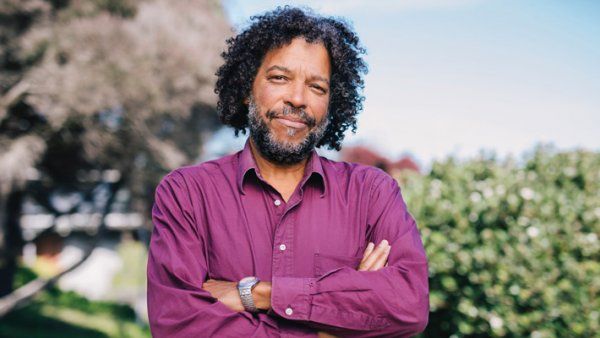
UCSF sociologist Howard Pinderhughes, PhD, says insufficient housing, economic opportunity, and educational inequity stand in the way of a healthy San Francisco. Nevertheless, he believes there is room for optimism and the possibility for change.
-
Archive: UCSF Wins 8 Regional CASE Awards in 2020 for Communications Excellence
The awards include a Grand Gold award for the UCSF.edu redesign, three Gold awards, three Silver awards and a Bronze award for work from across the Office of Communications, Community and Government Relations, and University Development and Alumni Relations (UDAR).
-
Archive: UCSF Releases Report on Hunters Point Naval Shipyard Testing Protocols
Scientists from UCSF, UC Berkeley and Lawrence Berkeley National Laboratory have concluded an independent review of the appropriateness of the radiation testing protocols used by the California Department of Public Health and the U.S. Navy to assess radiation contamination at the Hunters Point Shipyard.
-
Archive: 6 Questions for Keith Yamamoto on Preciscion Medicine at UCSF
In this interview, Keith Yamamoto, PhD, Director of UCSF Precision Medicine, explains why UCSF is considered a leader in the field and describes the "machine" created to fuel new insights and innovation.
-
Archive: UCSF Experts to Share Latest at 2020 Precision Medicine World Conference
The 31 UCSF speakers are among the foremost leaders who will share the latest in innovative technologies, research initiatives and clinical care developments that enable the translation of precision medicine into direct improvements in patient care.
-
Archive: ‘Living Fossil’ May Upend Basic Tenet of Evolutionary Theory
UCSF–led research team has discovered the first conclusive evidence that natural selection may also occur at the level of the epigenome and has done so for tens of millions of years.
-
Archive: Death Rate Escalates for Pediatric Liver Transplant Patients in ‘Growth Failure Gap’
Children waiting for new livers who are much smaller than their peers have a heightened risk of dying. Despite this, 40 percent of these undersized waitlisted children may lose vital points required to expedite transplantation, due to a ranking system that does not account for their growth failure.
-
Archive: Single-Payer Systems Likely to Save Money in US, Analysis Finds
A single payer healthcare system would save money over time, likely even during the first year of operation, according to nearly two dozen analyses of national and statewide single payer proposals made over the past 30 years.
-
Ageless Muscles, Lab-Made Organs, and Other “Better” Parts
Scientists at UCSF are exploring how we can improve our bodies – now and in the future – with science that sounds like sci-fi.

-
Archive: What Would It Take to End Homelessness?
-
Archive: Five Years After Abortion, Nearly All Women Say It Was the Right Decision, Study Finds
Five years after having an abortion, over 95 percent of the women in a landmark UCSF study said it was the right decision for them.
-
Archive: Five years after an abortion, most women say they made the right decision
-
Archive: Speech-Disrupting Brain Disease Reflects Patients’ Native Tongue
English and Italian speakers with dementia-related language impairment experience distinct kinds of speech and reading difficulties based on features of their native languages.
-
The Infectious Diseases on the Rise – and on the Way Out
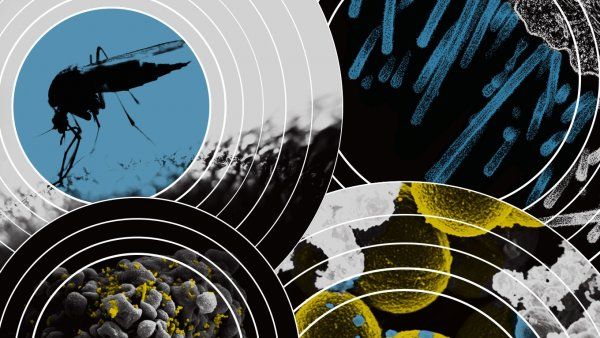
Infections that plagued the world for centuries (malaria, HIV/AIDS) are on the verge of eradication. Others threaten to disrupt human lives and economies more than ever before.
-
Archive: UCSF Study Examines E-Scooter Injuries
-
Archive: Urban Health Scare: E-Scooters Show Alarming Spike in Injuries
UCSF study finds a major surge of injuries related to scooters, particularly among young adults.
-
Archive: Lifestyle Choices Could Slow Familial Frontotemporal Dementia
A physically and mentally active lifestyle confers resilience to frontotemporal dementia, even in people whose genetic profile makes the eventual development of the disease virtually inevitable.