
UCSF Names New Campus Gateway to Honor Former Chancellor J. Michael Bishop
Nobel Laureate was remembered for shaping lives and the future of UCSF.
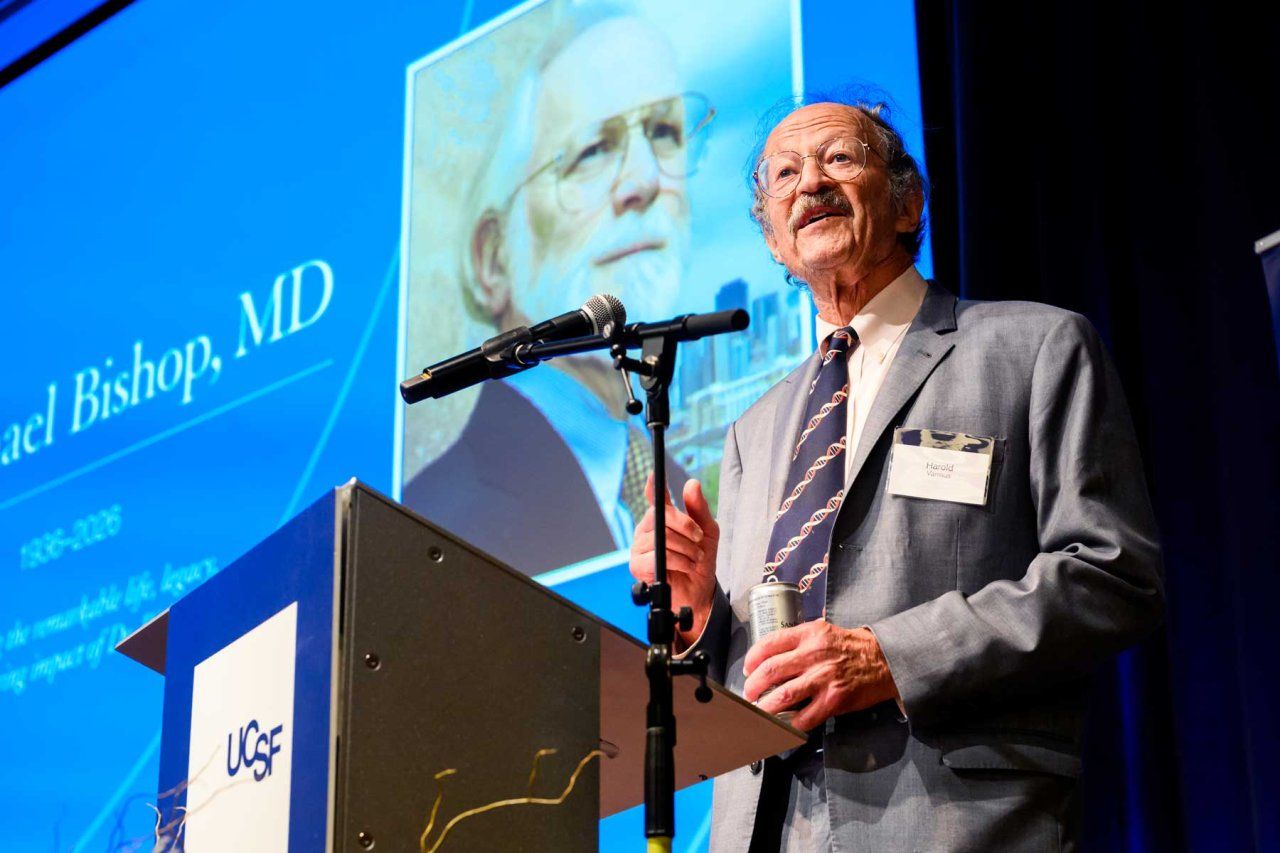
UC San Francisco is honoring Chancellor Emeritus and Nobel Laureate J. Michael Bishop, MD, with a new campus gateway at Parnassus Heights that will bear his name. The tribute was announced during a celebration of his life that brought together people who knew Bishop personally and professionally throughout the decades.
The gateway will be located at the western entrance to the Parnassus Heights campus and will recognize Bishop’s contributions to UCSF and his role redefining our biological understanding of cancer. It will also provide a lasting connection between Bishop and the future of the university he helped shape.
“The gateway will stand as a lasting tribute to Mike’s vision and impact, welcoming all who come to UCSF to learn, heal, and discover,” said UCSF Chancellor Sam Hawgood, MBBS.
Bishop was broadly known for his tenure as chancellor and the Nobel Prize he won for groundbreaking cancer research. But at the celebration of his life, another dimension of his legacy emerged through the stories of generations of scientists and physicians he taught, mentored, and influenced — many of whom went on to become leaders and pioneers in their own fields.
Among the 150 people who gathered Oct. 2 at the William J. Rutter Center at UCSF’s Mission Bay campus to remember Bishop were former colleagues, family members, members of the art world, and trainees. Bishop died in March at the age of 90.
Nobel Prize-Winning Collaboration
Harold Varmus, MD, co-winner of the 1989 Nobel Prize in Physiology or Medicine with Bishop, spoke during the event about their unlikely pairing: Bishop was the son of a Lutheran pastor who grew up in rural Pennsylvania with an outhouse and a two-room elementary school. Varmus grew up in the New York suburbs, the son of secular Jewish parents with Ivy League degrees.
When they met at UCSF in 1969, they began a lifelong collaboration that ultimately changed the future of cancer research through their discovery that normal cells contain genes that can cause cancer.
“We didn’t argue about the kinds of things that often disrupt partnerships: territory, money, other people,” Varmus said. “We both valued our relationship too much to jeopardize it with superficial and transient discord.”
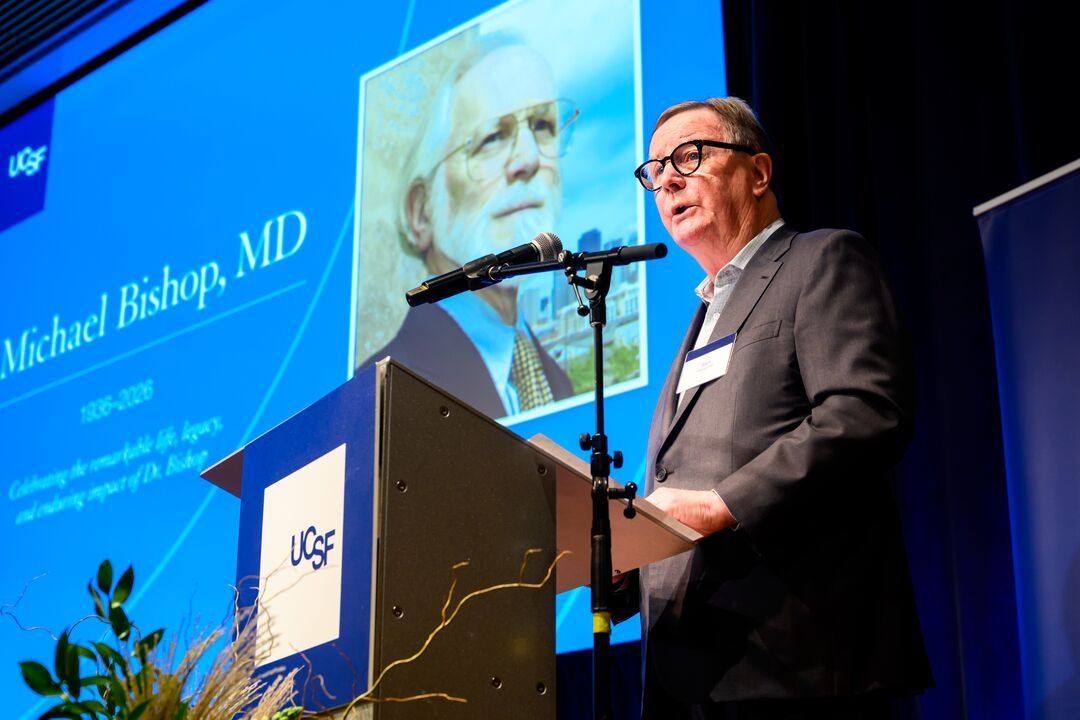
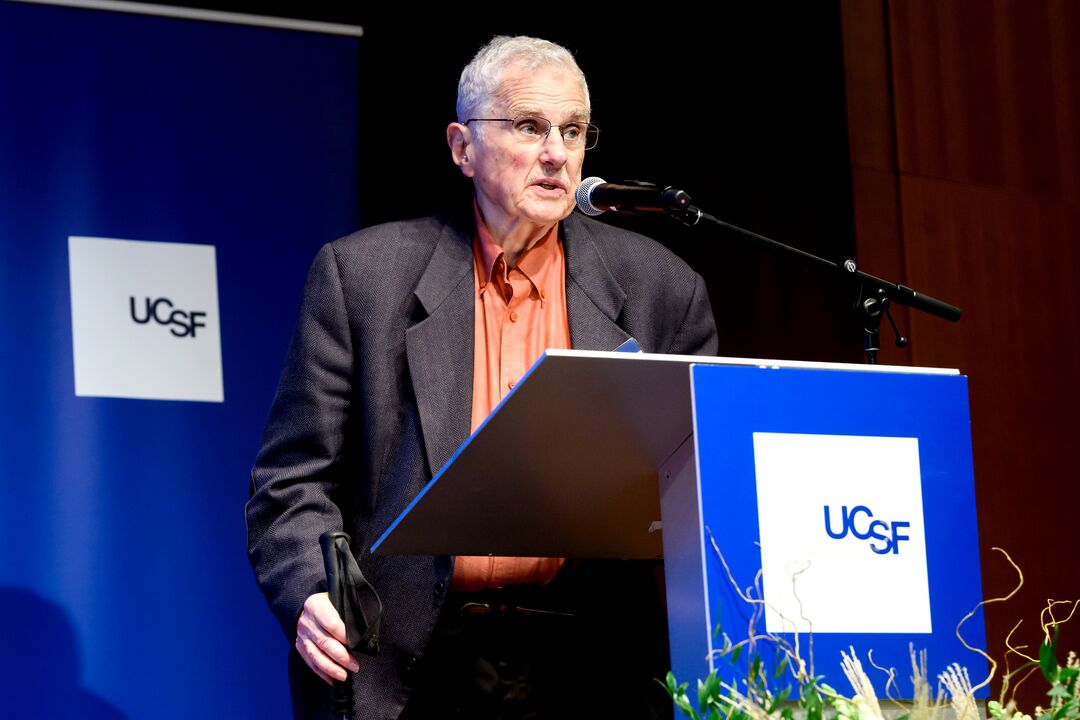
Chancellor Sam Hawgood speaks during the memorial for Chancellor Emeritus J. Michael Bishop at UCSF’s Mission Bay campus on Friday, Oct. 2, 2026. Photo by Noah Berger
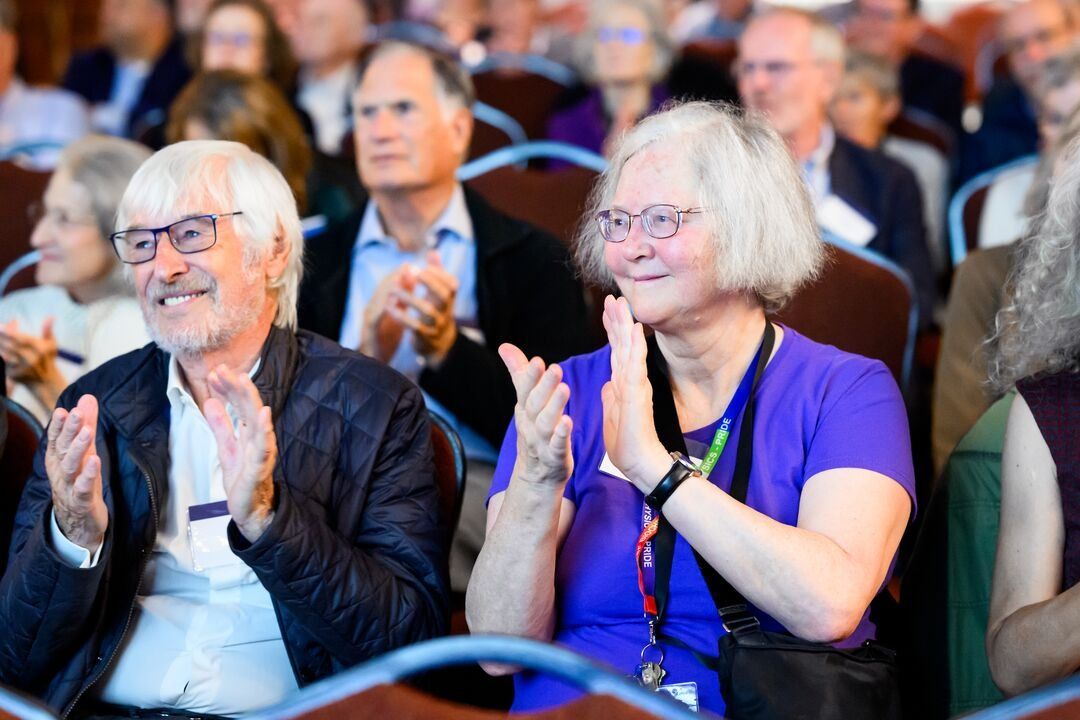
Reg Kelly, PhD, and Elizabeth Blackburn, PhD. Photo by Noah Berger
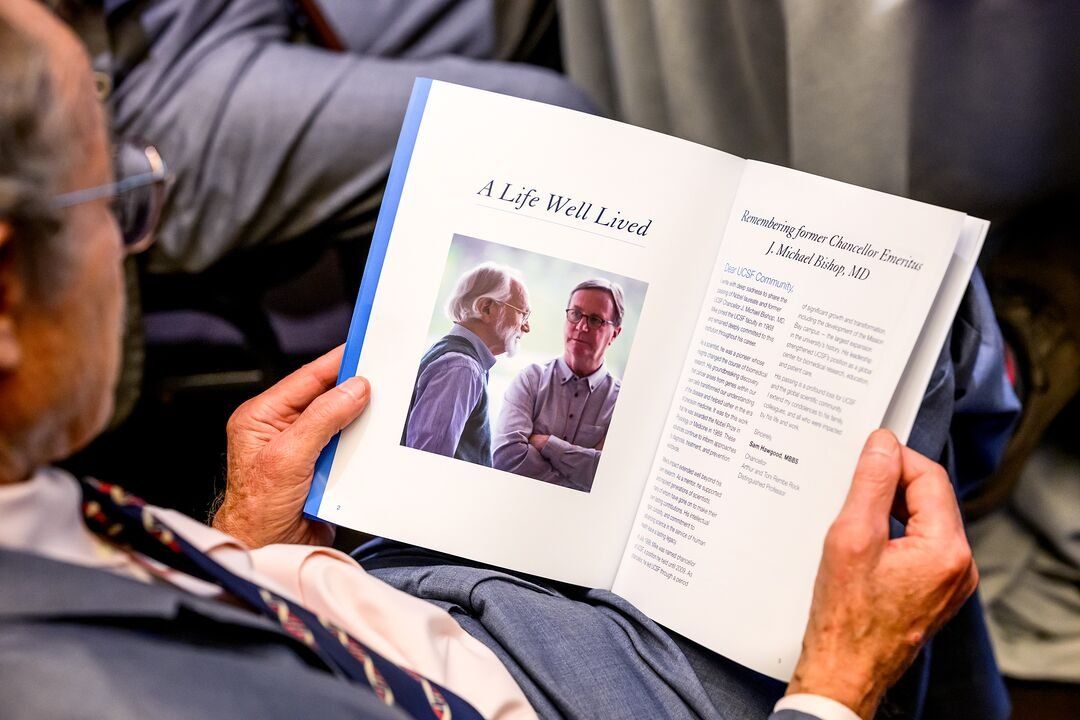
Photo by Noah Berger
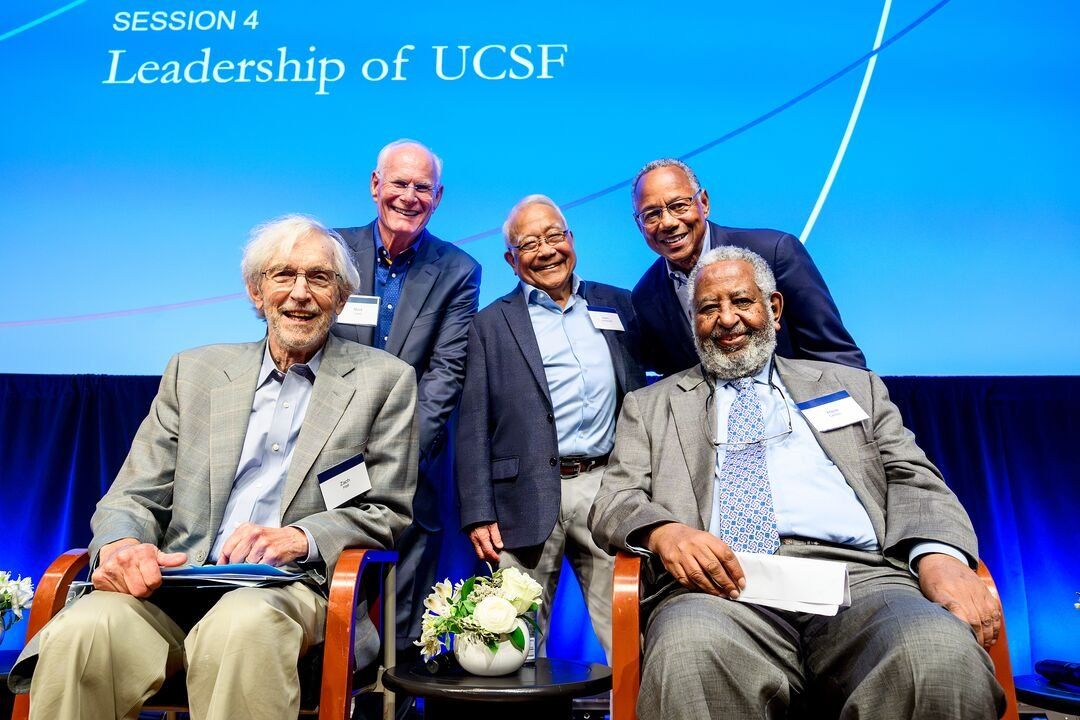
Former UCSF leaders attend the memorial for Chancellor Emeritus J. Michael Bishop. From left to right are Zach Hall, PhD; Mark Laret; Keith Yamamoto, PhD; Gene Washington, MD; and Chancellor Emeritus Haile Debas, MD. Photo by Noah Berger
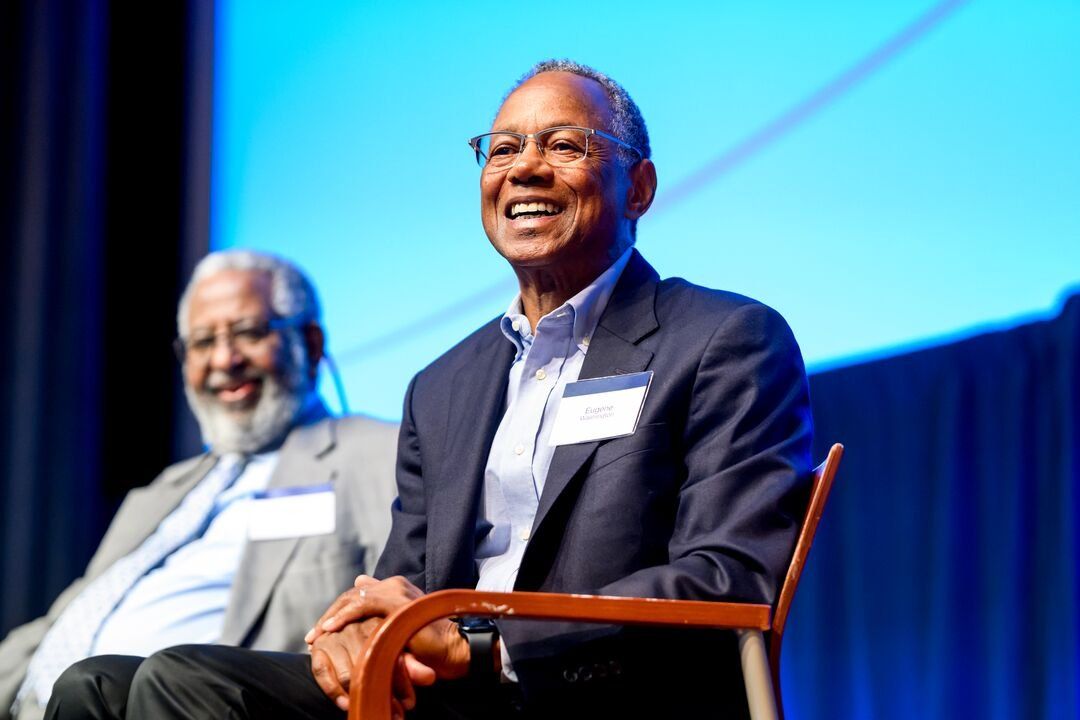
Chancellor Emeritus Haile Debas, MD (left) and Gene Washington, MD (right). Photo by Noah Berger
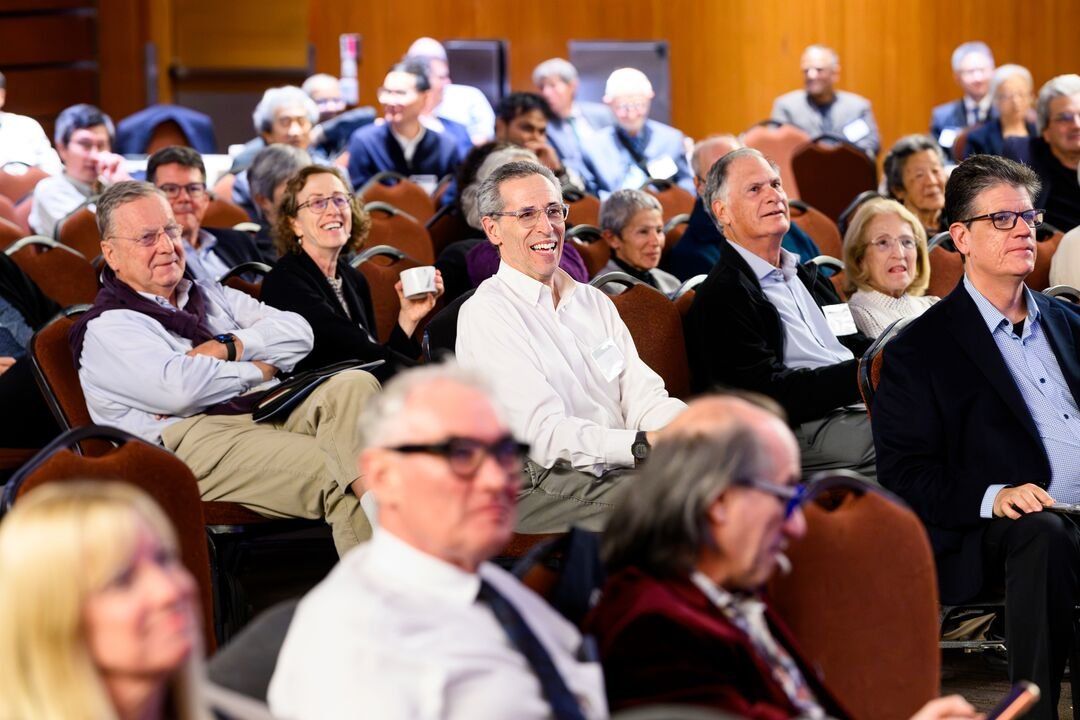
UCSF community members attend the memorial. Photo by Noah Berger
Humor, Advice, and Mentoring
Art Levinson, PhD, a Bishop trainee who later became Genentech’s CEO and chairman, remembered Bishop’s humor and his advice.
Levinson recalled the time Bishop showed up in a kangaroo costume, complete with a “roo” in his pouch, to honor a departing Australian postdoc. And when considering whether to go to Genentech, Levinson turned to Bishop, who told him to take the opportunity. Without Bishop’s advice, he said, “I’m not sure I actually would have gone there.”
Don Ganem, MD, spoke about a memory of Bishop that has stayed with him for 40 years. As a new faculty member in UCSF’s Microbiology and Immunology Department, Ganem audited an introductory lecture on infectious diseases by Bishop to get a feel for how the course was being taught.
In 50 riveting minutes, Ganem said, Bishop moved from evidence of polio in ancient Egypt to the Black Death in Europe in the 14th century, smallpox, the discovery of microbes, and the work of Louis Pasteur before moving on to modern-day public health. Along the way, he peppered the lecture with images from art, literature, and philosophy.
“I realized that Mike was actually not just giving them a history lesson,” Ganem said, “He was imparting a subliminal message that med school is not trade school, that they were entering a learned profession, one with a long history.”
Susan Weiss, PhD, who trained with Bishop from 1976 to 1980 and went on to become a virologist who pioneered COVID research, remembered that Bishop treated women in the lab exactly the same as men, at a time when that was uncommon. She, along with other trainees, also spoke of the respect Bishop showed his postdocs, referring to them as his “junior colleagues.”
Bishop’s concern for others was illustrated when the wife of one of his trainees, Pat Brown, MD, PhD — who later co-founded Impossible Foods — called the lab because she had gone into labor with twins almost three months early. Bishop grabbed a wheelchair and ran with it to Brown’s nearby home, then wheeled her to the ER. Bishop’s intervention, Brown said, helped save his children’s lives.
Bishop’s sense of fairness extended beyond his lab. In the early days of Internet access, he and Gene Washington, MD, MPH, were initially told that only faculty offices could be connected. Bishop refused unless all his colleagues could have access. They figured out a way to connect everyone, and Bishop paid the additional cost.
Washington, then a young faculty member, said that set an early example for him. Washington served as UCSF’s executive vice chancellor and provost during Bishop’s tenure as chancellor, and later was chancellor at Duke University.
Mike saw an opportunity to break down the traditional barriers between departments and create a new way of training scientists.
Bruce Alberts, PhD
Leading UCSF Through Change
Bruce Alberts, PhD, recalled how Bishop transformed graduate education at UCSF in the 1980s, with the creation of the Program in Biological Sciences (PIBS), a revolutionary model that replaced separate departmental PhD programs with a more collaborative approach. “Mike saw an opportunity to break down the traditional barriers between departments and create a new way of training scientists,” Alberts said. “It brought students and faculty together across disciplines, expanding their range of scientific colleagues, and strengthening UCSF’s collaborative culture.”
Bishop’s influence on UCSF extended beyond the laboratory and classroom. As chancellor from 1998 to 2009, he led the university through a period of significant change and growth.
Chancellor Hawgood reflected on how Bishop led UCSF through the development of Mission Bay — the largest expansion in the university’s history — and strengthened UCSF’s role as a global leader in health sciences.
Bishop demonstrated his commitment to the arts by setting aside one percent of the Mission Bay construction budget for art in each new building. This helped create the collection that bears his name.
Haile Debas, MD, former UCSF chancellor, noted that Bishop became chancellor in 1998 just after the dissolution of the UCSF-Stanford health care merger. This left UCSF’s hospitals in serious financial trouble, with morale across the university seriously shaken. Some questioned whether a basic scientist could lead UCSF through the crisis.
Bishop immersed himself in the institution, learning the names of head nurses and other hospital staff and making rounds before coming to his office at 7 a.m. He recruited a new hospital CEO, and together they stabilized the hospitals. “He immediately gained the trust of the faculty,” Debas said.
For all that Bishop shaped through his science and leadership, the people in the room made his legacy clear: He did not keep his knowledge to himself. He passed it on.
Now, the gateway bearing his name will carry that legacy forward for generations who pass through the Parnassus Heights campus.