Today, we take for granted that cancers arise when genes in our cells go awry. But less than 60 years ago, scientists were still trying to understand the molecular machinery that drove it. Unlocking cancer’s secrets began with a chicken.
By studying a virus that caused cancer in chickens, former UC San Francisco Chancellor emeritus J. Michael Bishop, MD, and longtime lab partner former Professor of Microbiology, Biochemistry, and Biophysics Harold E. Varmus, MD, showed that cancer is fundamentally a genetic disease — and paved the way for modern-day precision treatments.
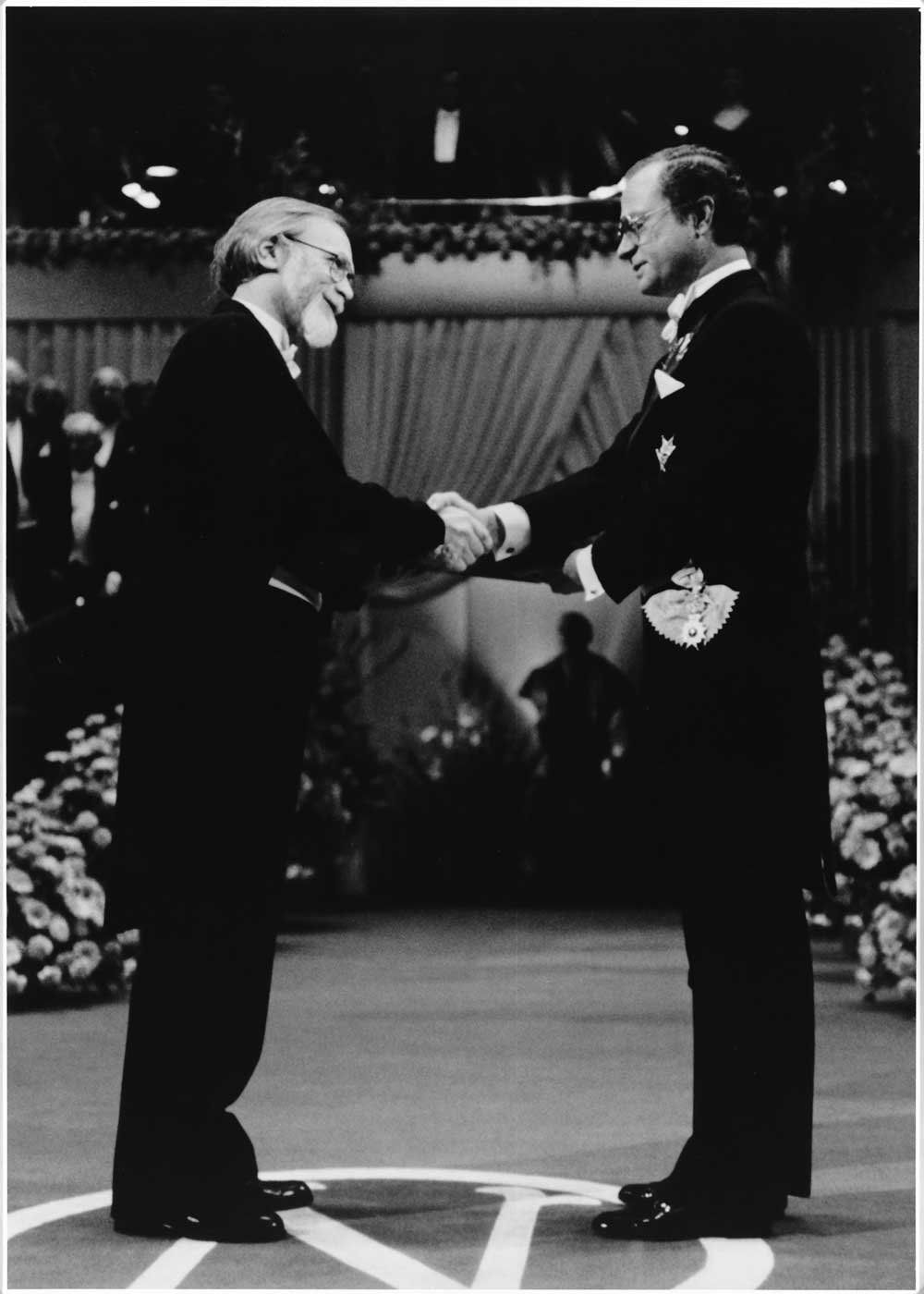
The duo went on to win UCSF’s first Nobel Prize in Physiology or Medicine for identifying cancer-causing oncogenes.
Bishop passed away earlier this year. Ahead of the 2026 Nobel Prize awards, we look back at some of Bishop’s most memorable musings.
On the discovery of oncogenes:
‘The universality of nature’
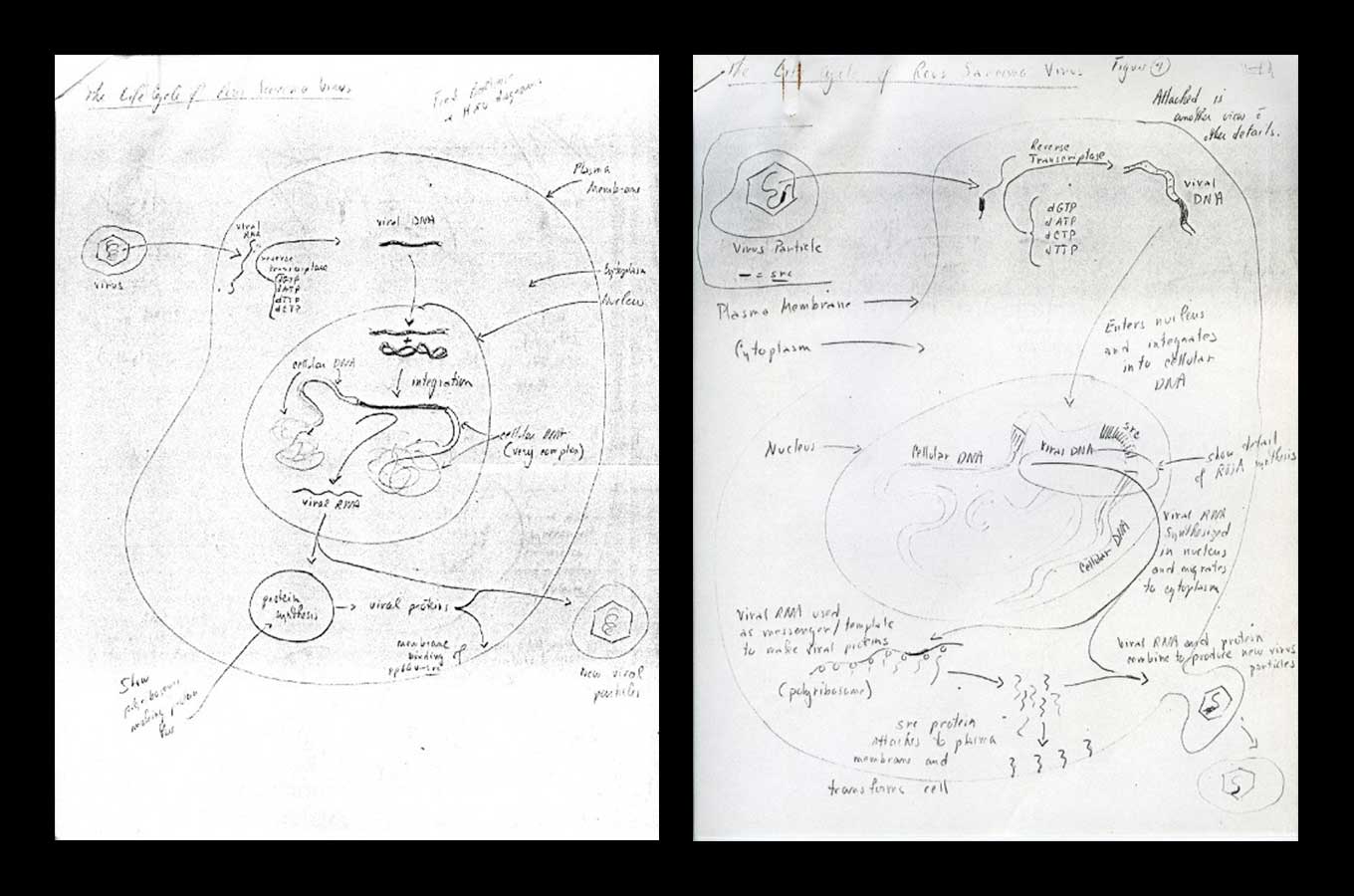
Bishop and Varmus focused on the single cancer-causing gene within the poultry pox, seeking to understand how one gene could transform healthy cells into cancerous ones. The pair found the gene wasn't confined to the chicken virus — it was present in virtually all healthy cells, whether they had encountered the avian virus or not.
Essentially, under the right conditions, normal cells could become oncogenes, or mutated genes that cause cancer. Their Nobel-winning discovery — the first such award for a San Francisco institution — ushered in the era of modern cancer care, paving the way for researchers to identify genes like HER2 as oncogenes for some aggressive breast cancers and to develop specially targeted treatments, such as the well-known drug Herceptin.
“
When I began my career in cancer research, really nothing was known about how the disease arises. And now we know exactly why cancer occurs. We don’t know all the causes, which is a problem, but we do know that once those causes have done their job, all cancer arises from the malfunction of genes.
“It was a gradually building thrill to realize that we had the cancer cell by the neck ... not in terms of throttling it, but in terms of understanding it.
“Did it bother me that it was a chicken virus? Not at all. I was a great believer in what we call the universality of nature and if I could find out anything about cancer in a chicken, I knew it would apply to humans. Boy, was I right.”
“
When I began my career in cancer research, really nothing was known about how the disease arises. And now we know exactly why cancer occurs. We don’t know all the causes, which is a problem, but we do know that once those causes have done their job, all cancer arises from the malfunction of genes.
“It was a gradually building thrill to realize that we had the cancer cell by the neck ... not in terms of throttling it, but in terms of understanding it.
“Did it bother me that it was a chicken virus? Not at all. I was a great believer in what we call the universality of nature and if I could find out anything about cancer in a chicken, I knew it would apply to humans. Boy, was I right.”
On career: ‘Go where you’re needed’
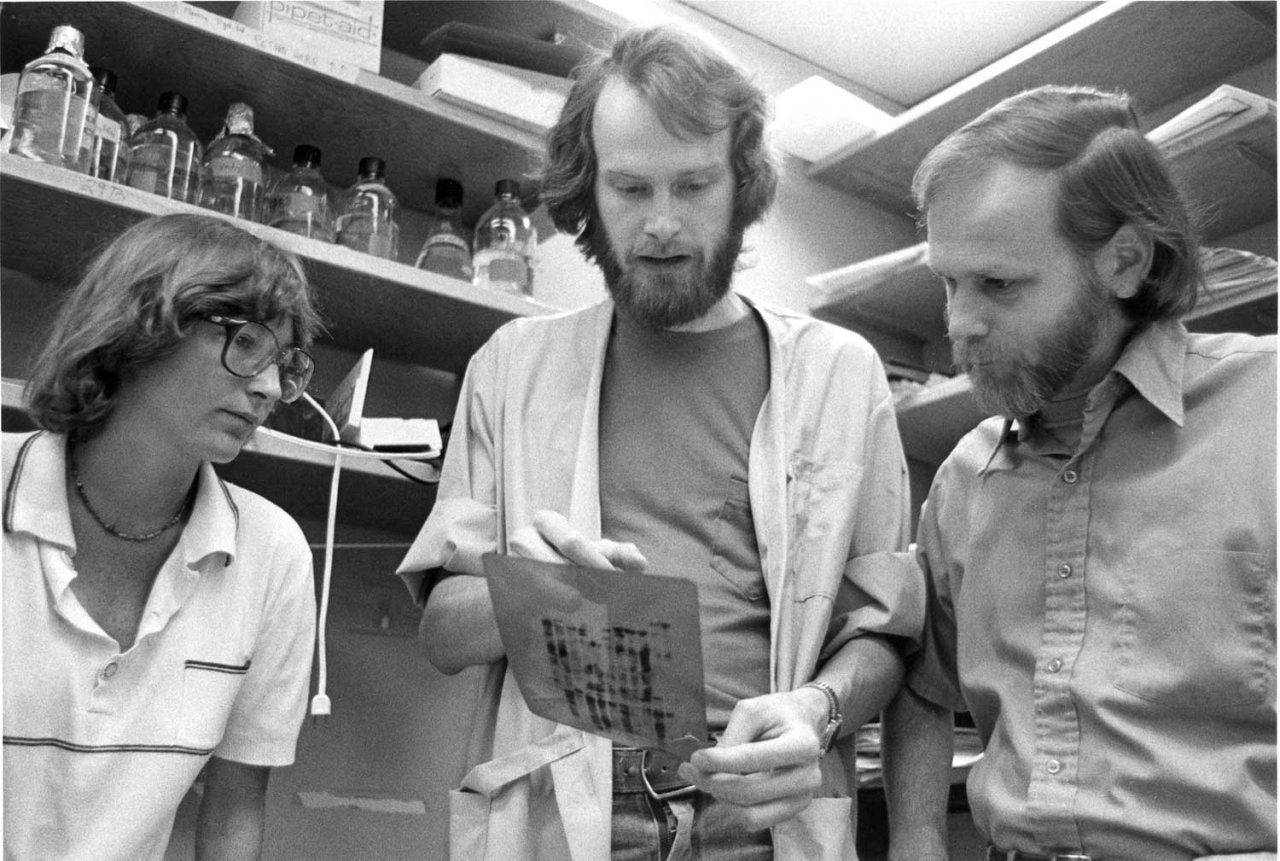
East Coast private universities were the engine of U.S. biomedical research until the late 1960s, when faculty like former UCSF biochemist William J. Rutter, PhD, recruited a wave of promising young scientists in the mold of Bishop. Together, they transformed UCSF into the basic science research powerhouse it is today. This cadre of young scientists helped shift the landscape of U.S. medical research, going on to win five Nobel Prizes in the last five decades and helping give rise to the biotech industry.
“The university represents genius of many sorts: genius of the mind, genius of the eye and hand, genius of the heart and soul,” Bishop would go on to say of being chancellor. “I want to do what I can to assure that genius of every sort remains public property in California.”
“
In those days, UCSF was hardly known outside the city. Yet my decision to go was an easy one because the opportunities involved in going seemed so much greater than in staying ... I would have been a mere embellishment on the East Coast. I was genuinely needed in San Francisco … The decision was so successful that it still underpins my advice to young scientists who are in the market for a job: go where you are genuinely needed; do not let prestige set the course.”
On love for San Francisco: ‘I heard six languages in one bus ride’
As the city’s second largest employer, UCSF was “part of the warp and woof of daily life in San Francisco.”
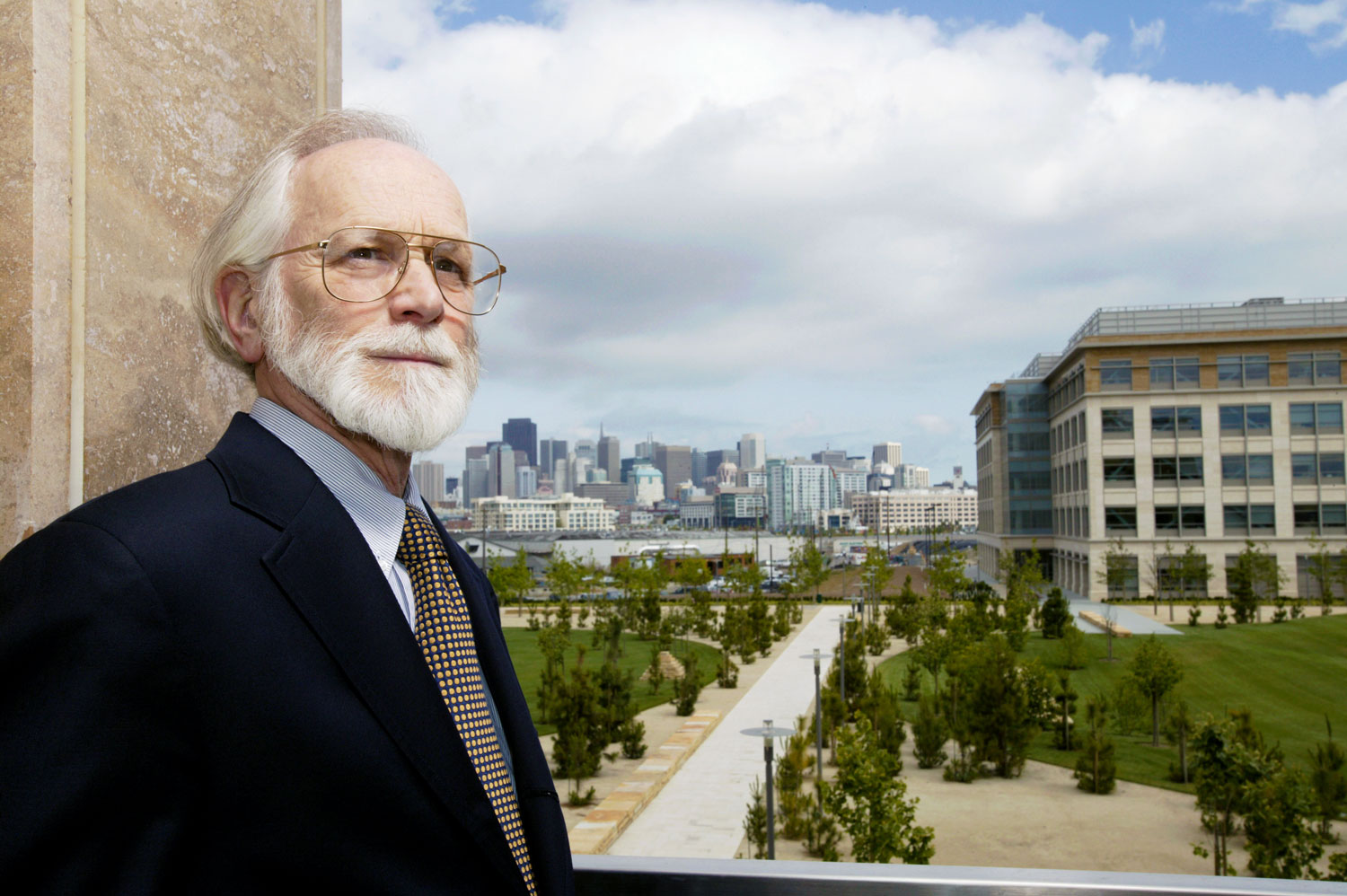
Bishop oversaw the creation of UCSF’s Mission Bay campus, including San Francisco’s first new hospitals in 30 years.
The campus opened in 2015 and transformed crumbling railyards and large dirt lots into a nexus of patient care, research and education. Here, physicians could collaborate with basic and clinical researchers to cure the world’s most devastating diseases.
Today, Mission Bay has attracted new housing developments, biotech start-ups, and — in partnership with UCSF — even a new public school. More broadly, UCSF generates billions of dollars in economic activity in the Bay Area and creates tens of thousands of local jobs.
On career: ‘Go where you’re needed’
East Coast private universities were the engine of U.S. biomedical research until the late 1960s, when faculty like former UCSF biochemist William J. Rutter, PhD, recruited a wave of promising young scientists in the mold of Bishop. Together, they transformed UCSF into the basic science research powerhouse it is today. This cadre of young scientists helped shift the landscape of U.S. medical research, going on to win five Nobel Prizes in the last five decades and helping give rise to the biotech industry.
“The university represents genius of many sorts: genius of the mind, genius of the eye and hand, genius of the heart and soul,” Bishop would go on to say of being chancellor. “I want to do what I can to assure that genius of every sort remains public property in California.”
“
In those days, UCSF was hardly known outside the city. Yet my decision to go was an easy one because the opportunities involved in going seemed so much greater than in staying ... I would have been a mere embellishment on the East Coast. I was genuinely needed in San Francisco … The decision was so successful that it still underpins my advice to young scientists who are in the market for a job: go where you are genuinely needed; do not let prestige set the course.”
On love for San Francisco: ‘I heard six languages in one bus ride’
As the city’s second largest employer, UCSF was “part of the warp and woof of daily life in San Francisco.”
Bishop oversaw the creation of UCSF’s Mission Bay campus, including San Francisco’s first new hospitals in 30 years.
The campus opened in 2015 and transformed crumbling railyards and large dirt lots into a nexus of patient care, research and education. Here, physicians could collaborate with basic and clinical researchers to cure the world’s most devastating diseases.
Today, Mission Bay has attracted new housing developments, biotech start-ups, and — in partnership with UCSF — even a new public school. More broadly, UCSF generates billions of dollars in economic activity in the Bay Area and creates tens of thousands of local jobs.
“
I have a vivid recollection of riding a bus during my first visit. By the time I got off, I had heard six languages. I knew then that this was a place where I would want to live. I had fallen in love with the city itself.”
“
I have a vivid recollection of riding a bus during my first visit. By the time I got off, I had heard six languages. I knew then that this was a place where I would want to live. I had fallen in love with the city itself.”
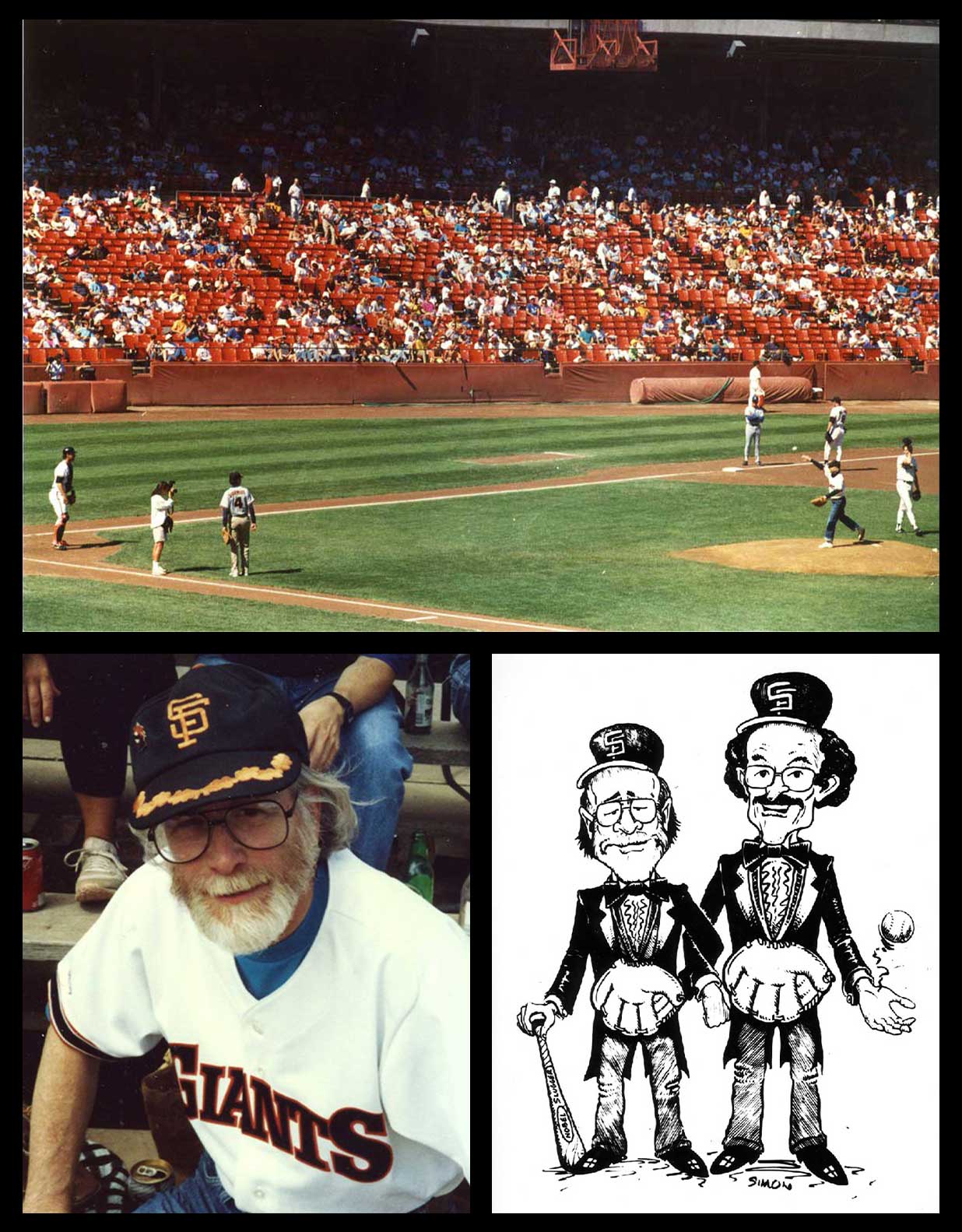
Bishop, a lifelong Giants’ fan, was invited to throw out the first pitch at a 1990 home game after his Nobel alongside Varmus.
“
I had been living in hope of (but not practicing for) that moment since the age of 10. In front of 38,000 people, I unloaded a one-hopper to the catcher, Terry Kennedy, who then ran out from behind the plate to shout: ‘You should let go of the ball earlier, Doc.’
“True to form, Harold threw a perfect strike. I later learned that he had practiced on a regulation pitching mound. The Giants won, 4–3.”
On achieving a Nobel: Winning isn’t the point. It’s the journey.
Bishop, a lifelong Giants’ fan, was invited to throw out the first pitch at a 1990 home game after his Nobel alongside Varmus.
“
I had been living in hope of (but not practicing for) that moment since the age of 10. In front of 38,000 people, I unloaded a one-hopper to the catcher, Terry Kennedy, who then ran out from behind the plate to shout: ‘You should let go of the ball earlier, Doc.’
“True to form, Harold threw a perfect strike. I later learned that he had practiced on a regulation pitching mound. The Giants won, 4–3.”
On achieving a Nobel: Winning isn’t the point. It’s the journey.
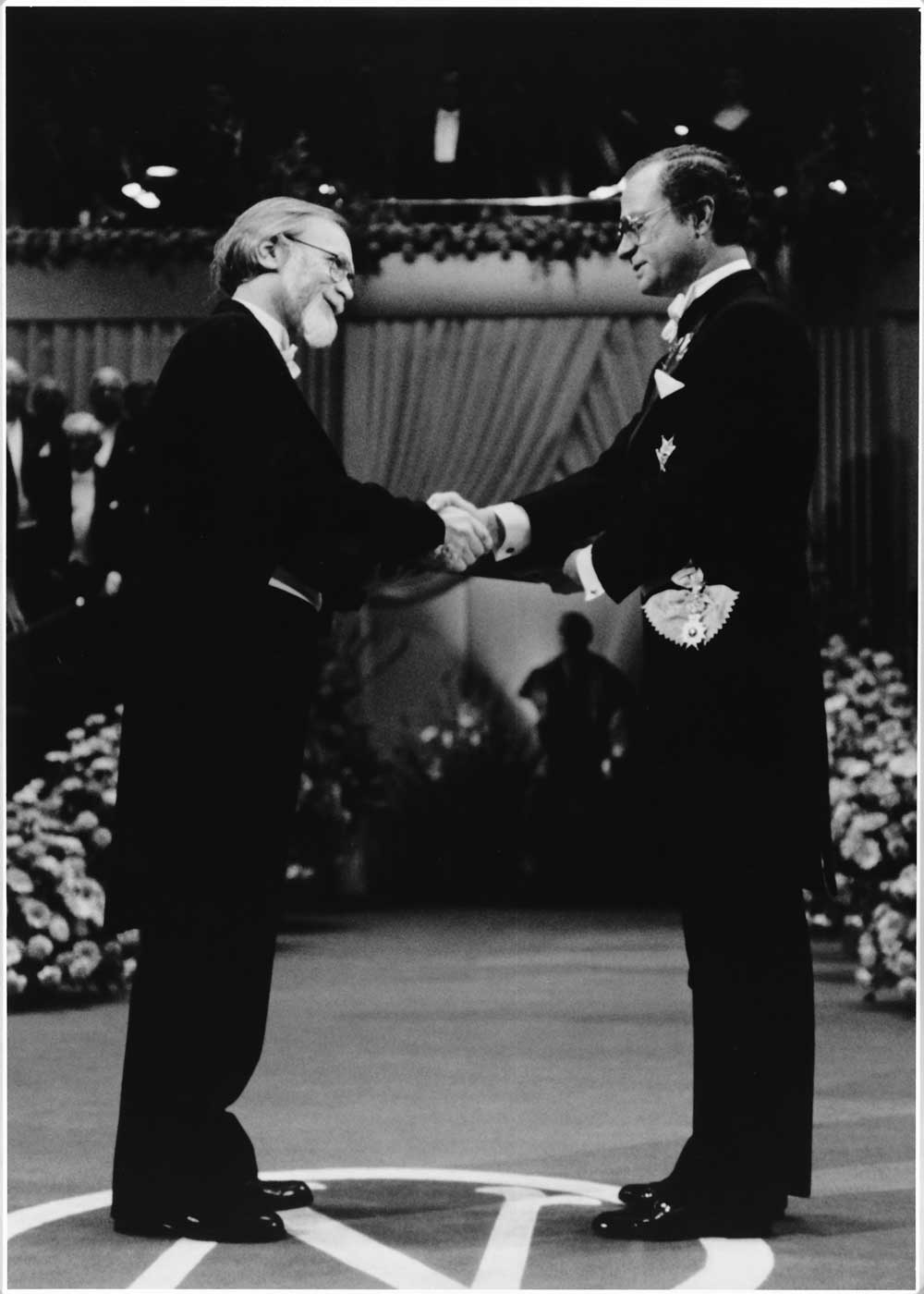
“Winning prizes is not the point of science; it is not the objective of most scientists. We do our work because we are enthralled and challenged by the puzzles of nature, because we can think of nothing else that we would rather do (although I might well now choose to play with a fine string quartet, if I had the requisite talent; or to pitch for the Giants, for which I clearly do not have the talent).
“My revered peers are not still congratulating me; they are asking me: ‘What is new?’ If my answer is not satisfactory, my feet seem ever more like clay. Like the literary critic Van Wyck Brooks, ‘I feel every morning that I am on trial for my life and will not be acquitted.’
“I have no illusions. I know that my good fortune could easily have gone to someone else. I have no formula for winning the Nobel Prize.”
“Winning prizes is not the point of science; it is not the objective of most scientists. We do our work because we are enthralled and challenged by the puzzles of nature, because we can think of nothing else that we would rather do (although I might well now choose to play with a fine string quartet, if I had the requisite talent; or to pitch for the Giants, for which I clearly do not have the talent).
“My revered peers are not still congratulating me; they are asking me: ‘What is new?’ If my answer is not satisfactory, my feet seem ever more like clay. Like the literary critic Van Wyck Brooks, ‘I feel every morning that I am on trial for my life and will not be acquitted.’
“I have no illusions. I know that my good fortune could easily have gone to someone else. I have no formula for winning the Nobel Prize.”