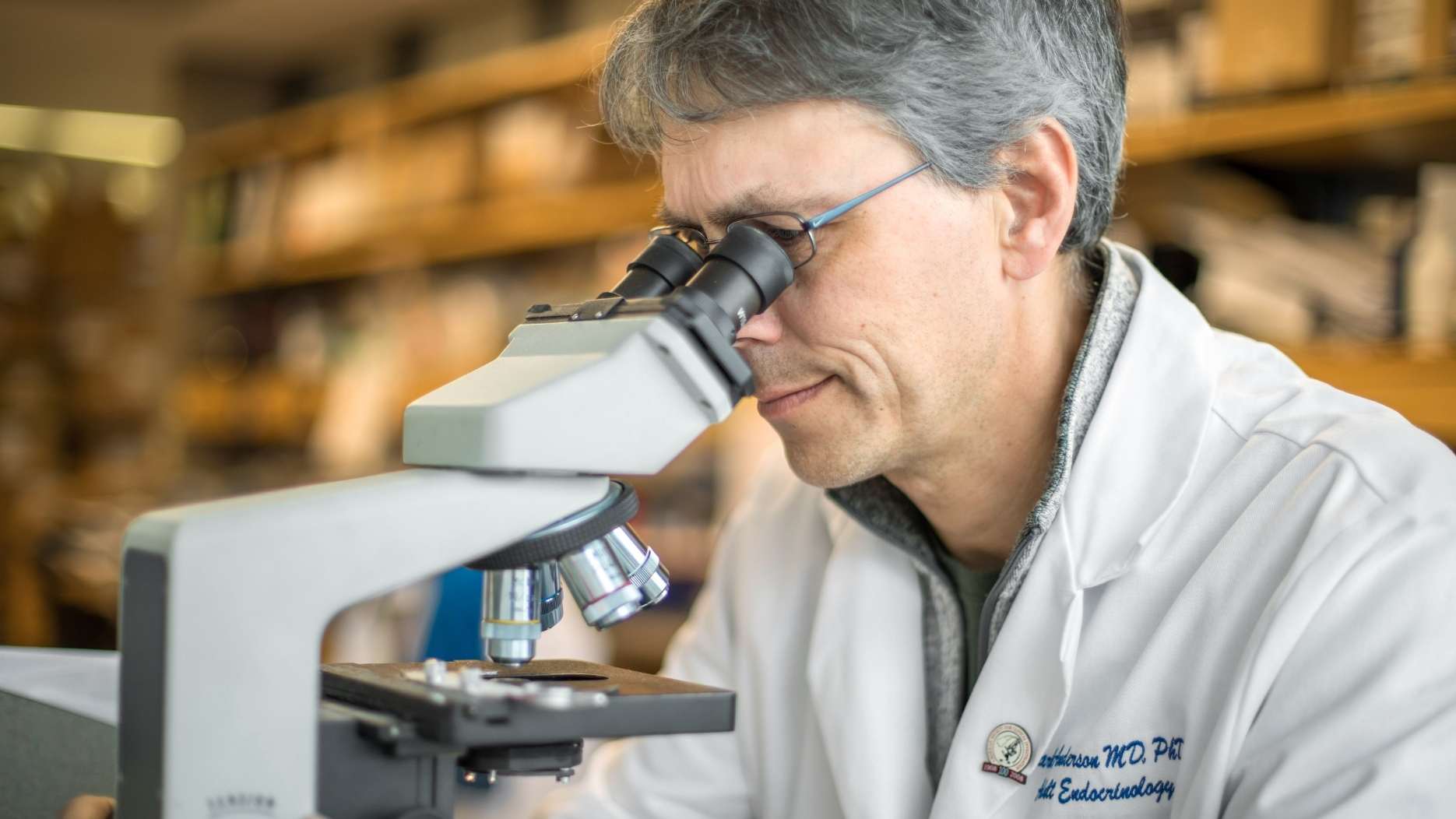
UC San Francisco scientists ushered in the era of type 1 diabetes prevention, nearly 40 years ago. Now, they’re working to solve the biggest challenges standing between patients and functional cures for the disease.
An estimated 2.1 million Americans live with type 1 diabetes, which is chronic and requires constant monitoring through pricked fingers and blood tests or continuous electronic monitoring — and comes with a higher burden of complications, like heart disease, stroke, and blindness.
Professor Mark Anderson, MD, PhD, is the director of the UCSF Diabetes Center. He is also the A.W. and Mary Margaret Clausen Distinguished Professor in Metabolism and Endocrinology, and the Robert B. Friend and Michelle M. Friend Endowed Chair in Diabetes Research. This year, the center marks a quarter century of science aimed at saving lives and revolutionizing what the world thought possible in diabetes prevention and care. Anderson tells us what the future may hold, including a functional cure.
What is type 1 diabetes?
In type 1 diabetes, the pancreas loses its ability to produce insulin — which allows our cells to use sugar for energy. As a result, sugar builds up in the bloodstream, causing many of diabetes’s symptoms and complications.
People who develop type 1 diabetes have to take insulin injections for the rest of their lives. In the U.S., type 1 diabetes accounts for roughly 8–10% of all diabetes cases, as compared with type 2 diabetes, which has its roots in family genetics and individual lifestyle.
What causes type 1 diabetes?
Type 1 diabetes is an autoimmune disease: Your immune system turns against you, attacking insulin-producing cells in your pancreas.
You said there’s an FDA-approved treatment that UCSF helped develop?
Yes, the Food and Drug Administration approved the first immune therapy, Teplizumab, to delay the onset of type 1 diabetes in 2022.
In the 1980s, UCSF discovered that people with type 1 diabetes — or who were likely to develop the disease — had a specific type of malfunctioning antibody in their blood. This antibody, they found, could be used as a biomarker, or a measurable sign to diagnose whether a person had the condition or was at risk of developing it later.
In the early 2000s, UCSF formed the Diabetes Center and recruited renowned immunologist and Professor Emeritus Jeffrey Bluestone, PhD. His team learned that the immune system’s T cells were key to orchestrating the autoimmune attack in type 1 diabetes. Jeff and the center played an integral role in developing an antibody drug that could target specific molecules on T cells’ surfaces, at least partly shutting T cells down.
Ultimately, we were able to give the antibody drug (Teplizumab), to people who we knew were on their way to developing type 1 diabetes because they had antibody biomarkers in their blood. The antibody therapy worked and delayed the onset of type 1 diabetes by years in many patients, which led to the 2022 approval.
Watch the video: See how UCSF scientists are tackling hurdles to a functional cure for type 1 diabetes. From pioneering the first biomarkers to developing the first FDA-approved immunotherapy, UCSF continues to lead the way.
Take us behind the headlines: What’s happening in cellular therapy and diabetes?
UCSF is deeply involved in cellular therapy research for type 1 diabetes, and it’s a rapidly emerging field. Today, we’re one of the few medical centers outfitted to perform islet transplantation, for example, which is used in cases of severe, hard-to-control type 1 diabetes. Surgery Professor Andrew Posselt, MD, PhD, and colleagues took this technology one step further. As part of a clinical trial, they transplanted insulin-producing cells, grown in a lab from stem cells taken from a donor, into another person.
Participants are able to get off insulin, which is great. But they have to take lifelong medication to suppress their immune system and prevent their body from rejecting the cell transplants. Unfortunately, these immunosuppressing medications put them at a much greater risk of life-threatening infections and certain kinds of cancers. This risk makes the approach impractical for most patients.
What’s new and exciting is how UCSF researchers are working to address the need for immune suppression with a specialized type of T cells, called regulatory T cells, or Tregs. Tregs act like the immune system’s “police” and can stop harmful immune responses. For example, they can prevent the immune system from attacking the body’s insulin-producing cells in diseases like type 1 diabetes or from rejecting transplanted cells.
Professor of Surgery Qizhi Tang, PhD and her team in the UCSF Diabetes Center are working on new ways to grow Tregs and reprogram them to do just that alongside associate professor at the Center Audrey Parent, PhD, who is an expert in islet cells — or the clusters of cells responsible for producing insulin.
This approach is thrilling because it is specific in nature: The Tregs will help shut down that unwanted immune response against insulin-producing cells but leave the rest of the immune system intact.
What could a functional cure look like for type 1 diabetes, and how close are we?
It’s an exciting time. We’re making progress on all fronts, but — as we can see with cell therapy — the challenge is getting to the end game: stopping the unwanted autoimmune response or immune rejection response without blocking general immunity.
Where the field is heading is toward finding ways to tweak the immune system to achieve what we often call the “holy grail:” Antigen-specific tolerance — that is, the ability to shut off only the part of the immune system responsible for attacking insulin-producing, while leaving intact all the beneficial functions of the immune system, such as fighting infections and responding to cancer. The work that’s going on with Tregs and other similar approaches has opened the door for getting this into the clinic.
We are now beginning to see the early steps toward making this a reality come together.