
Can a Pathway to Residency Cure the Pediatrician Shortage?
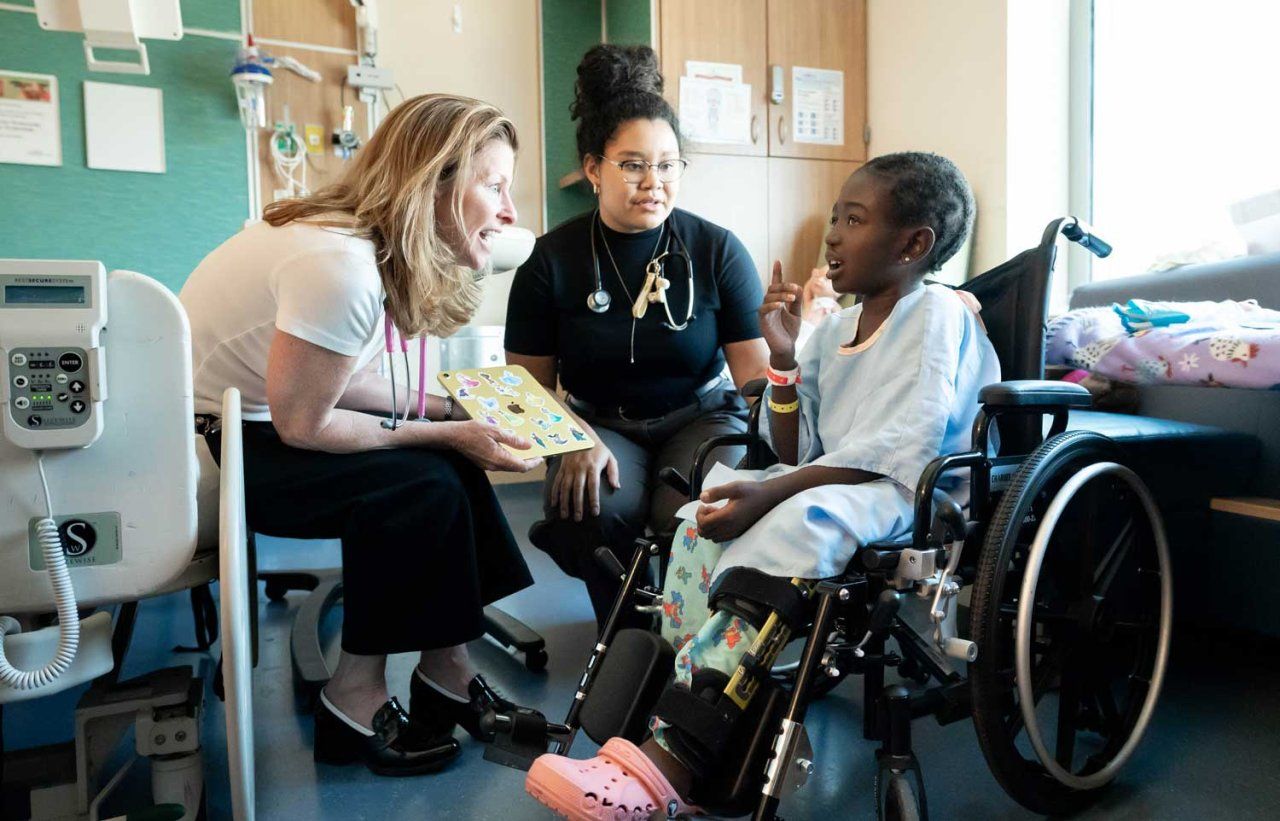
Michele Long, MD, still remembers the moment the pediatrician shortage reached her hospital.
Long, a pediatric hospitalist at UCSF Benioff Children’s Hospitals, had just finished treating a patient with an extended hospital stay and needed an urgent referral to an outpatient pediatric subspecialist. When she began looking for subspecialists, none could see her patient within six months. Scrambling, she did what most pediatricians do. She called personal contacts, hoping someone could see her patient earlier.
There are just 82 pediatricians per 100,000 children in the U.S., compared with 348 adult physicians per 100,000 adults, according to national workforce data. That’s over four times more adult physicians than pediatricians. It’s no surprise then that children often wait weeks or months for medical appointments, delaying diagnoses and treatments and contributing to poor childhood health indicators.
In fact, the U.S. ranks behind dozens of other countries in health measures for young children, including survival from birth defects, which are the second leading cause of death, killing nearly 6,000 children aged four and under annually.
A pathway to pediatrics
To address this shortage, UC San Francisco launched a new program that provides a pathway for medical school students to become pediatricians. Led by Long, the program matches students with mentors early in their medical school careers, provides individualized pediatric training opportunities, and creates a pathway into the UCSF pediatric residency program.
The Pediatric Specialized Training and Advancement to Residency Track, or Peds-START, is the only program of its kind in the West. It capitalizes on students’ interest in pediatrics when they enter medical school, providing support as they balance competing demands.
“Medical students deal with all kinds of stress — from choosing a specialty to securing a residency position and repaying school loans — all while dedicating themselves to caring for patients,” said Long. “Now, we have a program that takes away some of the barriers to training and progression and is actually producing future pediatricians who are well-trained and passionate about serving our children.”
Building on a foundation for success
Launched in January 2025, Peds-START was inspired by the success of a prior pilot program that produced almost two dozen practicing pediatricians and pediatric subspecialists.
The early pediatric training, with a pathway into UCSF Pediatric residency, is “transformative,” said Long. “Peds-START allows students to truly immerse themselves in training to be the best pediatrician, while taking away the worry and extra time that goes into applying for residency.”
Kathleen Wallace, MD, an alumna of the prior pilot program, is a practicing pediatrician in San Francisco. She said the program gave her the confidence to explore pediatrics and to train directly with patients in her community.
“The targeted mentorship and tailored education were crucial to getting me to where I am today,” said Wallace, who was inspired to pursue pediatrics by her own UCSF pediatrician, Carol Miller, MD. “As a child, I was fortunate to see myself reflected in my own pediatrician, and now I get to serve the children who reflect the communities I grew up in.”
Beyond Peds-START
It is important to remember that policy created the physician and pediatrician shortage, and policy can solve the shortage.
Janet Coffman, PhD, MPP
Helped by programs like Peds-START, California’s pediatric landscape, with 86 pediatricians and pediatric subspecialists per 100,000 children, is slightly better than the U.S. average. Experts say a lack of federal funding for pediatric medical training, federal policies that limit training spots, and lower insurance reimbursement rates for pediatric care drive the overall shortage.
To address these constraints on a larger scale, government policies are needed, said Janet Coffman, PhD, MPP, a researcher at UCSF’s Institute for Health Policy Studies.
Larger-scale solutions must accompany programs like Peds-START, Coffman said. These could include Congress directing more federal funding to pediatric care, removing residency position limits, and expanding loan-forgiveness programs for pediatricians.
For states, requests could include raising Medicaid reimbursement rates to match Medicare’s and directing the additional funding to pediatric training and care, Coffman said.
“It is important to remember that policy created the physician and pediatrician shortage, and policy can solve the shortage,” said Coffman. “The question is whether we value the health of our children and the country’s future enough to act.”
About UCSF Benioff Children’s Hospitals
UCSF Benioff Children’s Hospitals are among the nation’s leading pediatric specialty hospitals, according to U.S. News & World Report 2025-26 rankings. Their expertise covers virtually all pediatric conditions, including cancer, heart disease, neurological disorders, pulmonology, diabetes and endocrinology, as well as the care of critically ill newborns. The two campuses in San Francisco and Oakland are known for basic and clinical research, and for translating research into interventions for treating and preventing pediatric disease. They are part of UCSF Health, whose adult hospital ranks among the top medical centers nationwide and serves as the teaching hospital for the University of California, San Francisco, a national leader in biomedical research and graduate-level health/sciences education. Visit https://www.ucsfhealth.org.