

This story is part of our UCSF People series, highlighting the many dedicated individuals across the UCSF community who advance health worldwide through research, education, and clinical care in their everyday work.
Residency is where medicine leaves the textbook and comes to life. For three to four years during residency, newly graduated physicians gain hands-on experience, learn specialized skills, and manage patients. It’s a life phase unlike any other, says UC San Francisco Director of Well Being for UCSF Graduate Medical Education, Larissa Thomas, MD, MPH.
“Residents and fellows are in a unique position of being almost equally a trainee and an employee but never treated fully as either one,” says Thomas, a hospitalist who is also a professor of Medicine. “They’re working long hours, they’re not making a ton of money — although they carry a high debt burden — and they’re learning a lot, so the cognitive load is very high.”
The load comes with a cost. About a third of medical residents nationally reported burnout in 2024, according to the latest American Medical Association survey. Gender differences are stark: About 40% of women residents were burned out — a proportion more than 10 percentage points higher than that of male peers.
To support UCSF residents, Thomas and Assistant Professor of Medicine Kendra Moore, MD, created one of the country’s first formal peer support leadership programs within Graduate Medical Education.
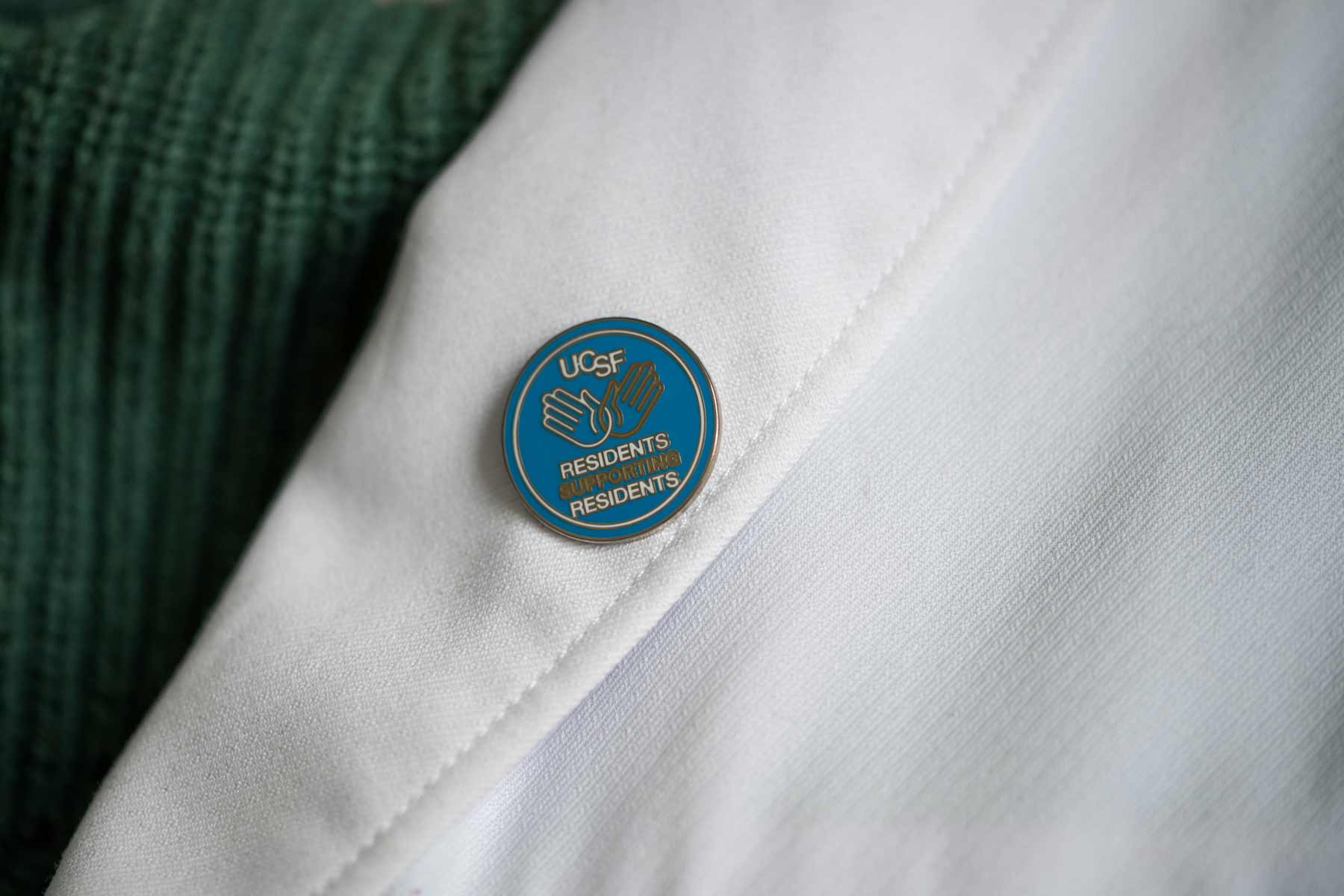
Each year, about a dozen residents become Peer Support Ambassadors, receiving training in peer support skills, including reflective listening, trauma-informed care, and how to access a range of campus resources. Supported by a small stipend, they serve as a university-wide resource for residents and fellows regardless of department and receive regular referrals to support peers after challenging cases.
Tag along to see how Thomas is equipping today’s young physicians for a career of success and service.
A small icon of an analog clock shows the time six p.m.
Catching up with our amazing Peer Support Ambassadors

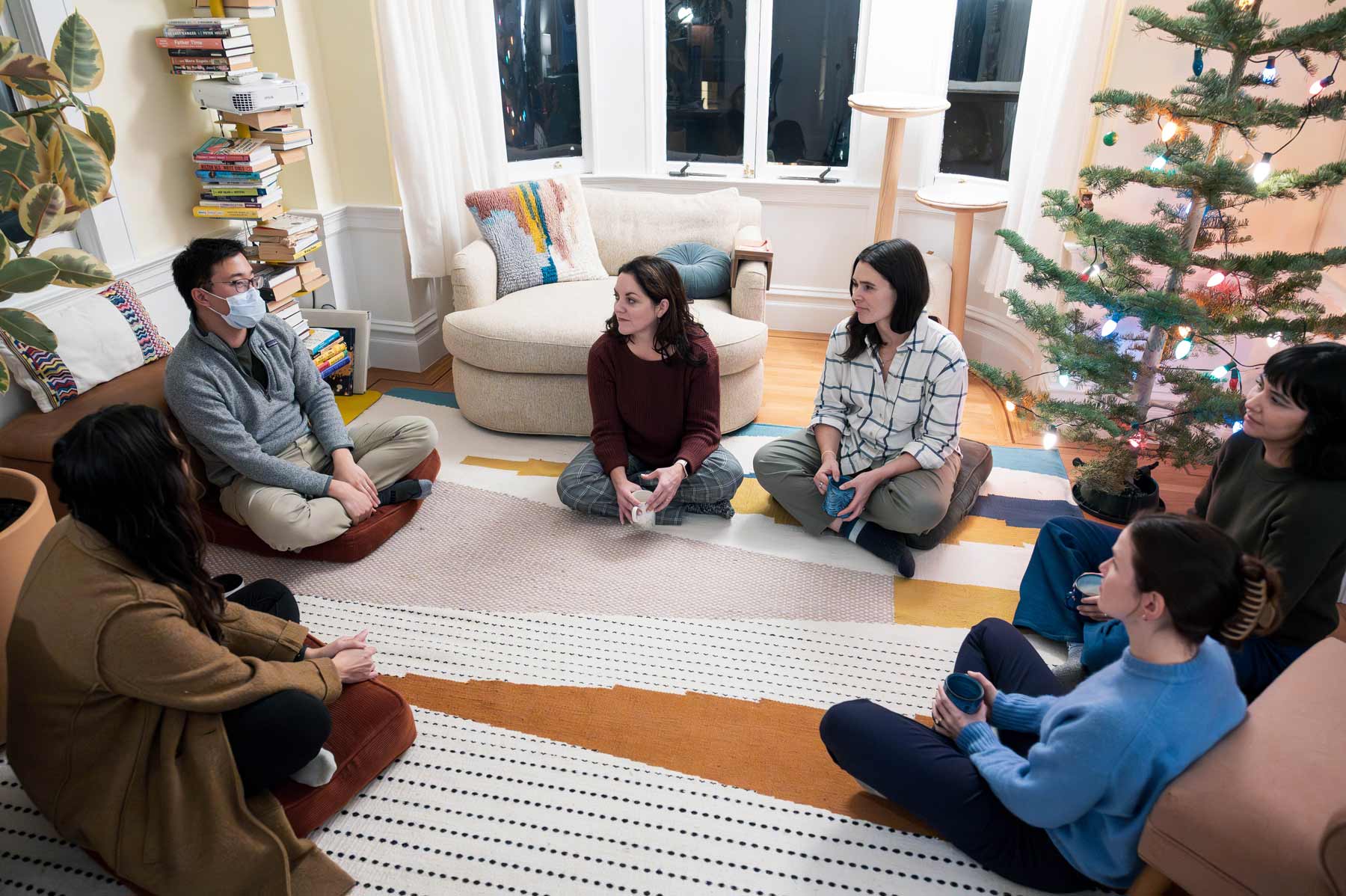
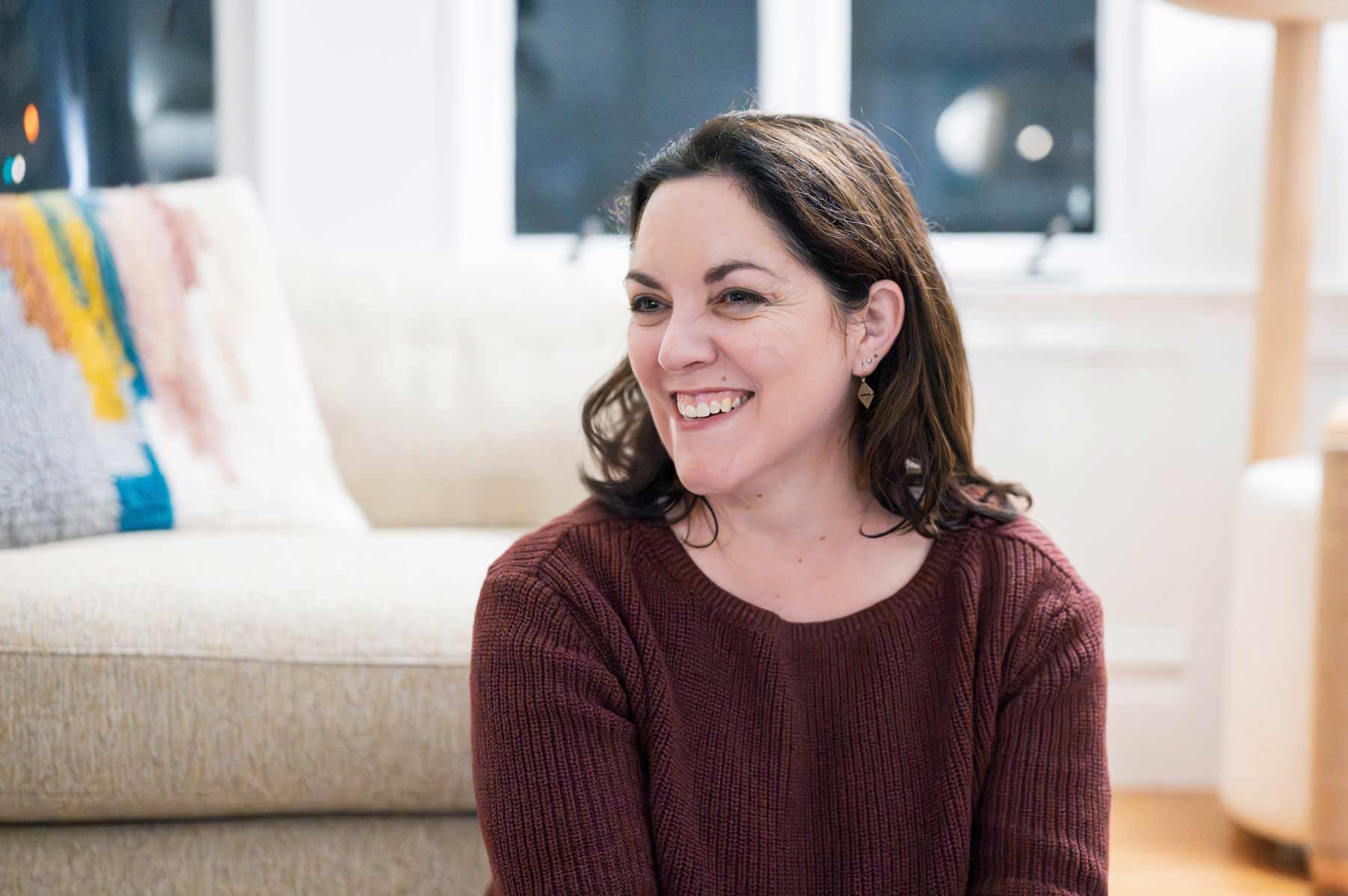
It’s December and Thomas is in San Francisco’s Mission District. Tonight, Thomas, Moore, and the ambassadors will share a meal to celebrate and reflect on the year.
UCSF residents with a Peer Support Ambassador in their department are more likely than those who don’t to know how to access support, early program data shows. Ambassadors say the training has helped them better support peers—and, with the added listening skills, even improve their connection with patients.
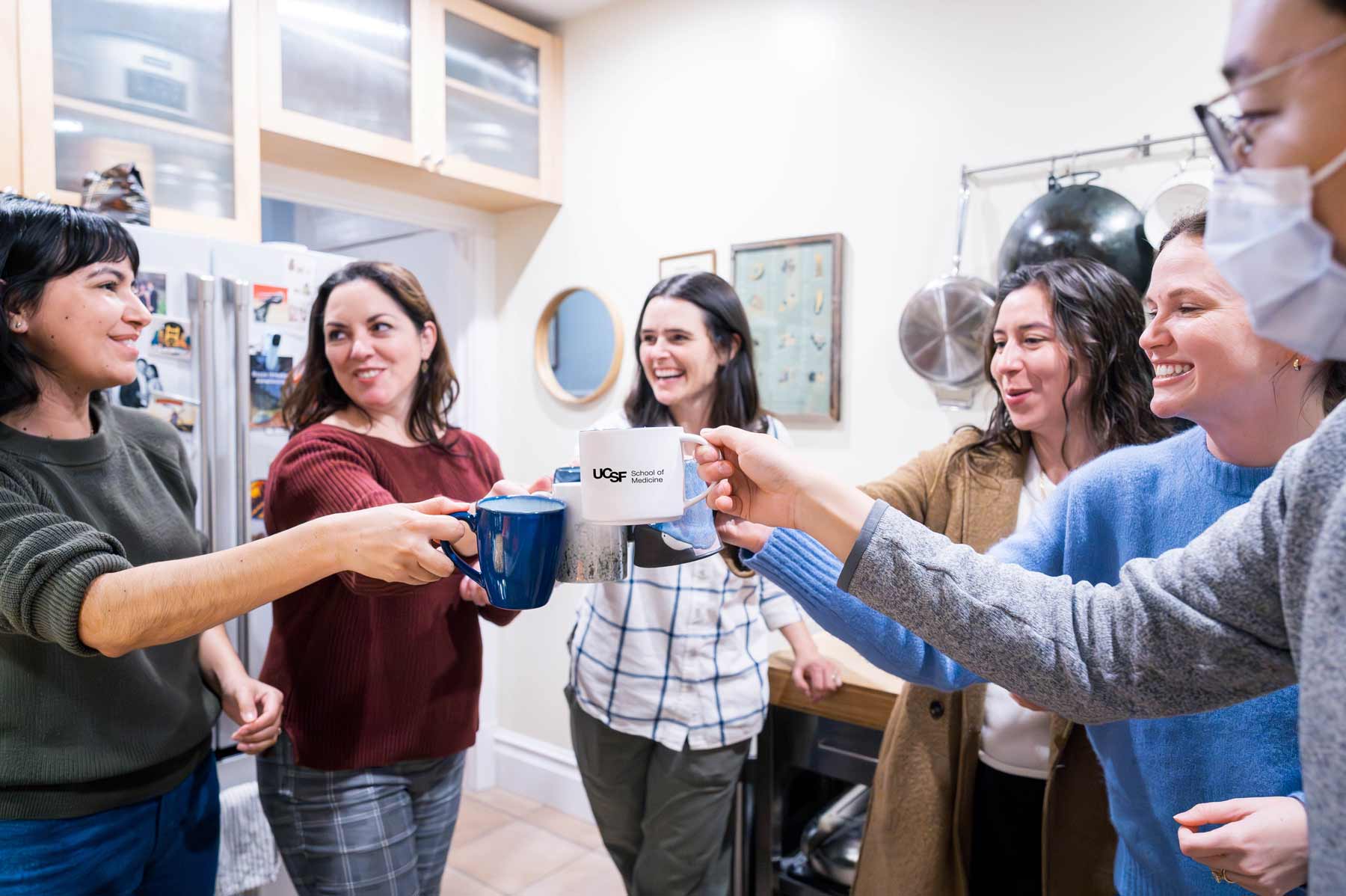
Thomas started her UCSF journey more than a decade ago as a resident. After experiencing burnout herself, she noticed prevention efforts focused on the individual rather than the systems: “I realized there was a lot of good evidence for what causes burnout, but medicine hadn’t developed much in the way of solutions.”
By her third year, she had already developed sessions in which residents could come together to process their experiences. Today, this work has become her research focus.
“I truly believe that people — when they’re supported — can come out of residency a better version of themselves.”
Care is a team effort – today and every day
A small icon of an analog clock shows the time nine forty-five a.m.

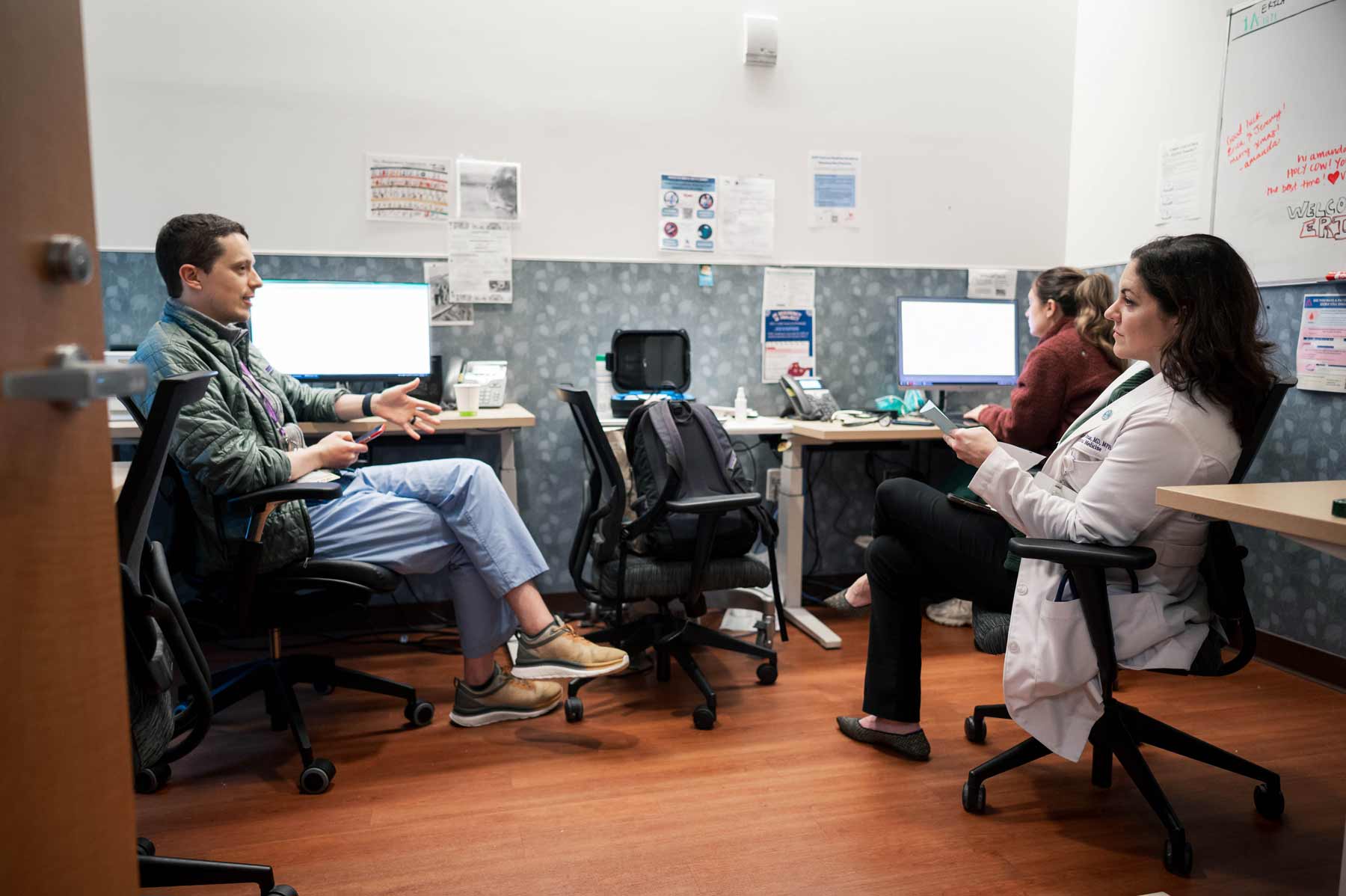
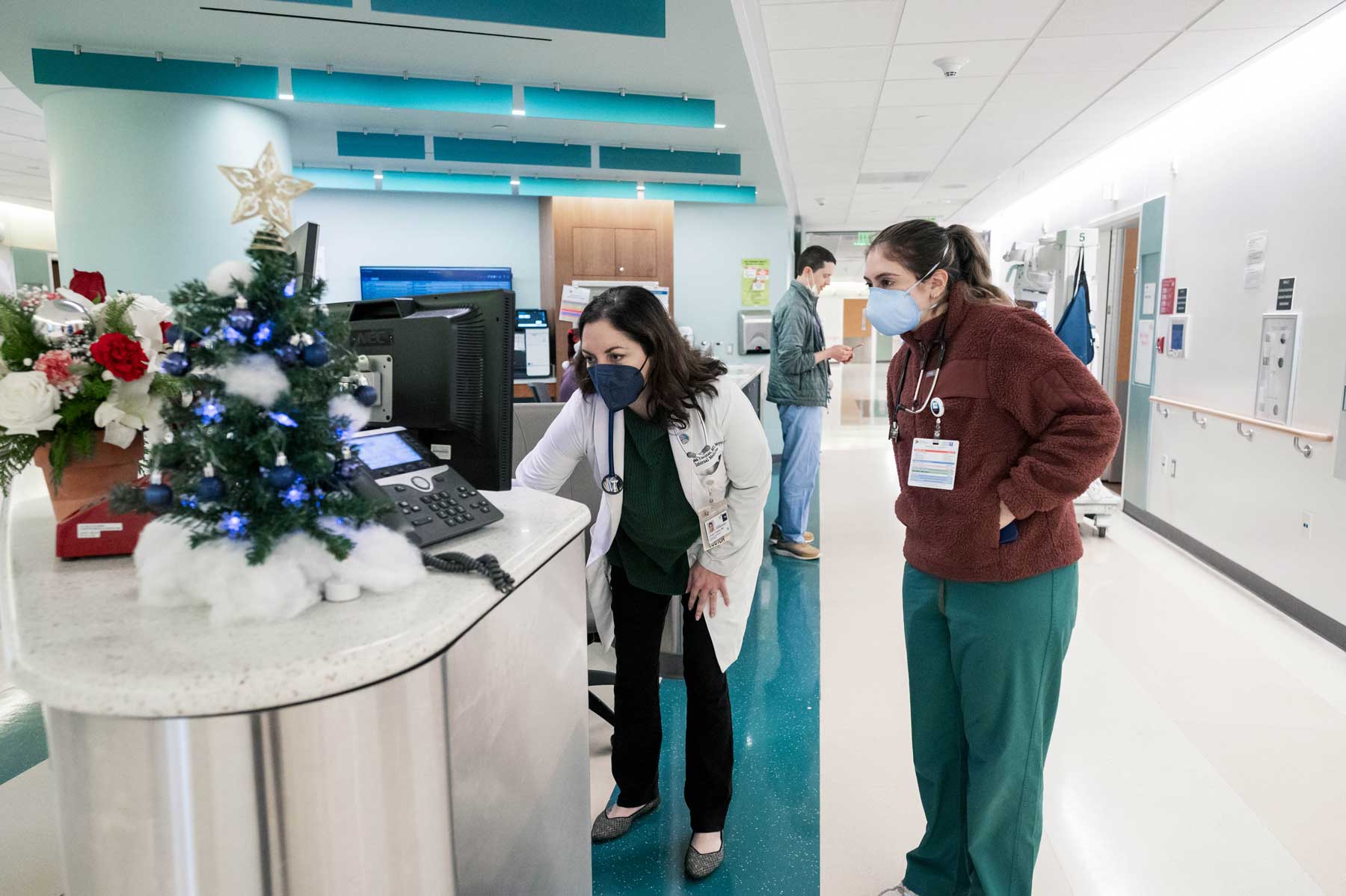
Days later, it’s Christmas. After celebrating with family, Thomas heads to Priscilla Chan and Mark Zuckerberg San Francisco General Hospital and Trauma Center (ZSFG), where she cares for patients and teaches residents and medical students. Today, Thomas begins with morning rounds with internal medicine residents Jeremy Bancroft Brown, MD, PhD, and Erica Ruiz, MD.
“I came to UCSF as a resident because I wanted to work at ZSFG,” says Thomas, explaining the hospital’s unique draw of social medicine and justice. “I love meeting patients where they are and working to make sure that the community knows we’re a hospital that cares about them — regardless of what happens before or after hospitalization.”
Thomas is one of the more than 2,000 UCSF physicians and staff who provide care at ZSFG, San Francisco county’s only provider of trauma and psychiatric emergency services. The hospital provides care regardless of ability to pay. UCSF provides more than a quarter of its patient services to Medicaid and Medi-Cal patients.
The trio begins by reviewing the charts of patients who were newly admitted overnight, then checks in on all the patients under their care.
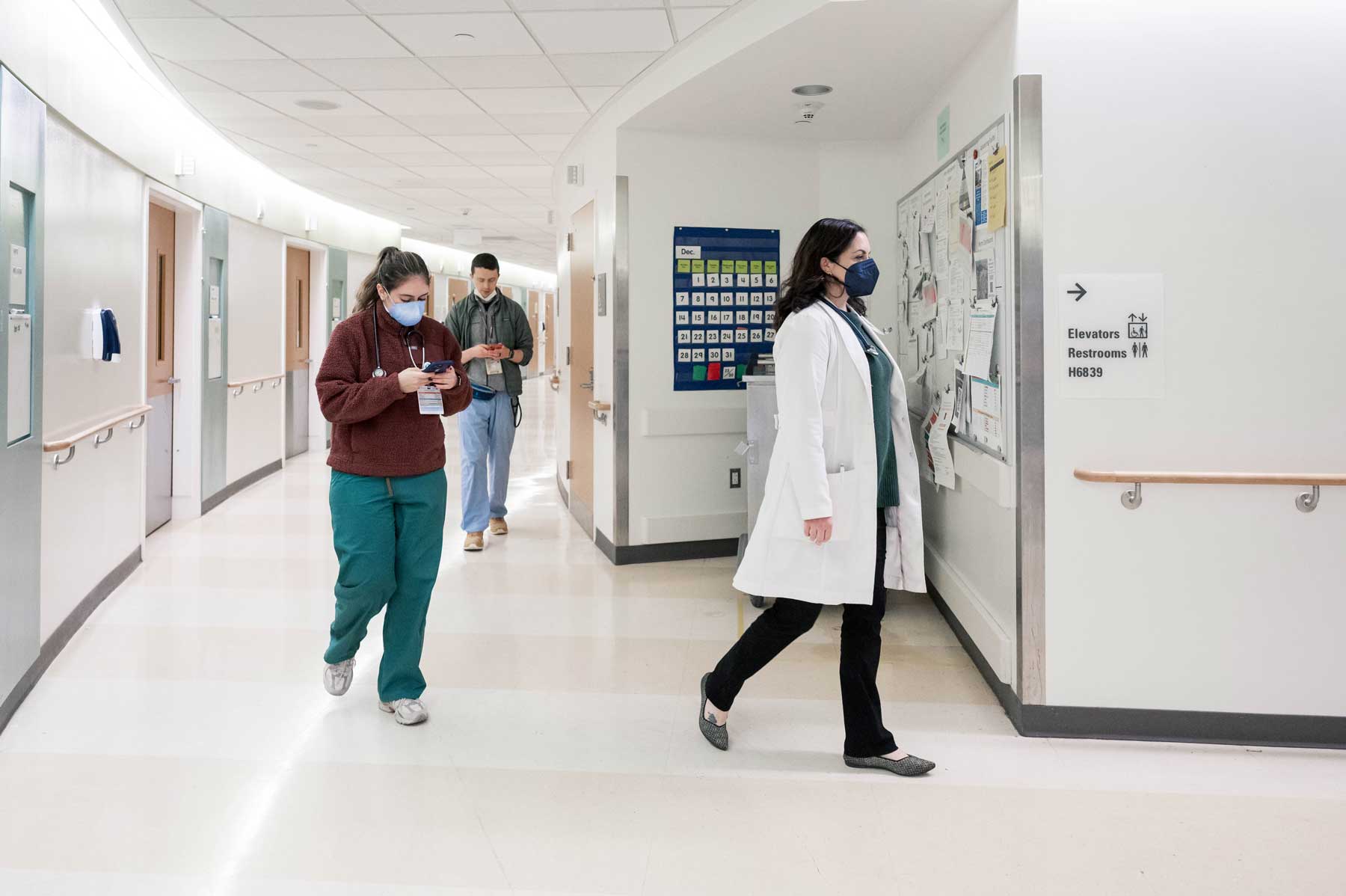
Residents, she says, will develop most of the care plans— with Thomas as support. As part of rounds most days, the team usually meets with a multidisciplinary team, including social workers, physical therapists, and patient care coordinators, to discuss each patient.
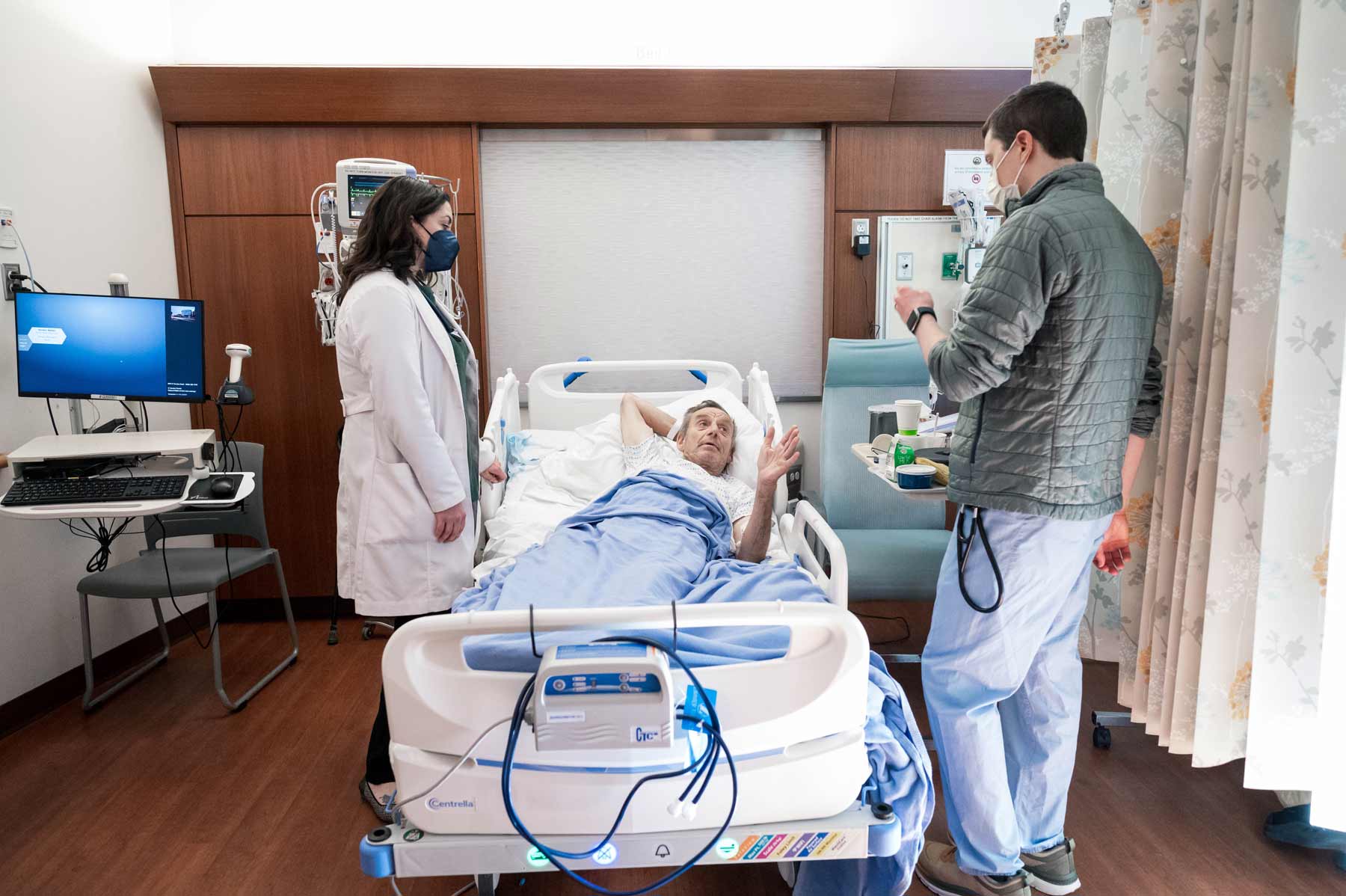
Later in the afternoon, Thomas typically teaches residents about clinical topics highlighting common needs at ZSFG, like chronic wound care, that aren’t extensively taught in medical school.
“The residents keep you on your toes,” she says, laughing. “They ask so many great questions, so you really have to make sure you’re up to date on current knowledge.”
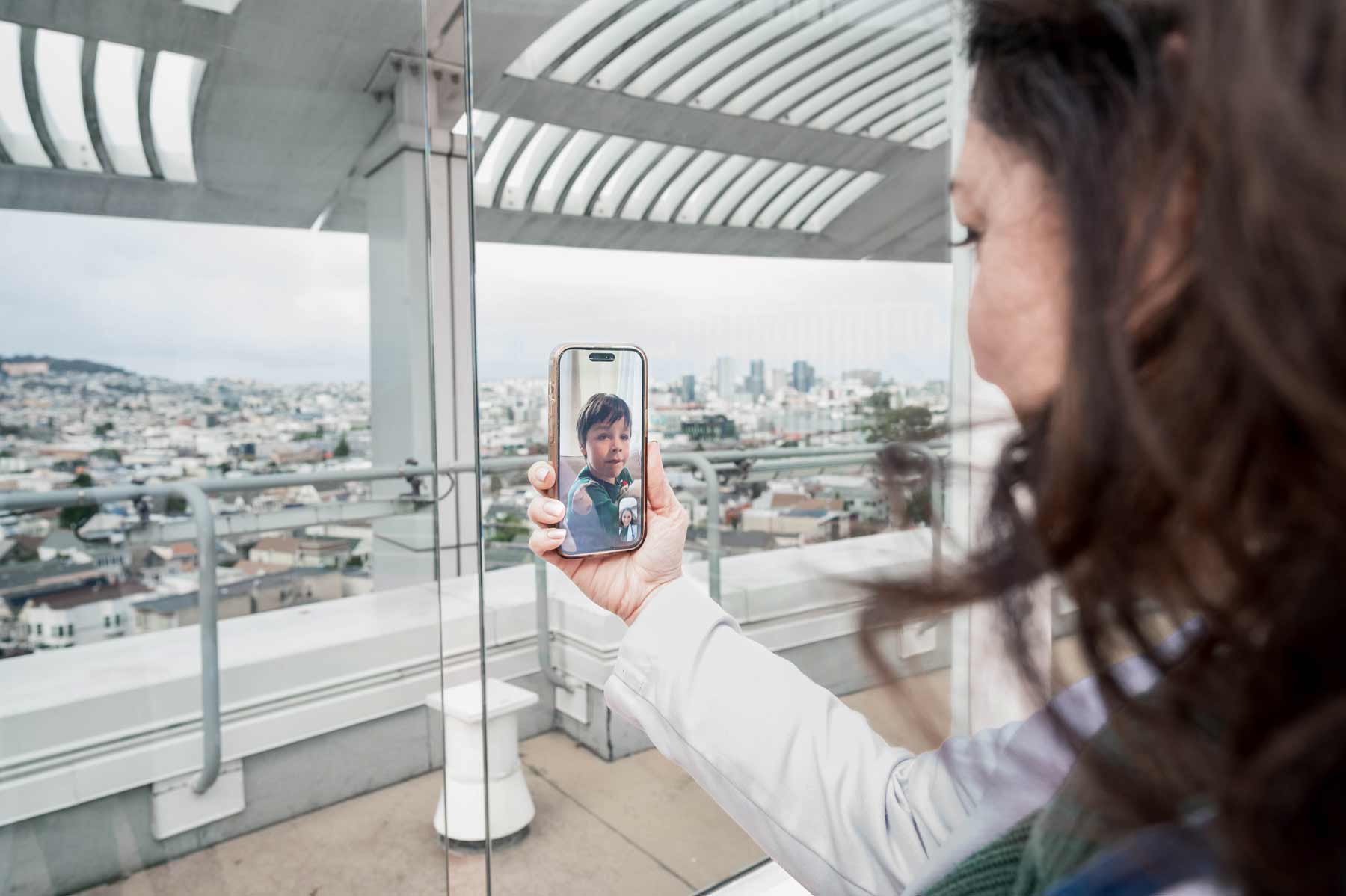
Today, however, the team has something else in store. But first, Thomas grabs a quiet moment on the hospital’s rooftop garden to call her 6-year-old son at home.
Checking in on the home front
A small icon of an analog clock shows the time eleven fifty-three a.m.

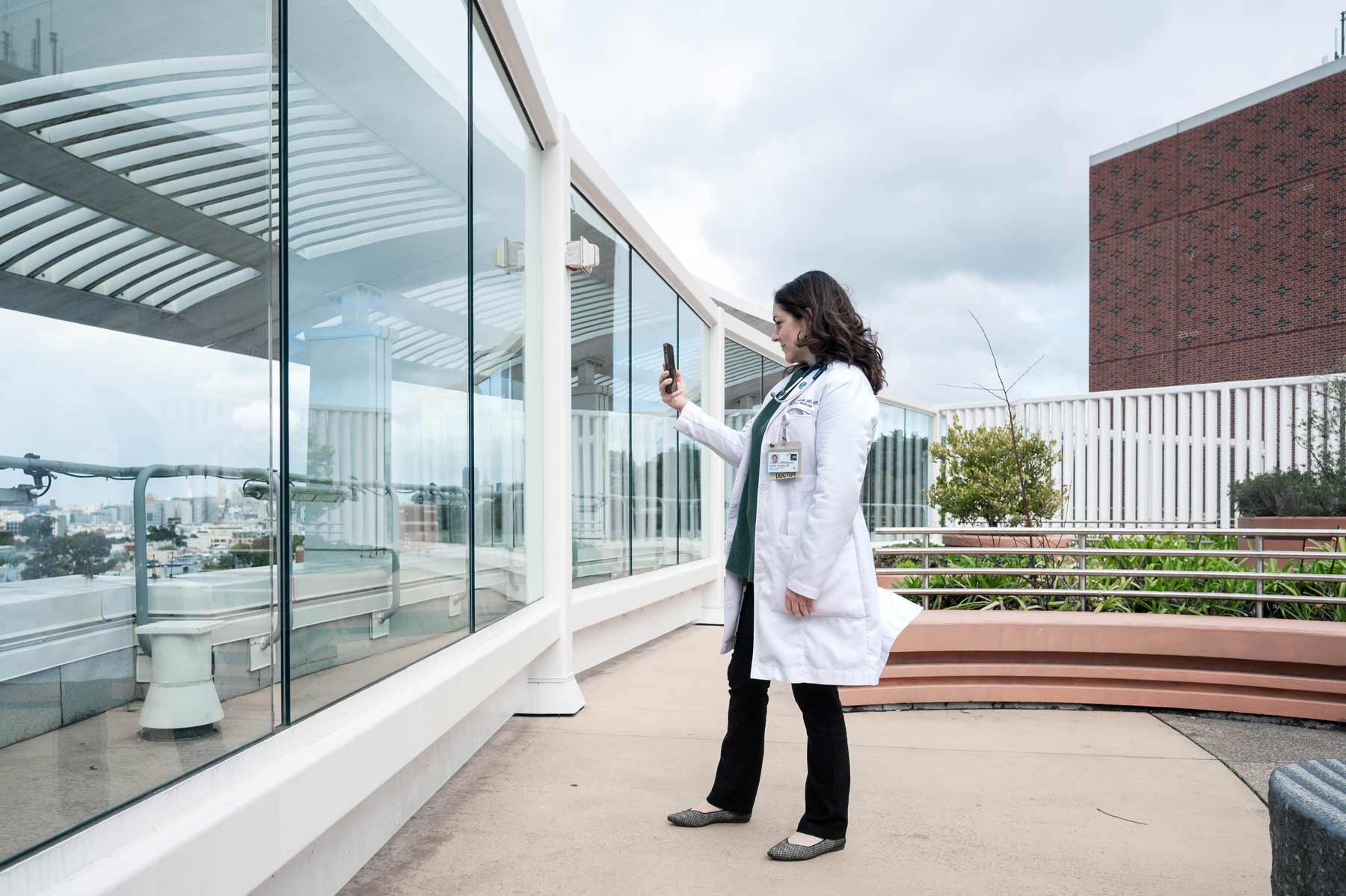
Thomas navigated a long and challenging journey to become a parent and has been open about the physical, emotional and financial toll that can come with infertility. The gift of her son inspired her to ensure every University of California resident or fellow can build a family.
“Residency and fellowship training coincide with the time when people are planning families,” she says. “We know that women doctors have higher infertility rates than the average population, even when controlling for age, so delaying family building can have big implications.”
Thanks to advocacy by Thomas and others, the University of California now offers residents throughout its system generous family-building benefits covering everything from fertility treatments to surrogacy and even adoption. She’s also advocated for expanded mental health benefits.
“People don’t always realize it, but there are a lot of us in graduate medical education who are working behind the scenes not only at UCSF but nationally to improve the residency and fellowship experience.”
A small icon of an analog clock shows the time twelve forty-six p.m.
Our people are the heart of “The General”

On Christmas Day, Thomas, Bancroft Brown, and Ruiz take a small break for a ZSFG holiday tradition — Stone Soup.
Organized by Vice-Dean for the UCSF School of Medicine at ZSFG Jeffrey Critchfield, MD, the tradition invites everyone working on Christmas Day in the ZSFG Internal Medicine Department to bring a single ingredient to add to a soup.
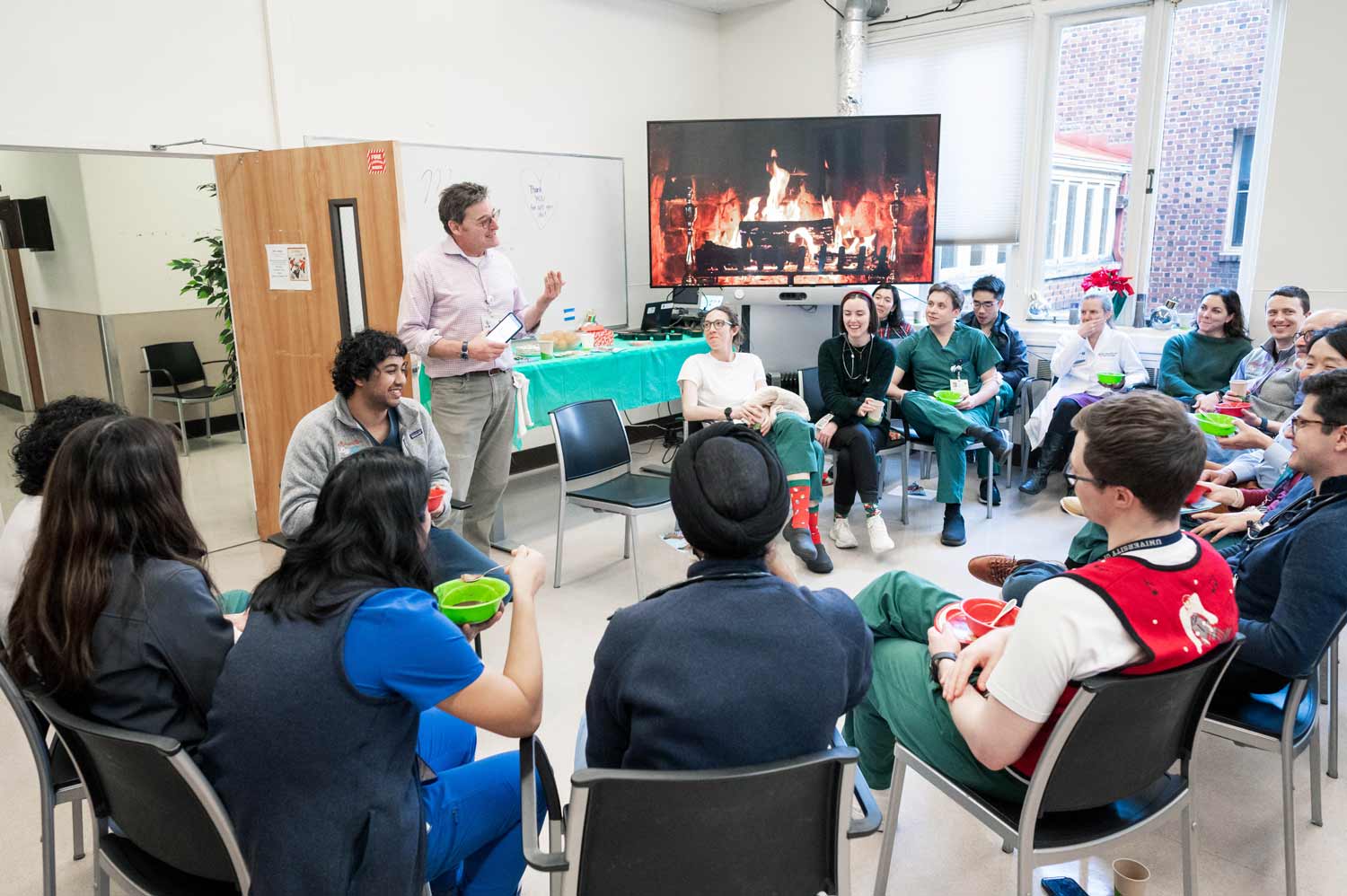
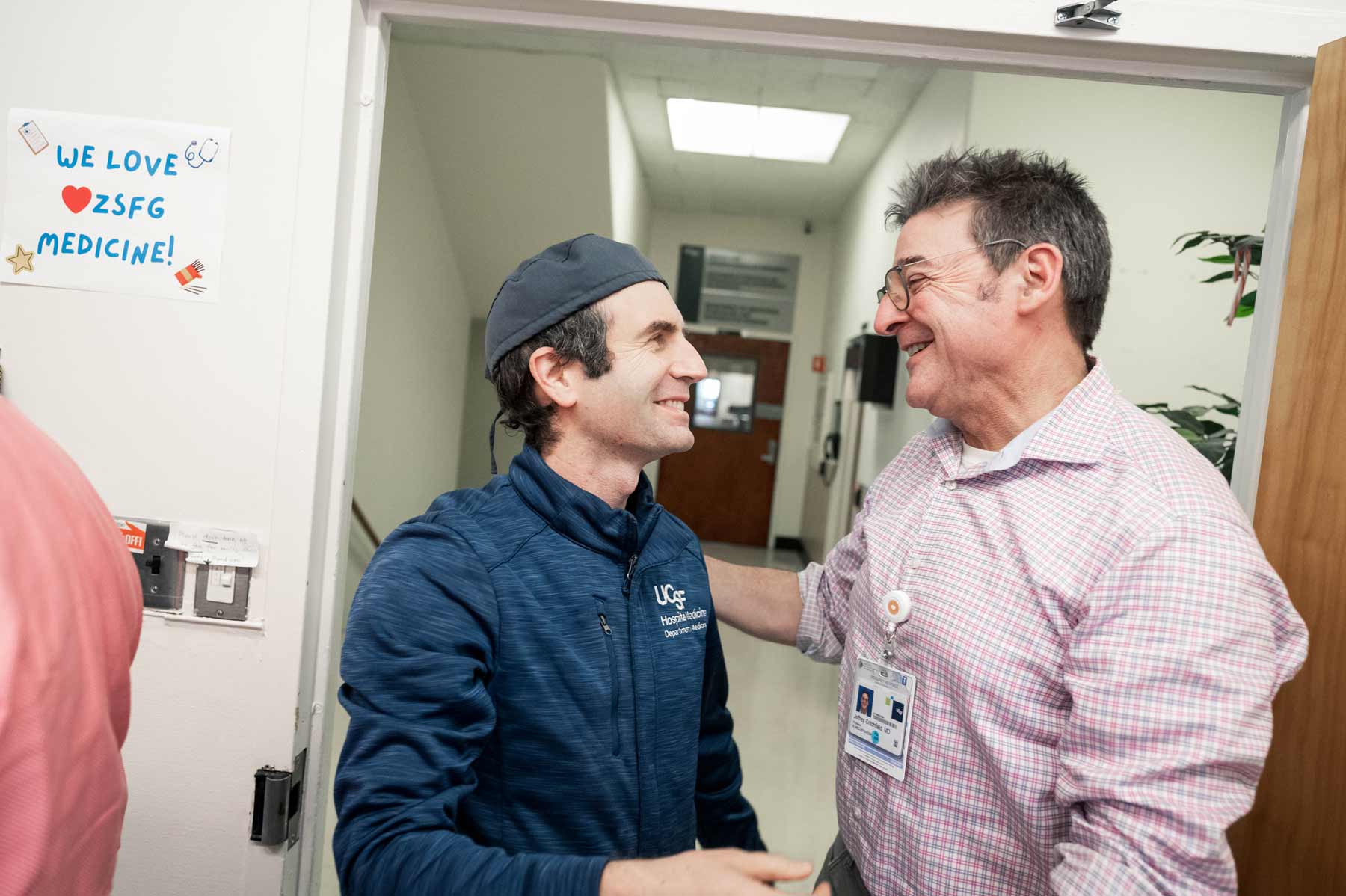
The ritual takes its name from the fable of a hungry traveler who persuades villagers to contribute a small morsel of food to his single stone, which is then boiled into a large pot of soup for all. The story teaches the value of sharing and community.
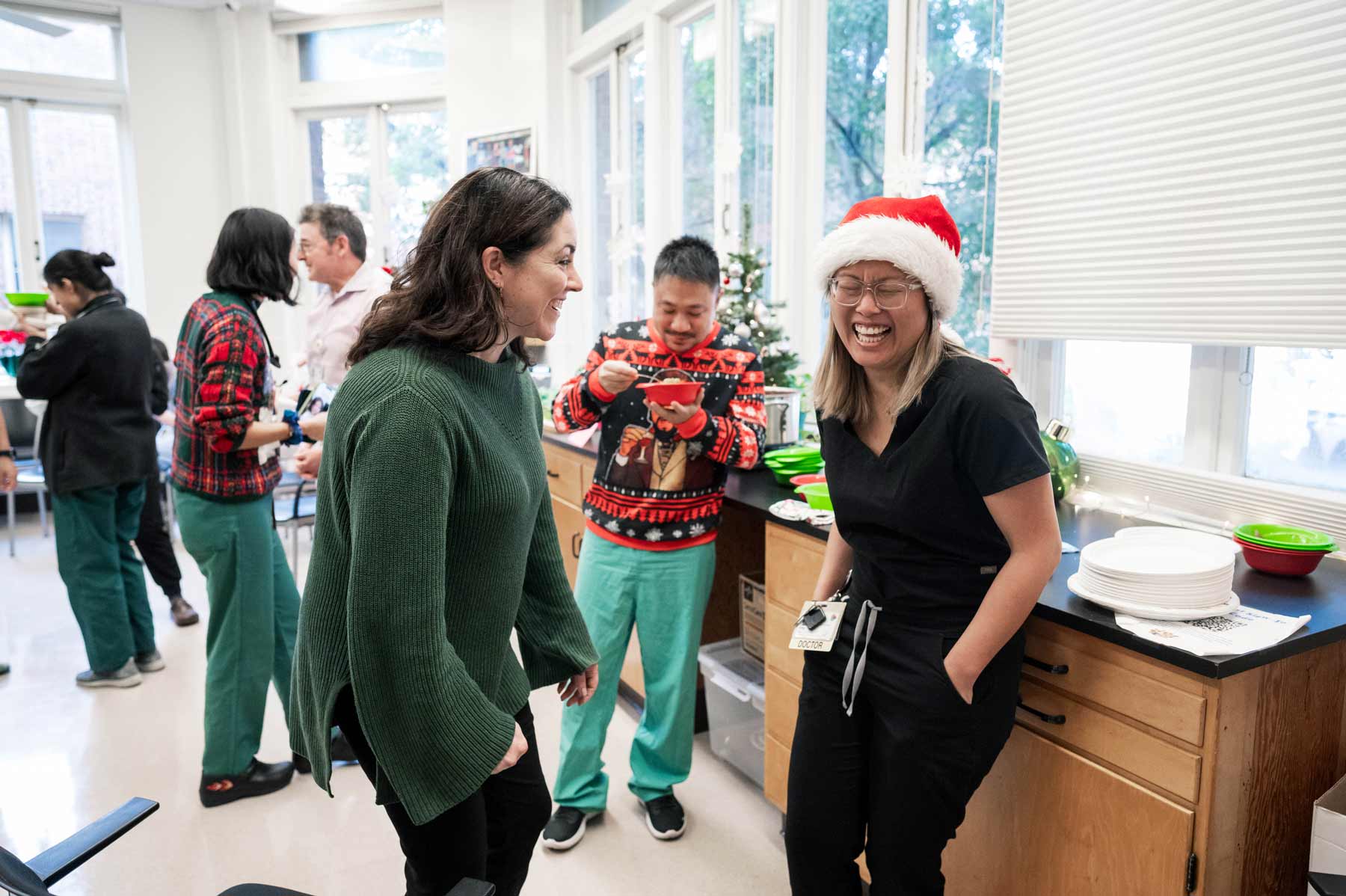
“Our physicians at ZSFG are driven by a strong sense of mission: We choose to be here with like-minded people who want to work together in this mission-driven way,” Thomas says. “That sense of community can help protect against burnout.”
That mission to increase access to health care is what brought Thomas to UCSF — and what awes her about UCSF residents today.
“In addition to providing fantastic clinical care, they’re just as passionate about social justice and health equity and their generation in medicine now has it more integrated into their approach than mine did,” she says. “Our residents truly care about our patients and about making the world a better place for them — and that’s what really inspires me about them every day.”