UCSF to Launch National Center of Excellence for Eating Disorders
UCSF is launching a national Center of Excellence for Eating Disorders that provides training and resources to providers, supported by a five-year grant from SAMHSA.
University of California San Francisco
Give to UCSFUCSF is launching a national Center of Excellence for Eating Disorders that provides training and resources to providers, supported by a five-year grant from SAMHSA.
The upsurge in Parkinson's cases has been described as reaching pandemic levels. Caroline Tanner, MD, PhD, discusses her research, which explains why cases are rising, and what we can do to reduce our risk or slow progression.
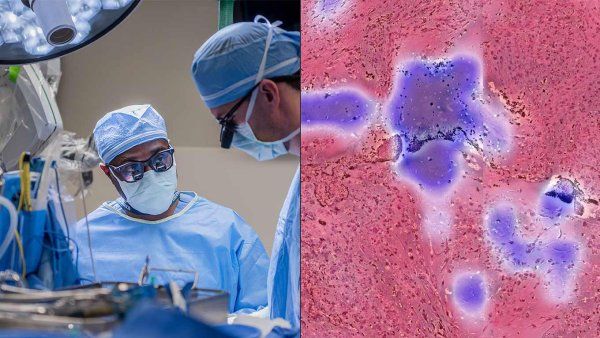
MRIs are among the most accurate imaging tests used to diagnose brain tumors, and MRI-based monitoring of tumors guides critical treatment decisions. The clinical standard for measuring tumors
UCSF Medical Center ties as No. 1 hospital in California and ranks best in the state for cancer, geriatrics, neurology and neurosurgery, pulmonology, rheumatology, and urology, according to U.S. News & World Report.
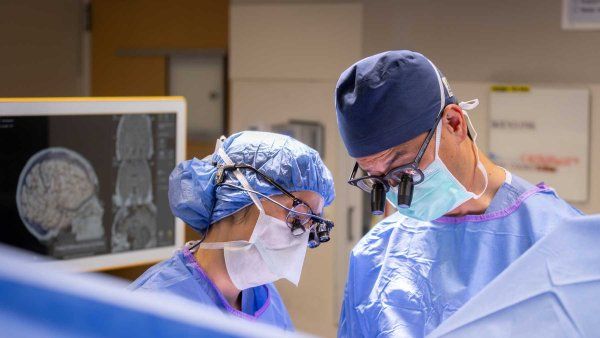
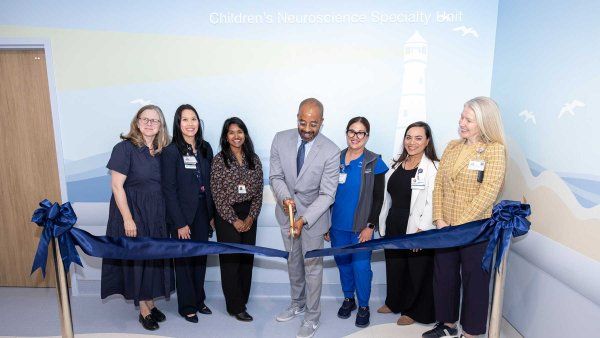
UCSF Benioff Children’s Hospital San Francisco is opening a dedicated 8-bed unit for pediatric neurological care, the first inpatient expansion since the Mission Bay Hospital opened in 2015.
Saxitoxin, a neurotoxin released in algal blooms, has killed many people on the West Coast who've gathered shellfish that were exposed to it. The poison has also been developed as a chemical weapon. There is no antidote, yet — but it does exist.
UCSF Health today announced a $170,000 investment in start-up funding to partner with Foothill College to develop a new two-year Neurodiagnostic Technologist (NDT) program. This landmark initiative
A study will test new drugs for early disease in an effort to prevent the buildup of toxic tau tangles that lead to cognitive decline.
UCSF researchers are using tiny "mini-organs" to model disease, personalize treatment, and understand human development. They are also addressing the limitations holding the field back: giving organoids a vascular system and making organoids reproducible.
Alcohol use disorder is a major cause of disease and premature death worldwide. For people with chronic liver disease (CLD), there is no safe level of alcohol consumption. Yet many patients with this
UCSF expert Kristine Yaffe, MD, explores how targeting modifiable risk factors—like sleep and exercise—can actively protect your aging brain.
UC San Francisco researchers have developed a new form of deep brain stimulation (DBS) that adjusts in real time as a person walks, helping to improve gait and reduce falls in people with Parkinson’s
S. Andrew Josephson, MD, a master clinician and educator who has led UCSF’s top-ranked Department of Neurology since 2017, has been named the next dean for the UCSF School of Medicine and vice chancellor of medical affairs.
Ethan Winkler, who studies aneurysms, discovered a dynamic between cells in the brain's blood vessels that explains why aneurysms burst. The findings describe a "life cycle" of an aneurysm and will likely change how physicians assess the risk for rupture and opportunities for personalizing treatment.
Two decades ago, children with stroke were falling into this gap between stroke providers who didn’t treat children and child neurologists who were uncomfortable with stroke. Today, UCSF is at the forefront of pediatric stroke care and research.
About 6% of asymptomatic adults have a biomarker for Alzheimer's disease and are already showing very subtle signs of the disease that would not come to light in a standard cognitive test.
A team at UCSF developed a multitask deep learning framework that can effectively predict Alzheimer’s disease diagnosis, cognitive scores, and future cognitive decline using only baseline MRI and demographics.
In the last few years, progress has been made in the fight against Alzheimer’s disease with a class of therapies called anti-amyloid antibodies (anti-Aβ). These anti-Aβ therapies, like lecanumab
Multiple clinical trials have shown that GLP-1s are safe and effective for patients with obesity, diabetes and cardiovascular conditions. New evidence shows that the drugs may also protect against neurological diseases, like dementia, Parkinson's, and substance use disorder.
A large team of scientists, found that a single dose of psilocybin created positive changes in the brain and well-being, one hour and one month after administration.
Epilepsy physicians Jon Kleen and Eddie Chang used high-resolution technology to see how cognition is disrupted in people with epilepsy and predict when it will occur. The new view points the way to being able to fend of these disruptions.
UCSF's Cherry Leung, associate professor of community health systems with the UC San Francisco School of Nursing, researches the gut-brain axis as a potential adjunct therapy for improving adolescent mental health.
Freeze-dried human platelets could be used as a "molecular tourniquet" for brain bleeds in the minutes to hours after a traumatic brain injury, according to a UCSF team led by Shibani Pati. The scientists envision stocking ambulances and EDs with the product.
Ten UCSF graduate students presented their research in accessible, 3-minute talks at the 2026 Grad Slam event. This year’s first-place talk was by Brandon Corteau on how HER2 and HER3 can become a toxic power couple when paired together, and lead to the development of breast cancer.
UCSF research shows psychedelics like psilocybin may treat depression, Parkinson’s, and addiction, offering new hope in clinical trials.
Rajiv Sethi, MD, PhD, has been appointed chief of the UCSF Division of Orthopaedic Spine Surgery, one of the nation’s premier spine programs. He has also been named co-director of the UCSF Spine