Archive: Six UCSF Scientists Awarded NIH Grants for High-Risk, High-Reward Research
The National Institutes of Health has awarded six NIH Director’s Awards to early-career UCSF scientists – a record number for the University.
University of California San Francisco
Give to UCSFThe National Institutes of Health has awarded six NIH Director’s Awards to early-career UCSF scientists – a record number for the University.
In DNA sequencing study of TD, UCSF researchers and their collaborators have unearthed new data suggesting a potential role for disruptions in cell polarity in the development of this condition.
A $20 million gift from longtime UCSF donors Dagmar Dolby and her son, David, will establish the UCSF Dolby Family Center for Mood Disorders within the Department of Psychiatry.
UCSF researchers have shown that it’s possible to study cellular identity by pulverizing brain tissue samples, extracting their RNA in bulk and looking for signature patterns of gene activity.
As the low-carbohydrate, high-fat ketogenic, or “keto,” diet becomes more popular, scientists at UCSF are among those working to study its potential health benefits and risks.
Most studies of galactic cosmic radiation have used male mice, but new research suggests that female mice may have innate protection against this deep space hazard.
Charles Limb, professor of otolaryngology at UCSF, has been fascinated for years by how artists produce unique, emotive, and coherent pieces of music with no sheet music or practice to guide them.
The Atlantic Philanthropies announced a new cohort of Atlantic Fellows, including Atlantic Fellows for Equity in Brain Health. The new fellows will be based at The Global Brain Health Institute at Trinity College Dublin and UCSF.
For the first time, a drug derived from marijuana has been approved by the Food and Drug Administration, and it may soon offer relief to children with hard-to-treat seizures.
Insights into pitch control could pave the way for advanced brain prosthetics that could allow people who can’t speak to express themselves in a naturalistic way.
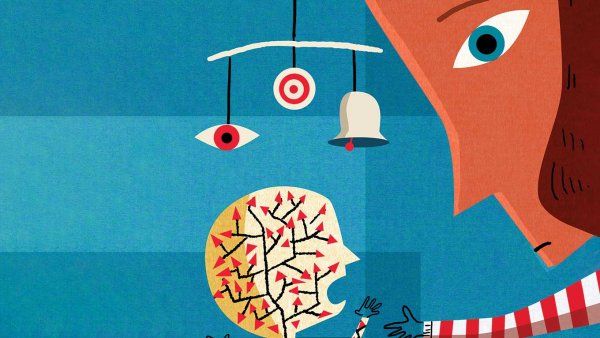
Sensory Processing Disorder, or SPD, causes some children to find everyday stimuli excruciating. Scientists are finally shedding light on what causes the disorder and what can be done about it.
UCSF scientists have improved mobility in rats that had experienced debilitating strokes by using electrical stimulation to restore a distinctive pattern of brain cell activity associated with efficient movement.
The new research reveals that the brain’s speech centers are organized more according to the physical needs of the vocal tract as it produces speech than by how the speech sounds.
In just the last few years, Zachary Knight’s research has upended textbook theories of hunger and thirst.
UCSF neuroscientist identified the first potential treatment for the brain damage caused by exposure to cosmic rays.
Matthew Leonard, who studies the neural basis of word representations, weighs in with a scientific perspective on the debate about “Laurel” versus “Yanny.”
Study led by UCSF scientists shows that brain cells react differently to opioid substances created inside the body than they do to purely synthetic opioid drugs.
Two faculty members from UCSFhave been elected to the National Academy of Sciences, one of the highest honors accorded to American scientists.
The largest analysis to date of genetic data in ALS has identified two previously unrecognized genetic risks that are significantly associated with the disease.
UCSF researchers have shown that an experimental brain boosting drug, ISRIB, acts like a molecular staple, pinning together parts of a much larger protein involved in cellular stress.