
Why This One Small Blood Cell Is Your Secret to Living the High Life
UCSF Postdoc Slam finalists tackle some of the world’s biggest problems, from Alzheimer’s disease and cancer to tuberculosis — and uncover some bloody secrets along the way.
From Machu Picchu to Mount Everest, people who live at high altitudes process sugar better and are less likely to develop diabetes. Now, a century after this discovery, science finally knows why — and it starts with a tiny, underappreciated cell you thought you knew.
“Oxygen is not distributed equally on our planet Earth,” said Yolanda Martí-Mateos, PhD, a postdoctoral scholar at UC San Francisco affiliate Gladstone Institutes. She was speaking to dozens of learners, faculty, and staff at this year’s UCSF Postdoc Slam on Sept. 22. “Right here, in San Francisco, we are very lucky. At sea level, our air is packed with oxygen, but the higher we go into the mountains, the thinner the air becomes … Even a simple task like breathing can take some work up there.”
To compensate for lower oxygen levels at high altitudes, our bodies produce more red blood cells — the cells that are responsible for ferrying oxygen throughout the body.
Still, high-altitude life isn’t all bad. Since the 1920s, scientists have noted that people and even animals at high altitudes process sugar more efficiently than their lower-altitude kin — and have lower rates of diabetes. Why, however, remained a mystery — until now.
Held during National Postdoc Appreciation Week, UCSF’s annual Postdoc Slam challenges scholars to explain their research in just three minutes. This year, 10 finalists selected from more than four dozen applicants competed for cash prizes with talks on challenges ranging from cancer and Parkinson’s disease to vaping. Winners were chosen based on their ability to quickly and clearly communicate their research in three minutes or less to a lay audience.
“Americans continue to have a great deal of confidence in scientists … and we have a responsibility to be able to communicate the incredible job that you're doing to the person on the street who might vote to support the research you’re doing,” said Nicquet Blake, PhD, vice provost and dean, Graduate Education and Postdoctoral Affairs, which is the home of postdoctoral training for UCSF’s 1,000-plus postdoctoral scholars from around the world.
Watch the winning talk: Yolanda Marti Mateos, PhD, won first place at this year’s Postdoc Slam. Watch her award-winning talk, “A Bloody Secret to Lower Sugar.”
Paving the way for new diabetes treatment?
Using low-oxygen chambers, Martí-Mateos recreated high-altitude conditions at Gladstone Investigator Isha Jain’s (PhD) lab. When mice in this faux alpine environment were given sugar, it vanished — almost instantly.
“We checked all the usual suspects — fat, muscle, liver cells — but none of them could explain this phenomenon,” she continued, shrugging deeply. “We were stumped.”
Martí-Mateos wondered if the culprit might be red blood cells. “Scientists have known about these cells for quite a bit … and almost stopped caring about them — poor cells,” she said with a bit of hyperbole.
She was right: “When we lowered red blood cells, sugar no longer disappeared; When we boosted red blood cells, blood sugar plummeted.”
Martí-Mateos found that at high altitudes, red blood cells adapt to low oxygen by pulling more sugar from the bloodstream. In research published earlier this year, she found that using a drug to mimic high altitude also reversed high blood sugar in laboratory models. The findings point to a potential new approach to treating diabetes, which affects more than 800 million people worldwide.
Shapeshifters, security breaches, and CRISPR in the clinic
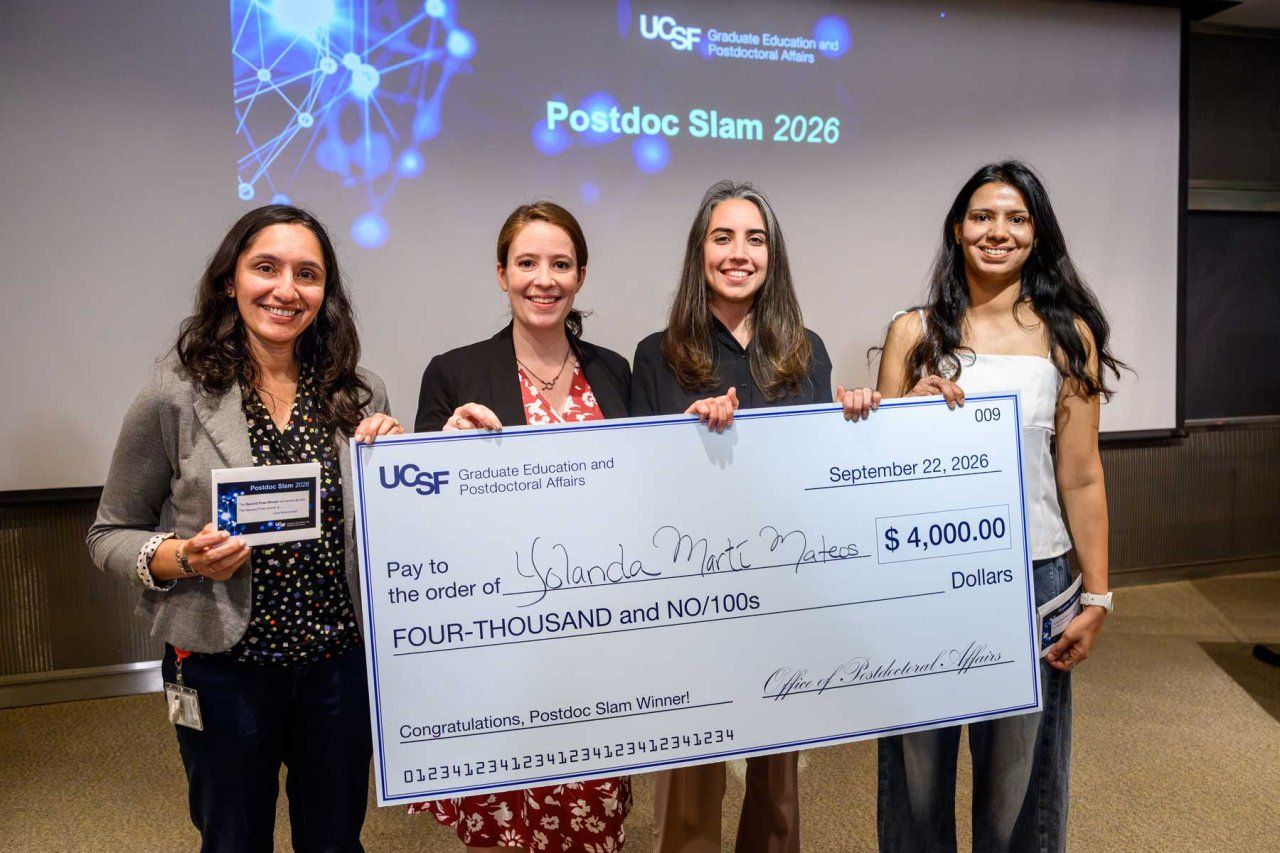
Martí-Mateo’s “bloody secret” nabbed her the $4,000 first prize. Chaitali Anand, PhD, took home second place and $2,000 for her clear, concise presentation on the origins of Alzheimer’s disease, focusing on misfolded tau proteins thought to help drive the condition. Nearly all adults with Down syndrome develop Alzheimer’s, some showing signs in the brain as early as their 20s. Anand is studying more than 100 postmortem brain samples from people with Down syndrome across the lifespan to track how tau evolves as Alzheimer’s develops. To help shape Alzheimer’s prevention, she is testing whether tau shifts through a range of shapes before settling into the dominant form seen in Alzheimer’s.
Third place went to Puspangana Singh, PhD, who took home $1,000 for her Marvel Comics-inspired talk on the p53 gene. Dubbed the “Guardian of the Genome,” p53 acts like a cellular bouncer, destroying damaged cells to protect the body. Singh found that Legionella, the bacterium behind Legionnaires’ disease, can hack p53’s security system much like cancer does. The secret may lie in a single protein, and understanding how it works could reveal new ways to influence whether damaged cells repair themselves or die — a potentially powerful tool for treating disease.
Lastly, the Gladstone Institute’s Shoshana Williams, PhD, took home the $750 People’s Choice Award for her talk tackling the world’s leading infectious disease killer, tuberculosis (TB). In South Africa, which has one of the world’s highest burdens of TB, roughly 1 in 10 people with TB who are tested for the disease never receive their results. This is because current TB tests rely on faraway centralized laboratories, making it difficult to get timely results to patients.
Williams is programming the molecular tool CRISPR to recognize TB’s unique genetic fingerprint and trigger a visible result on a simple paper test strip. Designed for use in rural clinics, the test could deliver results within an hour, helping patients start lifesaving treatment sooner while reducing deaths and the spread of TB, which kills more than one million people each year.
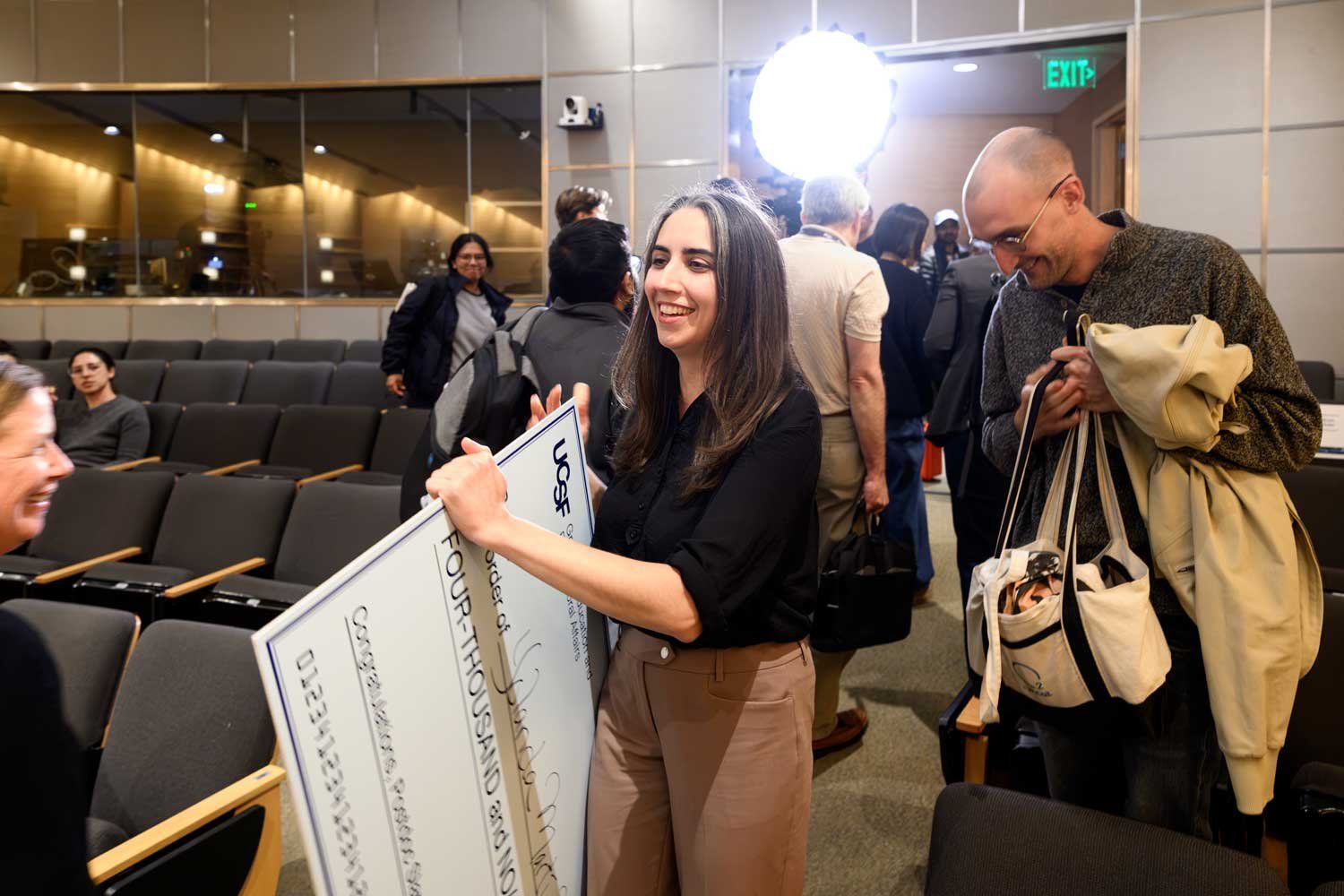
First place winner Yolanda Martí Mateos, PhD, carries her prize. Photo by Noah Berger
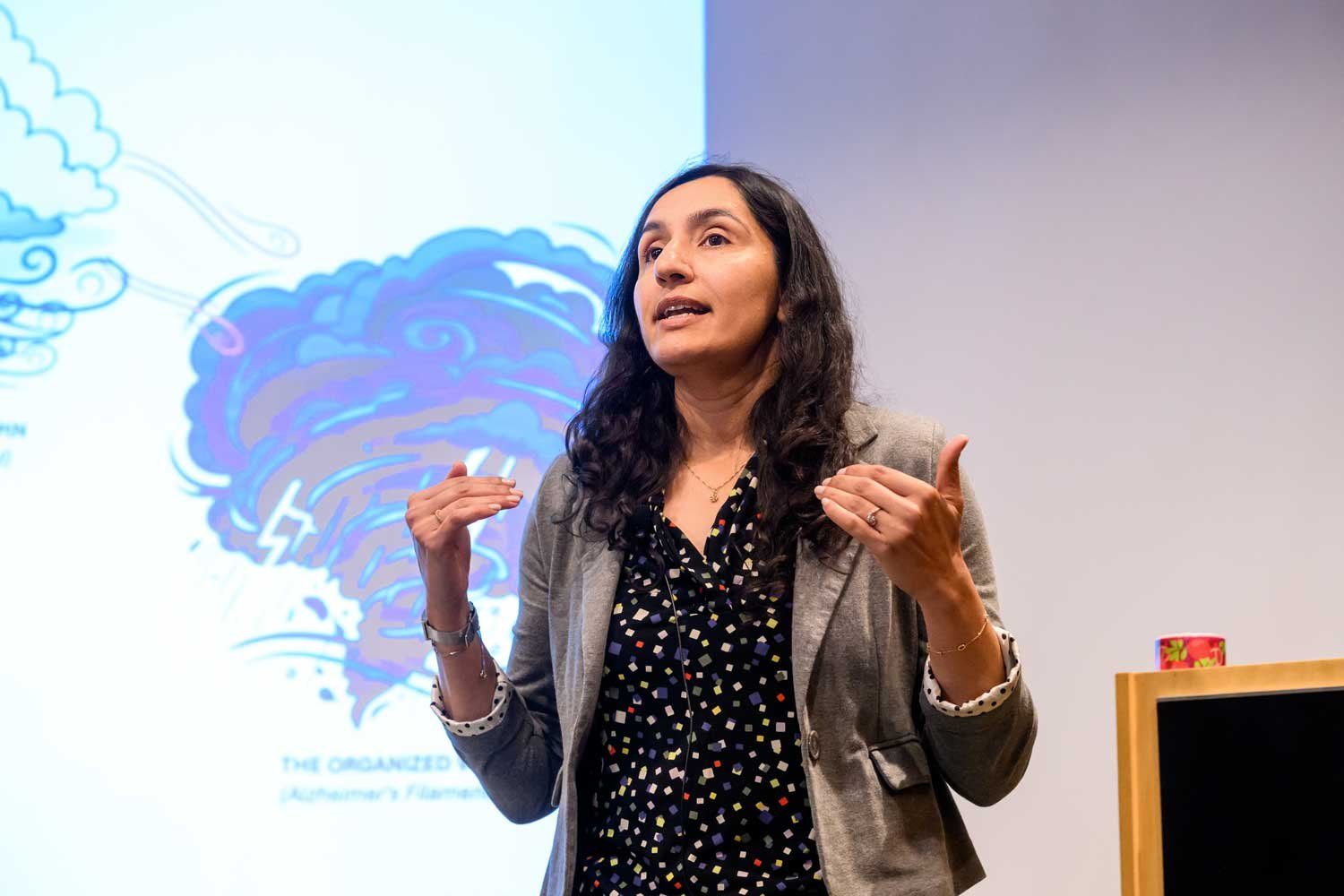
Second place winner Chaitali Anand, PhD, delivers her talk “Before the Storm: Mapping Tau in Down Syndrome to Predict Alzheimer’s Next Move.” Photo by Noah Berger
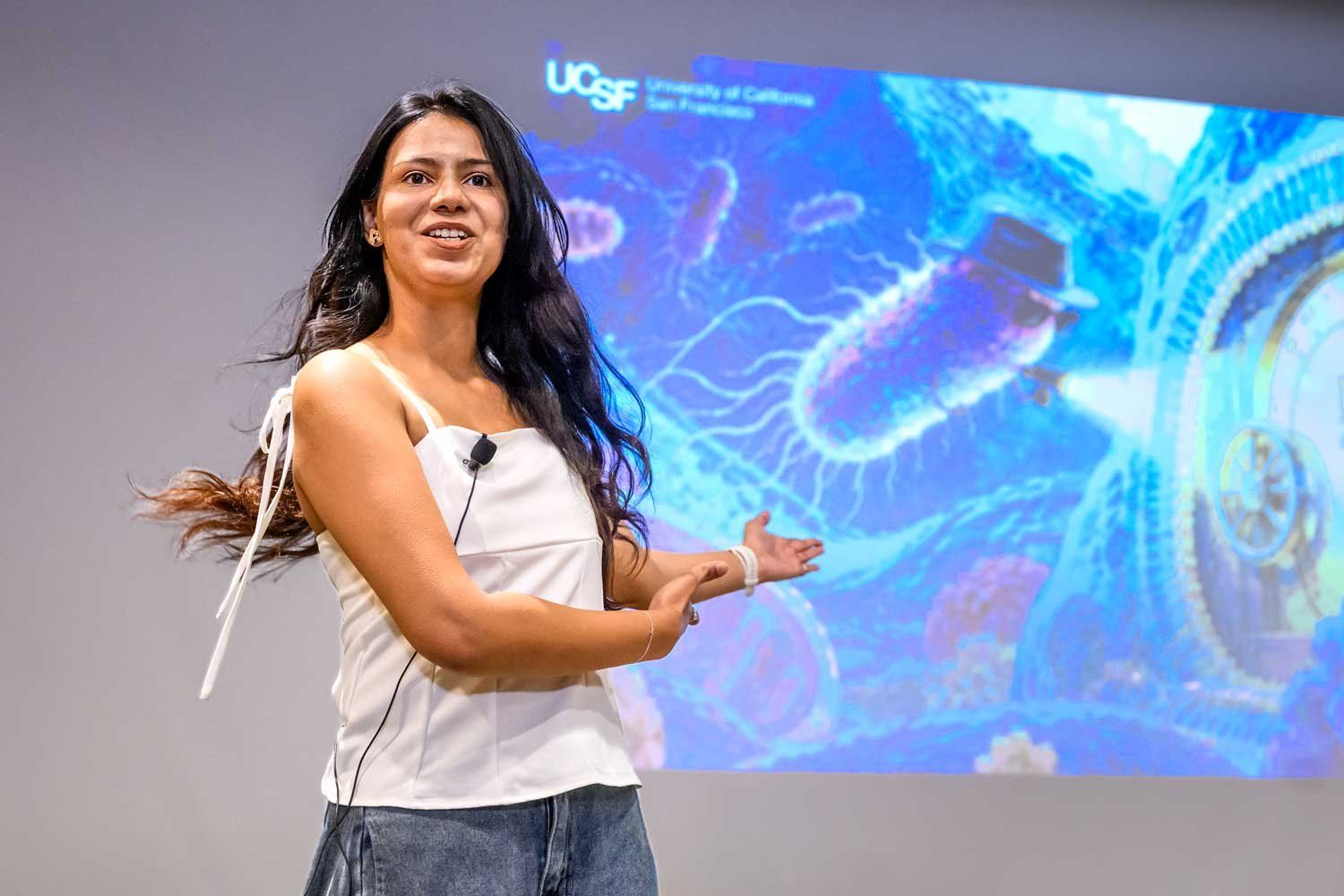
Third place winner Puspangana Singh, PhD, delivers her talk “The Art of Cellular Sabotage: Lessons from a Master Hacker.” Photo by Noah Berger
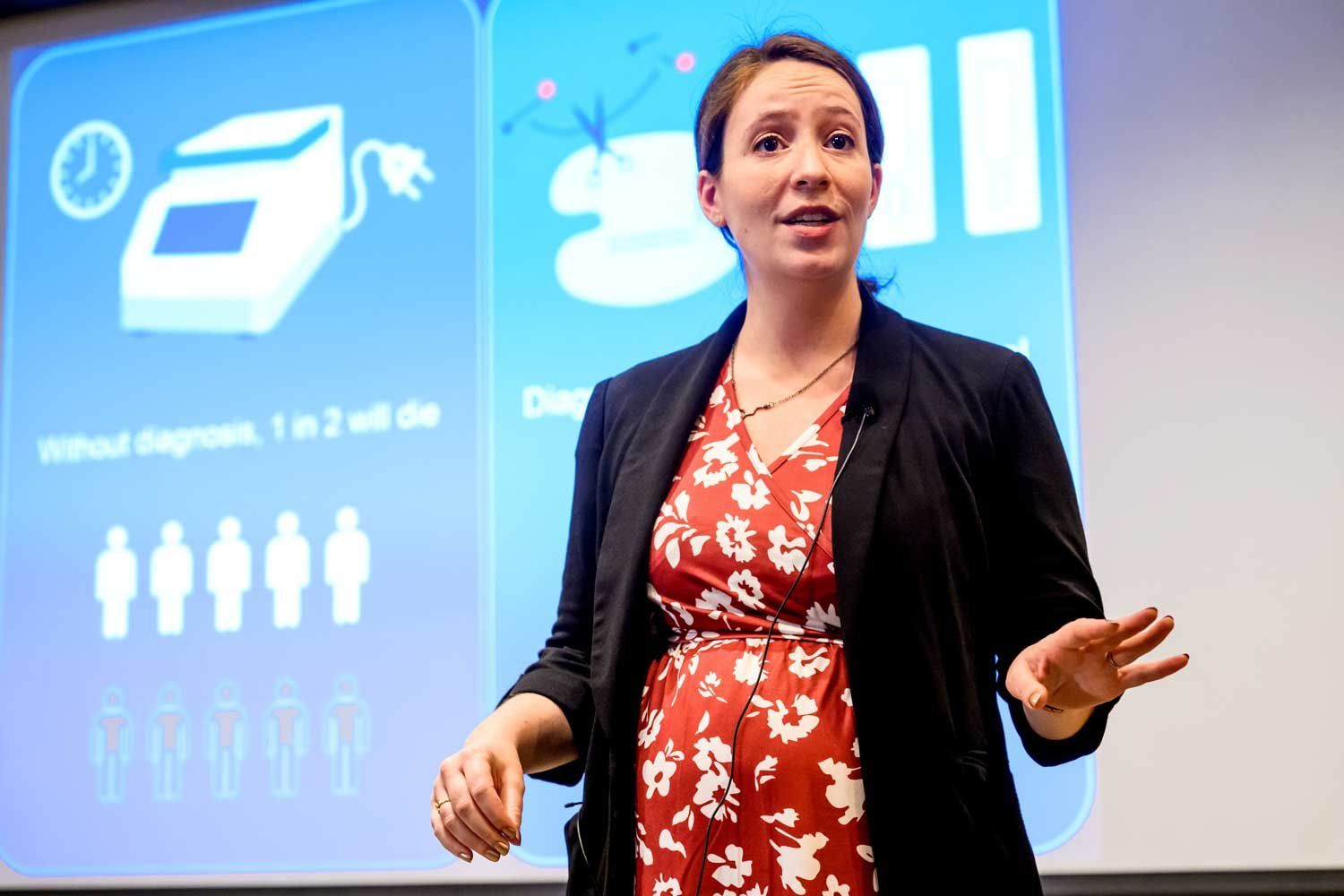
People’s Choice Award winner Shoshana Williams, PhD, delivers her talk “No Lab, No Power, No Problem: Improving the Accessibility of Diagnostics.” Photo by Noah Berger
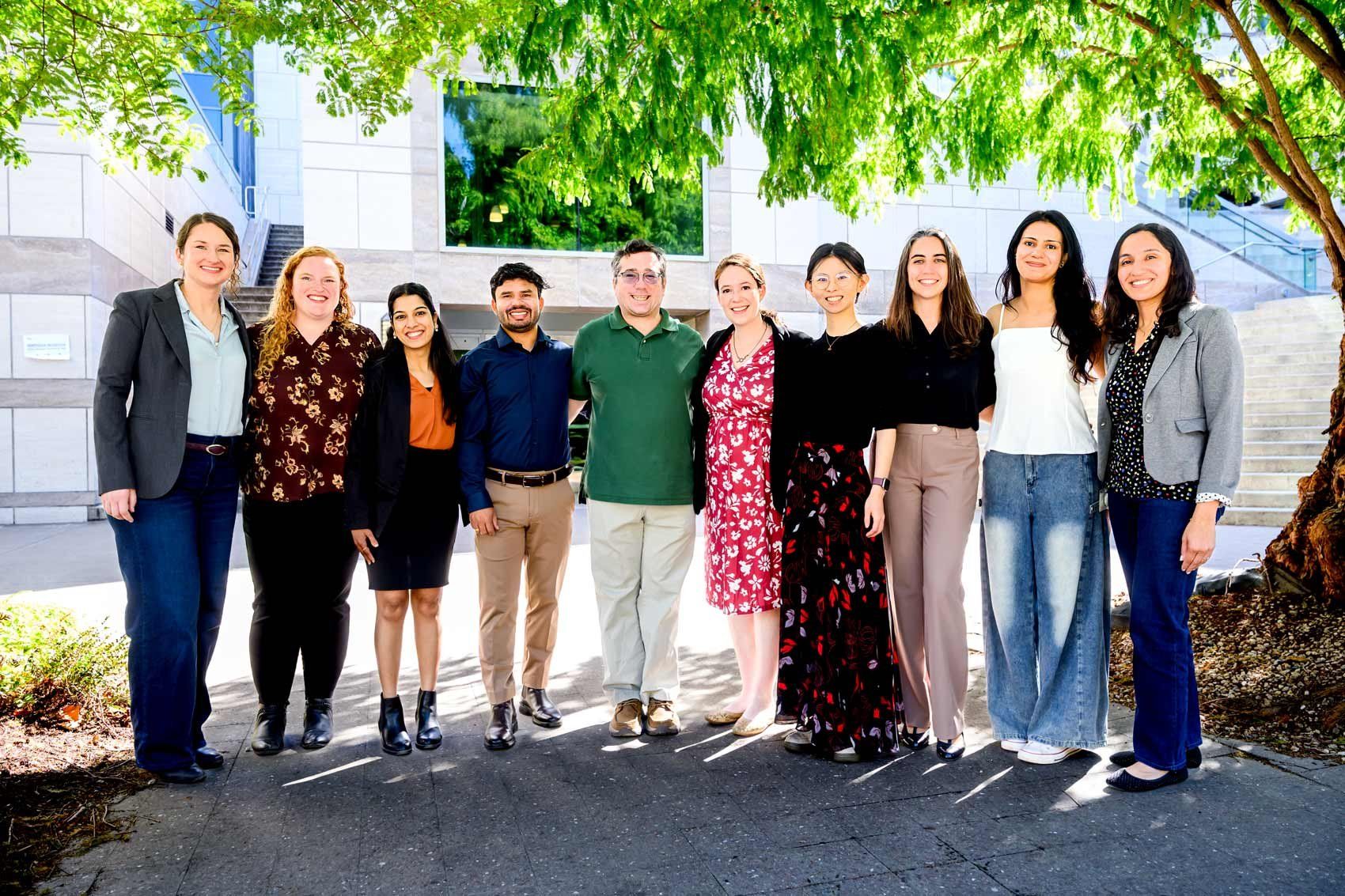
The 2026 Postdoc Slam Finalists. From left to right: Christine Olson, PhD; Deanna Halliday, PhD; Mahima Choudhury, PhD; Abhilash Barpanda, PhD; Bryan Ryder, PhD; Shoshana Williams, PhD; Meng Liu, PhD; Yolanda Martí Mateos, PhD; Puspangana Singh, PhD; and Chaitali Anand, PhD. Photo by Noah Berger.
2026 UCSF Postdoc Slam Finalists
In the order they presented:

Chaitali Anand, PhD
“Before the Storm: Mapping Tau in Down Syndrome to Predict Alzheimer’s Next Move”
Faculty advisor: Carlo Condello, PhD

Abhilash Barpanda, PhD
“Hidden in Plain Sight”
Faculty advisor: Arun Wiita, MD, PhD

Yolanda Martí Mateos, PhD
“A Bloody Secret to Lower Sugar”
Faculty advisor: Isha Jain, PhD

Puspangana Singh, PhD
“The Art of Cellular Sabotage: Lessons from a Master Hacker”
Faculty advisor: Shaeri Mukherjee, PhD

Mahima Choudhury, PhD
“The Secret Phone Calls Between the Knees and the Gut”
Faculty advisors: Christopher Hernandez, PhD, and Kelsey Collins, PhD

Shoshana Williams, PhD
“No Lab, No Power, No Problem: Improving the Accessibility of Diagnostics”
Faculty advisor: Melanie Ott, MD, PhD

Bryan Ryder, PhD
“Clearing Protein Garbage through Unlocking the Proteasome”
Faculty advisor: Jason Gestwicki, PhD

Christine Olson, PhD
“Missing the Brain Train”
Faculty advisor: Peter Turnbaugh, PhD

Deanna Halliday, PhD
“How Do You Quit a Quit Aid? ”
Faculty advisor: Pamela Ling, MD, MPH

Meng Liu, PhD
“The Secret to a Younger Body Is in Your Brain”
Faculty advisor: Param Priya Singh, PhD
2026 UCSF Postdoc Slam Finalists
In the order they presented:
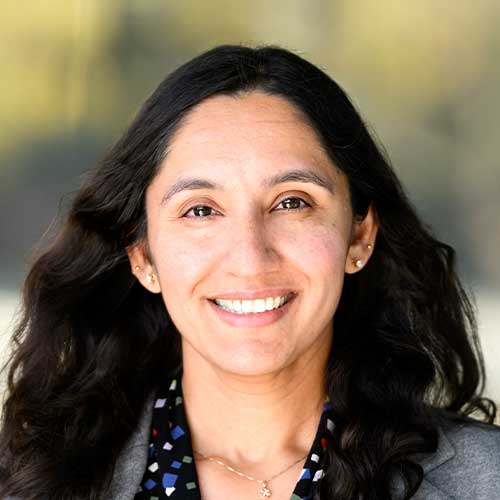
Chaitali Anand, PhD
“Before the Storm: Mapping Tau in Down Syndrome to Predict Alzheimer’s Next Move”
Faculty advisor: Carlo Condello, PhD
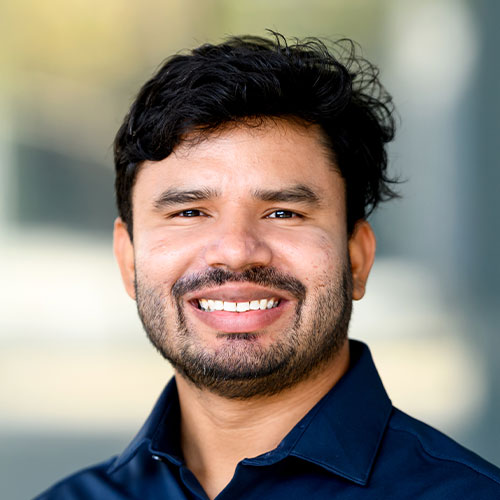
Abhilash Barpanda, PhD
“Hidden in Plain Sight”
Faculty advisor: Arun Wiita, MD, PhD
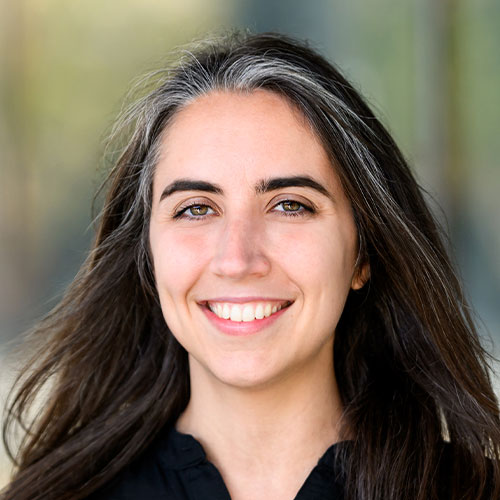
Yolanda Martí Mateos, PhD
“A Bloody Secret to Lower Sugar”
Faculty advisor: Isha Jain, PhD
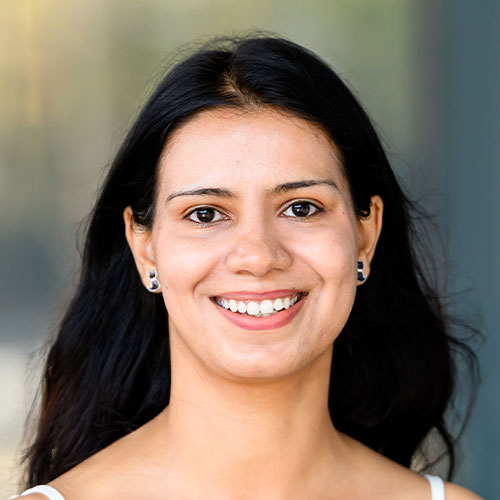
Puspangana Singh, PhD
“The Art of Cellular Sabotage: Lessons from a Master Hacker”
Faculty advisor: Shaeri Mukherjee, PhD
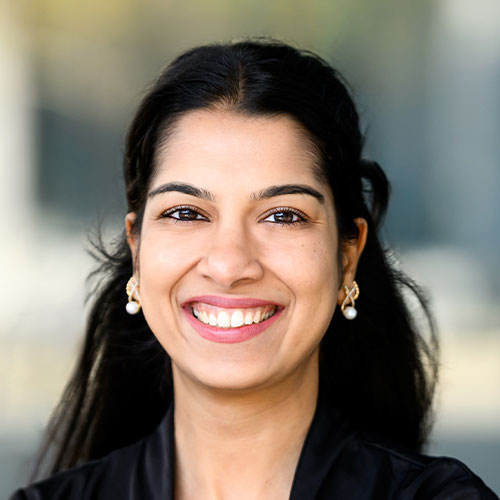
Mahima Choudhury, PhD
“The Secret Phone Calls Between the Knees and the Gut”
Faculty advisors: Christopher Hernandez, PhD, and Kelsey Collins, PhD
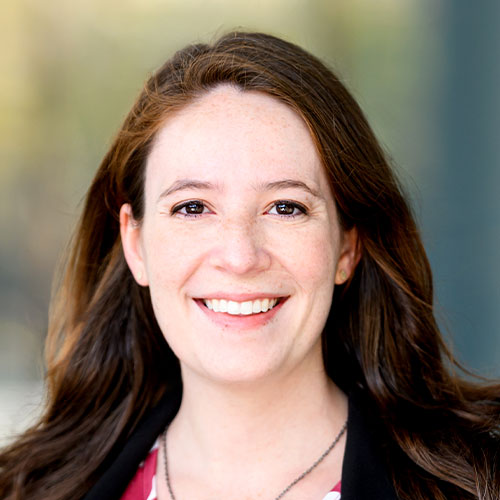
Shoshana Williams, PhD
“No Lab, No Power, No Problem: Improving the Accessibility of Diagnostics”
Faculty advisor: Melanie Ott, MD, PhD
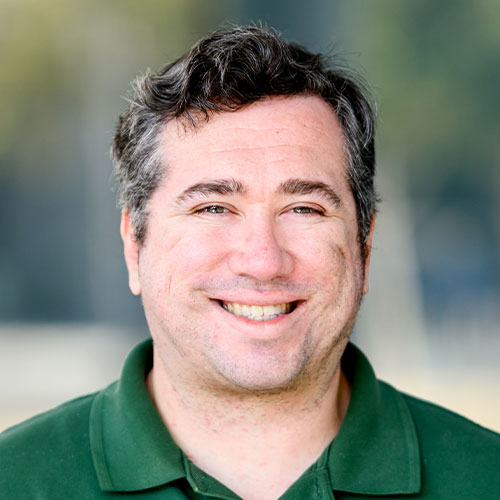
Bryan Ryder, PhD
“Clearing Protein Garbage through Unlocking the Proteasome”
Faculty advisor: Jason Gestwicki, PhD
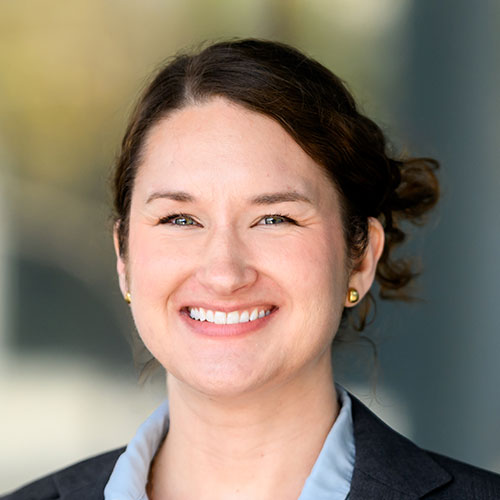
Christine Olson, PhD
“Missing the Brain Train”
Faculty advisor: Peter Turnbaugh, PhD
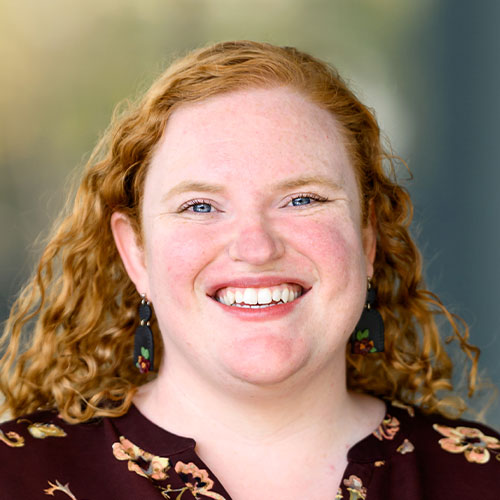
Deanna Halliday, PhD
“How Do You Quit a Quit Aid? ”
Faculty advisor: Pamela Ling, MD, MPH
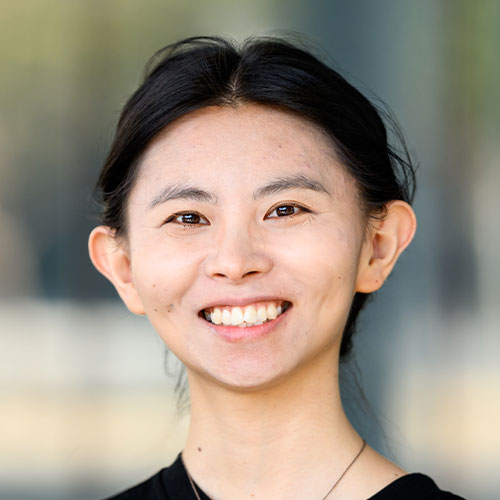
Meng Liu, PhD
“The Secret to a Younger Body Is in Your Brain”
Faculty advisor: Param Priya Singh, PhD
UCSF 2026 Postdoc Slam Judges:
- Erin Allday, staff writer for the San Francisco Chronicle
- Maga Jackson-Triche, MD, MSHS, UCSF Health executive advisor, Organization Culture and System Level Design and assistant vice chancellor, Office of Opportunity and Outreach
- Jennifer Nazareno, PhD ’15, associate dean of Academic Affairs, UCSF Graduate Education and Postdoctoral Affairs; UCSF Sociology PhD alum
- Katherine Nielsen, MS, MA, director, UCSF Science and Health Education Partnership; Co-Founder, Bay Area Science Festival
- Jason Sello, PhD, professor, Pharmaceutical Chemistry, and associate director of Opportunity in Basic Science Faculty at UCSF’s Office of Opportunity and Outreach