
UCSF QBI Is Awarded $46 Million to Advance Autism Research
ARIA investment supports pioneering research in profound autism, accelerating the path from molecular discovery to new precision medicines.
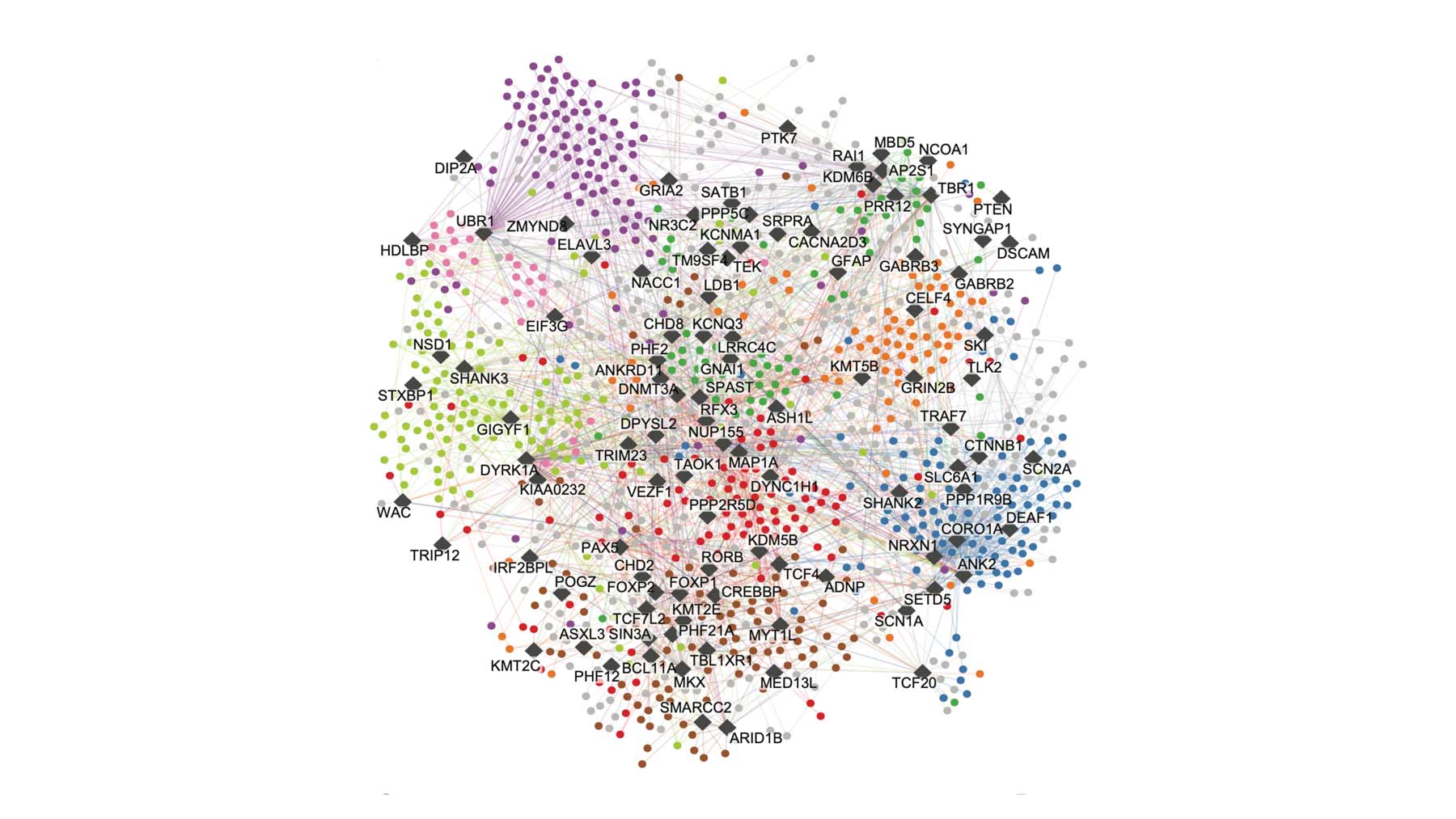
The UC San Francisco Quantitative Biosciences Institute (QBI) has received a $46 million grant from Aligning Research to Impact Autism (ARIA) to expand its research into the molecular mechanisms underlying autism spectrum disorder (ASD).
The funding directly builds on an Aug. 27, study in Science in which UCSF scientists at QBI and the Department of Psychiatry and Behavioral Sciences produced the largest molecular interaction map of autism risk genes to date, revealing how hundreds of genetic mutations converge on a surprisingly small number of shared protein complexes. The findings point toward a new generation of precision medicines for autism and other complex disorders.
The grant will support QBI’s role as a key participant in ARIA’s Protein-Protein Interactions Hub, one of six research hubs within ARIA’s scientific ecosystem. The hub brings together collaborative, multidisciplinary research teams from San Francisco, New York, Germany, and Switzerland to map disrupted protein complexes and to develop mechanism-based small molecule medicines capable of modulating them.
The work is designed to move from the biological insights established in the Science study to therapeutic discovery that could one day benefit people with profound autism and others on the spectrum who seek additional support for daily life.
“Translating fundamental science into medicines that help patients requires not just the right ideas, but the sustained investment to follow those ideas all the way through,” said Nevan J. Krogan, PhD, professor at UCSF, director of QBI, and senior investigator at Gladstone Institutes. “ARIA’s commitment does exactly that. It accelerates our ability to move from molecular insight to therapeutic impact for autism and ultimately for many other diseases.”
ARIA was established with a mission to drive scientific discovery and create more therapeutic opportunities for people with profound autism and people on the spectrum who seek additional support in order to improve daily life. By organizing its investments around focused scientific hubs integrated with a broad clinical-translational research infrastructure in the United States, United Kingdom, and Canada, ARIA aims to drive impact by fostering connections that might accelerate the development, testing, and scaling of the most promising therapies.
The study published in Science systematically mapped protein-protein interactions for 100 high-confidence autism risk genes, identifying more than 1,800 protein interactions, 87% of which had never been reported previously. The researchers analyzed 54 patient-derived autism mutations, revealing how distinct genetic variants rewire protein interaction networks to produce convergent effects on brain development.
Importantly, the researchers found that many genetically distinct forms of autism converge on disrupting the same shared protein complexes. This finding raises the possibility that a single small-molecule drug could address multiple genetic forms of autism simultaneously, with potential advantages in brain delivery, tolerability, scalability, and manufacturing compared to gene-targeting approaches such as antisense oligonucleotides or CRISPR-based therapies.
This award represents one of the most significant investments in QBI’s history and builds on more than a decade of collaborative research from QBI and the UCSF Department of Psychiatry and Behavioral Sciences, known as the Psychiatric Cell Map Initiative (PCMI). QBI’s prior work mapping the SARS-CoV-2 human protein interaction network during the COVID-19 pandemic identified 69 drug candidates, 27 of which advanced into clinical trials, a track record that demonstrates QBI’s potential to move rapidly from molecular insight to therapeutic impact. The ARIA investment enables QBI’s protein-protein interaction platform to be applied to autism with the full resources and urgency the moment demands.
About the Quantitative Biosciences Institute (QBI): The Quantitative Biosciences Institute (QBI) is a University of California organized research unit reporting through the UCSF School of Pharmacy. QBI fosters collaborations across the biomedical and physical sciences to advance interdisciplinary approaches to human disease and therapeutic discovery. QBI’s disease-agnostic, uniquely integrated technological platforms have generated insights across cancer, neurodegeneration, and infectious diseases, leading to the formation of spinout companies, including Rezo Therapeutics. QBI incorporates the UCSF division of QB3, a multicampus UC institute that supports bioscience research and innovation in California. Learn more at qbi.ucsf.edu.
About the UCSF Department of Psychiatry and Behavioral Sciences: The UCSF Department of Psychiatry and Behavioral Sciences and the Langley Porter Psychiatric Institute are among the nation’s foremost resources in the fields of child, adolescent, adult, and geriatric mental health. Together they constitute one of the largest departments in the UCSF School of Medicine and the UCSF Weill Institute for Neurosciences, with a focus on providing unparalleled patient care, conducting impactful research, training the next generation of behavioral health leaders, and expanding access, awareness, and advocacy across the field of behavioral health. Learn more at psychiatry.ucsf.edu.
About UCSF: The University of California, San Francisco (UCSF) is exclusively focused on the health sciences and is dedicated to promoting health worldwide through advanced biomedical research, graduate-level education in the life sciences and health professions, and excellence in patient care. UCSF Health, which serves as UCSF’s primary academic medical system, includes top-ranked specialty hospitals and other clinical programs, and has affiliations throughout the Bay Area. UCSF School of Medicine also has a regional campus in Fresno. Learn more at ucsf.edu.