

In the past few decades, researchers have identified hundreds of genes that increase the risk of autism spectrum disorder. Yet, two key questions remained unanswered: How do mutations in these genes change brain development, and how can that knowledge lead to more effective therapies?
In an Aug. 27 study in Science, researchers in UC San Francisco’s Quantitative Biosciences Institute (QBI) and the Department of Psychiatry and Behavioral Sciences have taken a major step toward answering both questions. Over more than a decade of work, the team developed the largest map of molecular interactions in autism, revealing how hundreds of genes and dozens of mutations converge within a small number of shared protein networks. The result could open new roads in developing precision medicines for the disorder.
“After the initial excitement of discovering rare mutations that cause common forms of autism, the reality of how hard it would be to develop medicines to target the most severe end of the autism spectrum became abundantly clear,” said Matthew W. State, MD, PhD, a senior author and chair of the UCSF Department of Psychiatry and Behavioral Sciences. “This current work opens up a whole new world of possibilities for therapeutic targets and promises a generation of novel drugs that can transform what we are able to do in the clinic.”
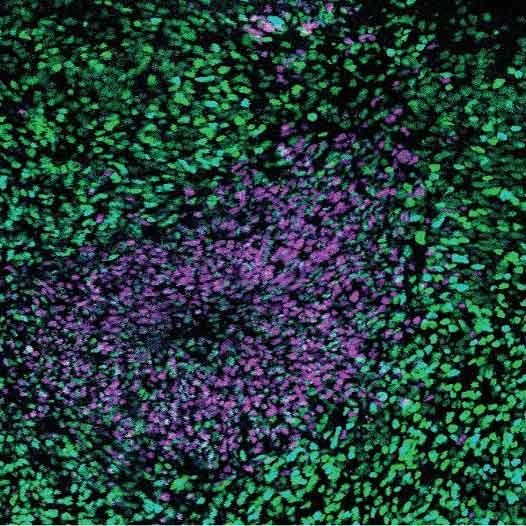
Rather than focusing only on the genes linked to autism, the researchers mapped the proteins encoded by those genes. They discovered how individual disease-causing mutations can rewire the molecular machinery of the developing brain. The work uncovered a new layer of disease biology that could offer targets for future therapies. It also provides a framework for designing medicines that address a wide range of underlying molecular causes of autism.
“The science demonstrates that autism is written in our genes,” said Nevan J. Krogan, PhD, professor at UCSF, director of QBI, and senior investigator at Gladstone Institutes. “This study maps the exact molecular machinery that is altered, including the specific protein interactions, down to the interfaces we can target with a drug. Further, what we’ve built here isn’t limited to autism. It’s a blueprint for translating the genetics of almost any disease, from neurodegeneration to cancer, into a real therapeutic strategy. That’s what we’ve been building QBI to do.”
The study is most directly relevant to individuals with profound autism, which makes up about 30% of diagnoses. Many of these individuals carry rare, high-impact mutations in established autism risk genes.
One of the study’s key findings is that many genetically distinct forms of autism disrupt the same dozen protein complexes. Instead of requiring different therapies for every mutation, these shared molecular hubs could be tapped to develop medicines capable of treating multiple genetic forms of autism.
Drugs designed to restore these shared protein interactions could potentially benefit many patients, while offering advantages in brain delivery, tolerability, scalability, and manufacturing.
More broadly, the work establishes a general framework for connecting disease-causing genetic variations to protein networks, molecular mechanisms, and therapeutic targets, a strategy that may ultimately be applicable across many human diseases.
The study systematically mapped protein-protein interactions for 100 high-confidence autism risk genes using affinity purification-mass spectrometry (AP-MS). The map revealed more than 1,800 protein interactions, 87% of which had never been reported previously. The researchers then analyzed 54 patient-derived autism mutations, revealing how distinct genetic variants rewire protein interaction networks to produce convergent effects on brain development.
Key study findings:
- QBI developed the largest molecular interaction map ever generated for autism. The study focused on 100 autism risk genes and mapped over 1,800 protein-protein interactions, 87% of which were previously unknown. The resulting “diagram” offers the most detailed view to date of the molecular machinery underlying autism, revealing previously unknown connections between proteins.
- Autism’s genetic diversity funnels into a small number of shared molecular pathways. While autism can be caused by hundreds of different genes, the relevant changes in those genes tend to alter a much smaller number of shared protein complexes. This suggests that researchers may be able to develop therapies that target common molecular hubs rather than every mutation, which could speed the development of drugs benefiting more patients.
- Disease-causing mutations don’t just break genes, they rewire protein networks in predictable, convergent ways. Distinct mutations in different autism genes produce surprisingly similar changes in how proteins interact with each other. For example, separate autism-causing mutations in the FOXP1 and FOXP2 genes converge on disrupting the same FOXP1-FOXP4 protein interaction, leading to premature development of neurons in the outer level of the brain and increased neural circuit excitability in lab-grown brain organoids.
- AI reveals precisely where disease-causing mutations act. By integrating the interaction maps with AlphaFold structural predictions, researchers pinpointed where mutations disrupt protein interfaces, creating opportunities to design drugs that stabilize beneficial interactions or block harmful ones.
- Study reveals that mutations cause damage, not just a loss of function. In one example, FOXP1 mutations that sit at different locations within the protein all converge on disrupting the same FOXP1-FOXP4 interaction. FOXP1 acts as a master regulator for other genes during brain development and has been presumed to play a primary role in how large-effect mutations cause the syndrome. The mapping revealed that, rather than simply reducing the amount of FOXP1, the genetic changes in FOXP1 trigger a pathogenic gain of function in the partner protein FOXP4. This unexpected finding reveals a new dimension of how autism mutations can cause harm and opens new avenues for therapeutic intervention.
- Research creates a blueprint for precision medicine. Beyond autism, the framework developed in this study — connecting genetic mutations to protein interaction networks to disease mechanisms to therapeutic targets — offers a model for translating disease genetics into a treatment strategy. QBI’s PPI platform is now positioned to apply this approach across neurology, oncology, and infectious diseases.
QBI laid the groundwork for the research during the COVID-19 pandemic in mapping the SARS-CoV-2 human protein interaction network. The project identified 69 drug candidates, 27 of which advanced into clinical trials. The current study also marks a milestone in a more than decade-long partnership between QBI and the Department of Psychiatry and Behavioral Sciences at UCSF, known as the Psychiatric Cell Map Initiative (PCMI). This effort has identified the causal biology of a neuropsychiatric disorder at the molecular level, laid the foundation for a targeted therapeutic approach in autism spectrum disorder, and established a generalizable blueprint for moving from genetics to therapy that could inform how we approach other complex genetic diseases.
Authors: The study was led by co-first authors Belinda Wang, MD, PhD, Rasika Vartak, PhD, and Kelsey Hennick, PhD, along with co-corresponding authors Kirsten Obernier, PhD, Tomasz J. Nowakowski, PhD, and A. Jeremy Willsey, PhD.
About the Quantitative Biosciences Institute (QBI): The Quantitative Biosciences Institute (QBI) is a University of California organized research unit reporting through the UCSF School of Pharmacy. QBI fosters collaborations across the biomedical and physical sciences to advance interdisciplinary approaches to human disease and therapeutic discovery. QBI’s disease-agnostic, uniquely integrated technological platforms have generated insights across cancer, neurodegeneration, and infectious diseases, leading to the formation of spinout companies, including Rezo Therapeutics. QBI incorporates the UCSF division of QB3, a multicampus UC institute that supports bioscience research and innovation in California. Learn more at qbi.ucsf.edu.
About the UCSF Department of Psychiatry and Behavioral Sciences: The UCSF Department of Psychiatry and Behavioral Sciences and the Langley Porter Psychiatric Institute are among the nation's foremost resources in the fields of child, adolescent, adult, and geriatric mental health. Together they constitute one of the largest departments in the UCSF School of Medicine and the UCSF Weill Institute for Neurosciences, with a focus on providing unparalleled patient care, conducting impactful research, training the next generation of behavioral health leaders, and expanding access, awareness, and advocacy across the field of behavioral health. Learn more at psychiatry.ucsf.edu.
About UCSF: The University of California, San Francisco (UCSF) is exclusively focused on the health sciences and is dedicated to promoting health worldwide through advanced biomedical research, graduate-level education in the life sciences and health professions, and excellence in patient care. UCSF Health, which serves as UCSF’s primary academic medical system, includes top-ranked specialty hospitals and other clinical programs, and has affiliations throughout the Bay Area. UCSF School of Medicine also has a regional campus in Fresno. Learn more at ucsf.edu.