

With her 50th birthday approaching, Jennifer Cocohoba, PharmD, MAS, has been thinking a lot about time.
“During the early part of our career, I think many of us are really rushing through time,” she said. “It just can’t seem to go fast enough…You’ve got the next steps, the milestones you’ve got to achieve. If you’re not moving up the ladder on a certain timeline, you’re not cutting it.”
That focus, she said, can turn into a kind of checklist mindset. And while that can help keep people on track, it can also make it easy to overlook moments that don’t fit into a predetermined plan but can still shape the direction of a career.
Cocohoba, a UCSF professor of clinical pharmacy, spoke about those ideas during the Last Lecture she delivered on April 15 in Cole Hall at UCSF’s Parnassus Heights campus. The annual event invites a faculty member, selected by students from UCSF’s graduate and professional schools, to answer a simple question: If you had one lecture left to give, what would you say?
The Sumner and Hermine Marshall Endowed Last Lecture was inspired by the real-life final lecture given in 2007 by Randy Pausch, a computer science professor at Carnegie Mellon University. Pausch, then 46, had been diagnosed with pancreatic cancer and died less than a year later. UCSF launched its own version of the series in 2012, when then-Chancellor Susan Desmond-Hellmann, MD, delivered the inaugural Last Lecture.
This year, along with a bevy of students, the in-person audience at Cocohoba’s lecture included two previous honorees, Dan Lowenstein, MD (2013) and Igor Mitrovic, MD (2014).
A clinical pharmacist who has spent much of her career working in HIV care, Cocohoba described moving quickly through her own early training, applying to pharmacy school before finishing her undergraduate degree at UCLA and starting at UCSF School of Pharmacy as she turned 21.
“I, too, could not wait to move on to the next thing,” Cocohoba said.
Even the specialty she chose, caring for people with HIV, was moving at a fast pace: In HIV/AIDS care, the speed with which antiretroviral medications were evolving was both intellectually stimulating and exciting.
But it was during a rotation as a fourth-year pharmacy student at Zuckerberg San Francisco General Hospital that she had a moment that has stayed with her to this day.
Time is required to facilitate connection.
Jennifer Cocohoba, PharmD, MAS
A seriously ill patient had been admitted – a woman who had contracted HIV through intravenous drug use and had a collapsed lung from pneumocystis pneumonia. Cocohoba and the two other students on her team were eager to engage the woman in conversation as they interviewed her and learned her history. The woman was stoic, answering questions politely but staying guarded.
One day, as Cocohoba was leaving the room, she paused and looked at the patient. She thought about how the woman wasn’t much older than she was.
“I felt the space between us shrink infinitesimally small, as I wondered what tricks time had played, and life had played, to bring me standing here in her room with the student team and to leave her there, in that bed,” Cocohoba said.
As the team continued its visits, the patient began to say a little more, mentioning that she missed her cat and asking when she might be able to go home. The students also learned she would be spending her birthday in the hospital.
Cocohoba and her teammates each pooled $3 to buy her a present from the hospital gift shop – a black Beanie Baby cat. When they gave it to her, Cocohoba said, the patient was quiet for a moment. Then, to the surprise of the students and attending physician, the young woman got out of bed – IV tubes dangling – and hugged each of them.
“The moments that stay with you are not going to be the times you check off a milestone,” Cocohoba said. “They’re going to be those moments when someone finally lets you in.”
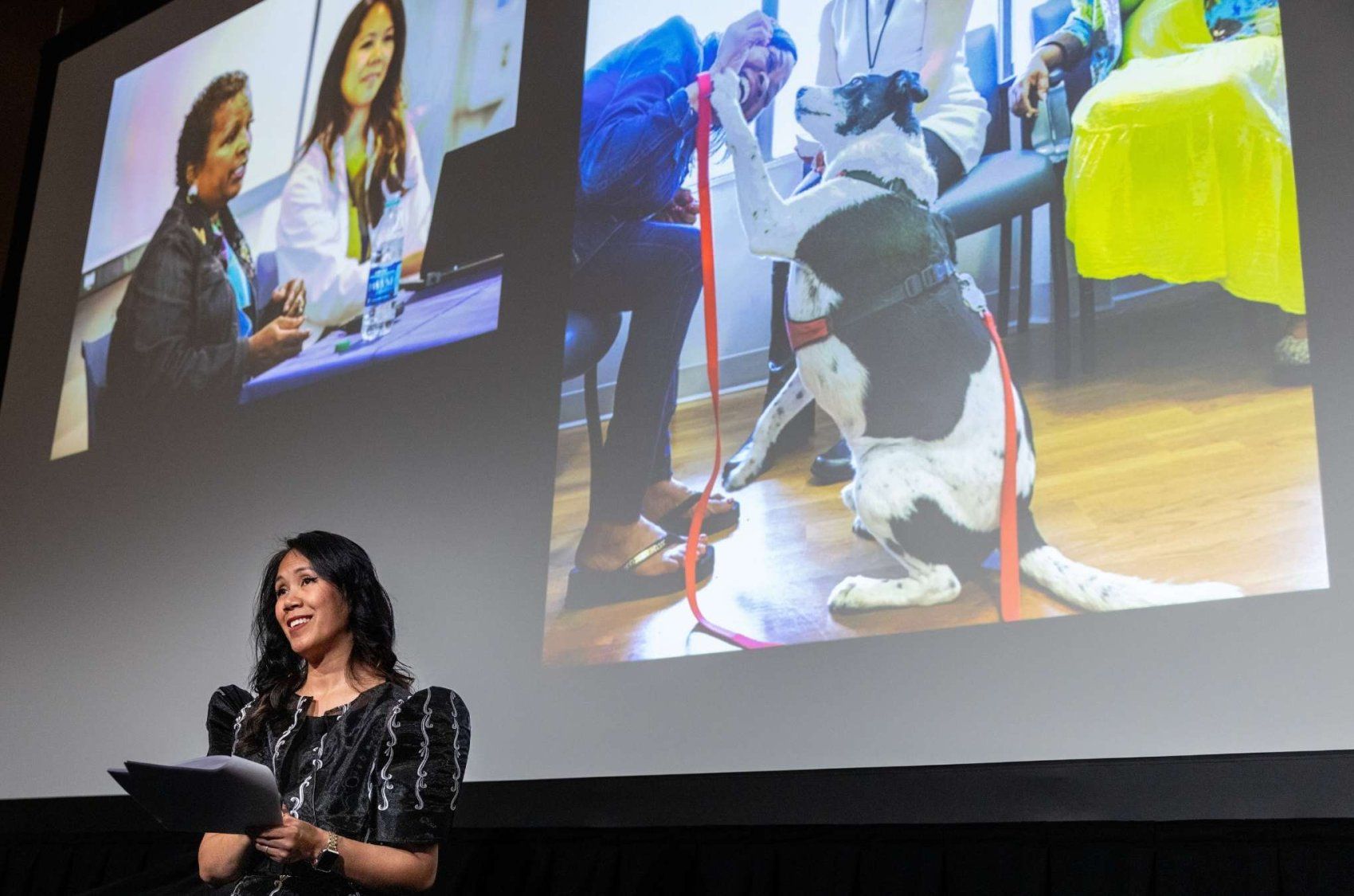
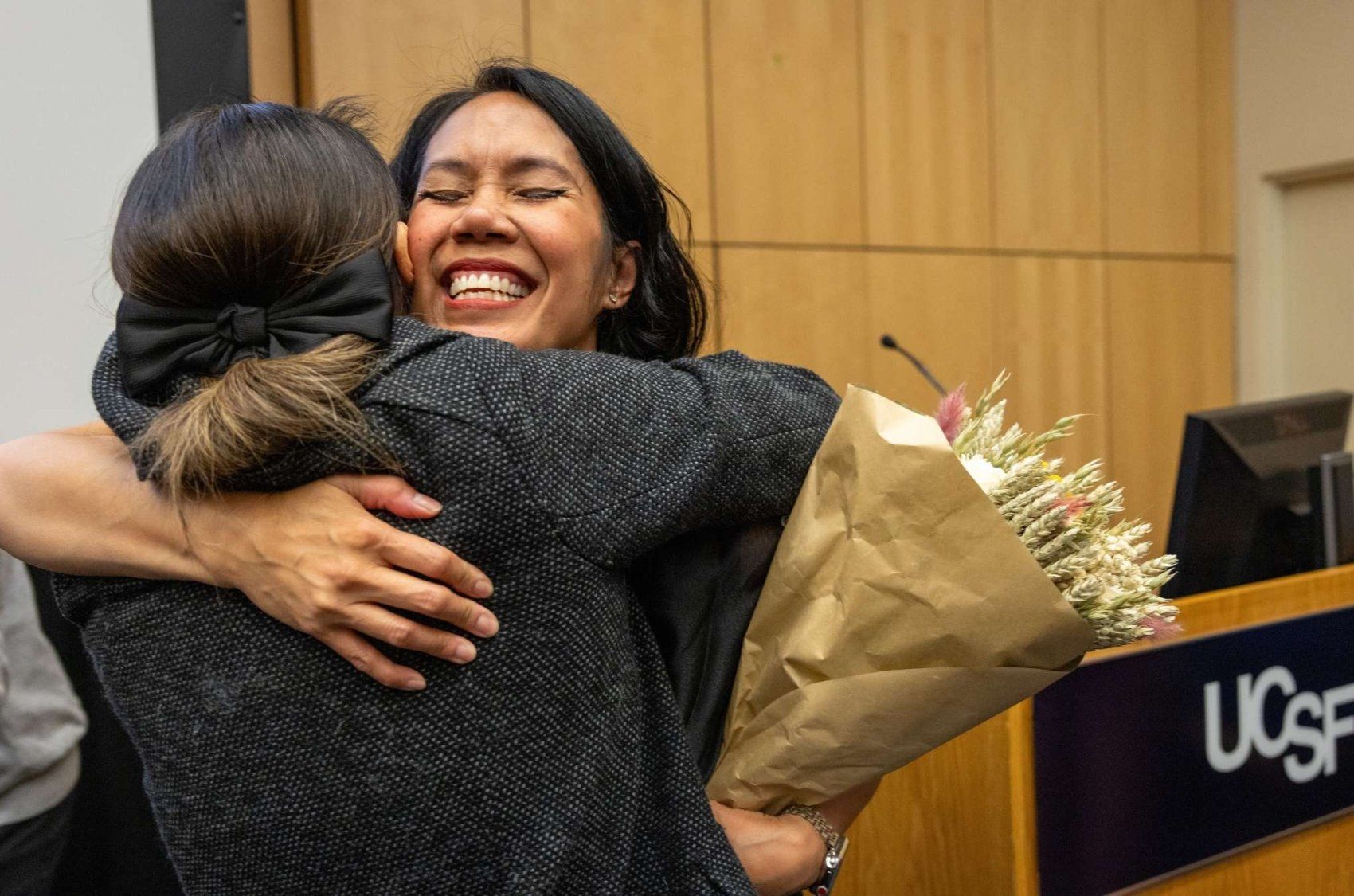
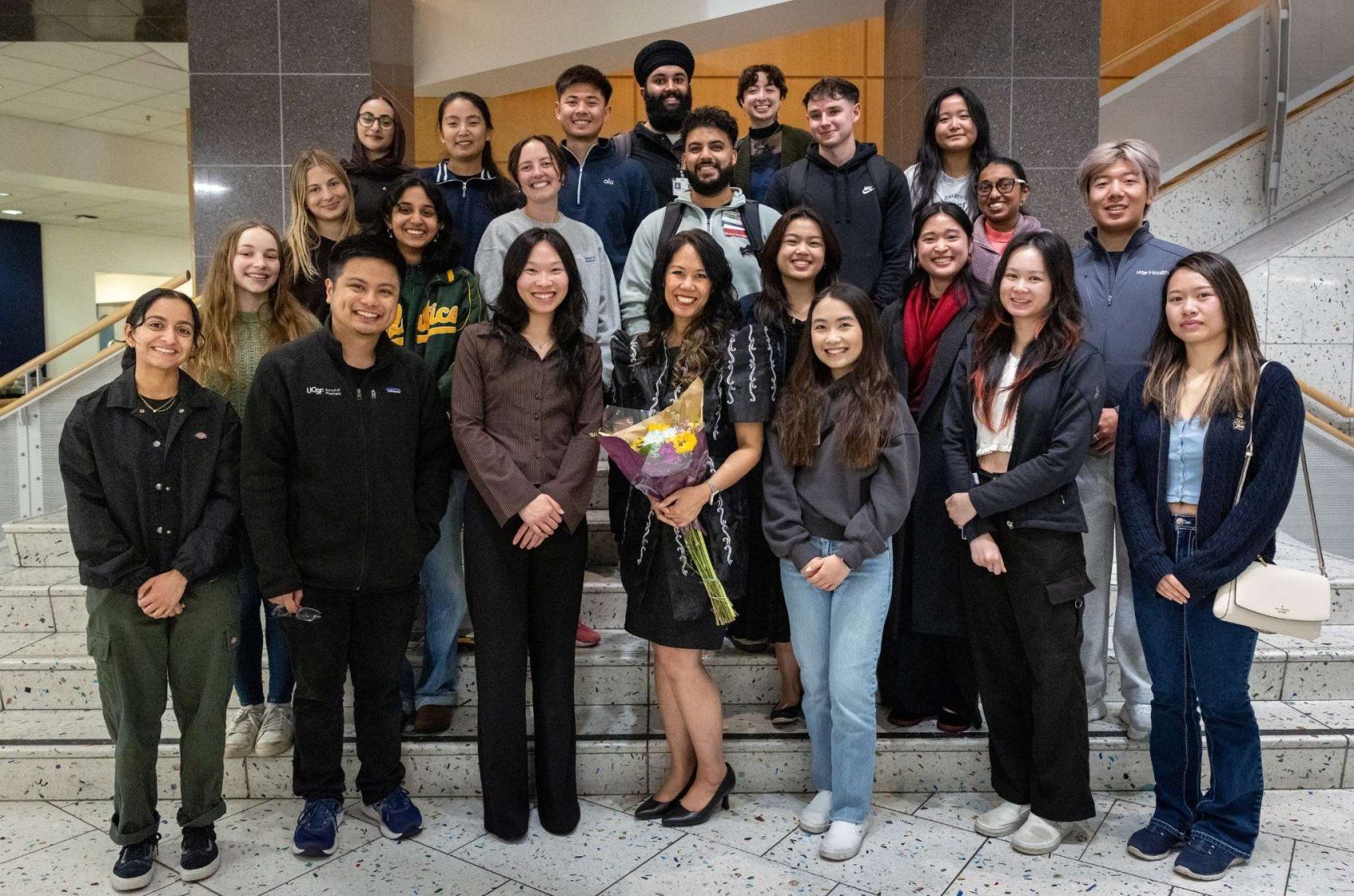
Cocohoba used that experience to describe what she called the role of time in connection. “Time is required to facilitate connection,” she said. “It’s never a guarantee, but it is a requirement.”
As a health care practitioner, time is typically treated as something to manage efficiently. Patients are also managing time as they navigate treatment, appointments, and their own life circumstances. Nevertheless, the time spent connecting can develop into important ongoing relationships. She spoke of patients she has known for more than 20 years – the product of many individual visits.
Cocohoba, who is a faculty adviser and research mentor for Mabuhay Health Center, a UCSF student-run community health clinic for Filipino-Americans in San Francisco’s South of Market neighborhood, also spoke about time educating and guiding students. Working with them, she said, often requires slowing down, even when efficiency might otherwise take priority. The impact of that time isn’t always immediately clear.
Strive to give and receive time wisely, but generously.
Jennifer Cocohoba, PharmD, MAS
“You just don’t know,” she said, describing how a brief conversation or explanation might resonate later for patients in ways clinicians never see.
Cocohoba connected those ideas to her own background: The daughter of immigrants from the Philippines, she talked about her mother, who came to the United States by herself in her 20s through a hospital-sponsored nursing program and went on to obtain her nurse practitioner degree. Cocohoba’s father served 20 years in the U.S. Navy, often spending months at a time at sea. His military service provided her with the financial support she received for her undergraduate and graduate education.
As life circumstances change, she said, time feels more limited in different ways and priorities change. Her father has Parkinson’s-related dementia, and there are questions she may never be able to ask.
Cocohoba closed with a simple piece of advice.
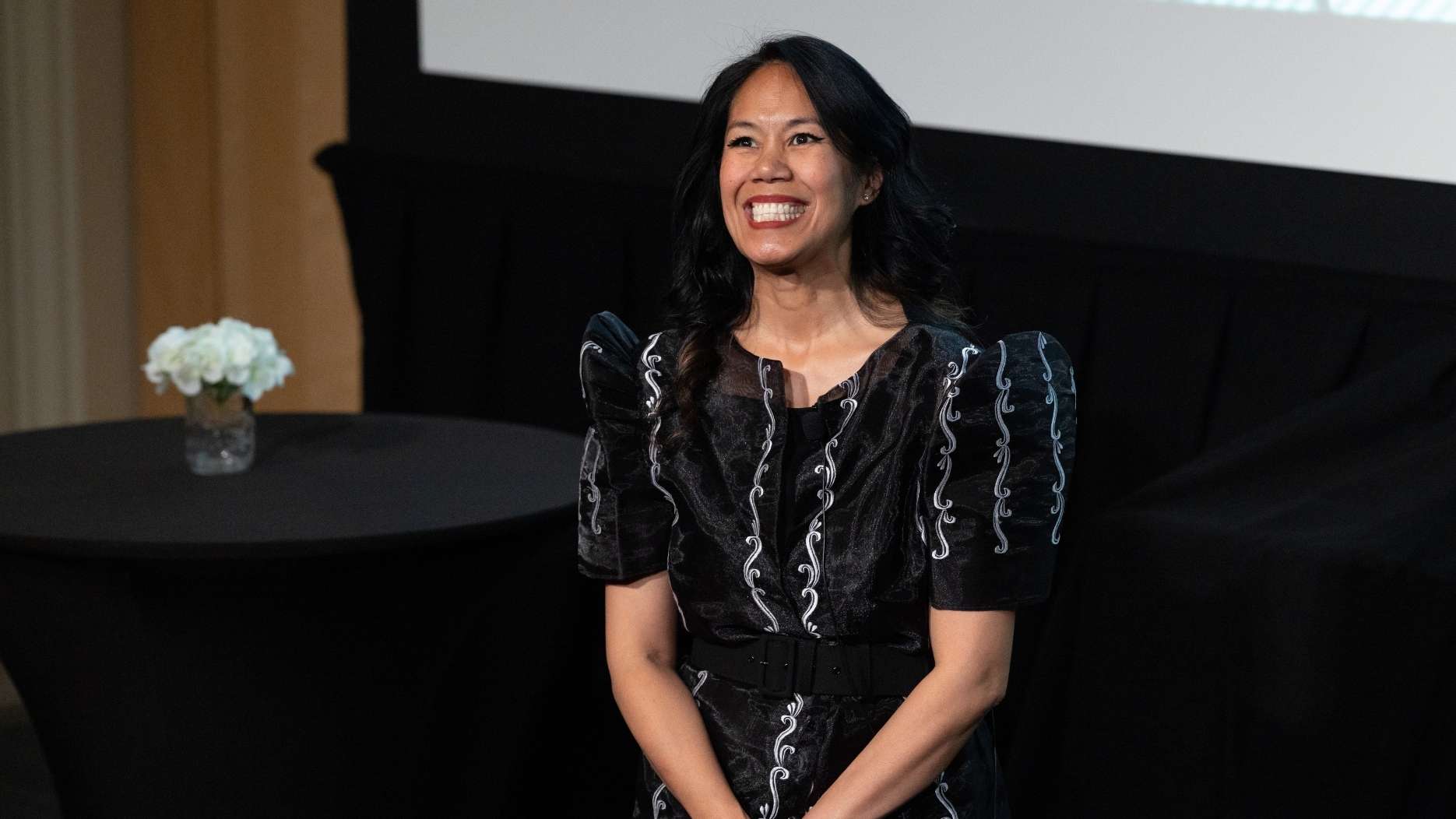
“Strive to give and receive time wisely, but generously,” she said, “with patience, with intention and, above all, with love.”
Last Lecture Series
The Sumner and Hermine Marshall Endowed Last Lecture is the product of an endowment created by the couple’s sons in their memory. The program is hosted annually by the UCSF Graduate and Professional Student Association. Recent years have featured D’Anne Duncan, PhD, Peter Chin-Hong, MD and Kai Kennedy, DPT.
View past lectures