

For years, one of the most powerful weapons against certain blood cancers, called CAR-T therapy, has required an elaborate process: Doctors extract a patient’s immune cells, ship them to a specialized facility where they’re genetically reprogrammed to fight cancer, then ship them back for infusion into the patient’s bloodstream. This has revolutionized cancer treatment, but the time and expense place it out of reach for thousands of patients.
Now, scientists at UC San Francisco have developed a method to precisely reprogram these cancer-fighting cells directly inside the body, potentially eliminating those barriers.
It is the first time that scientists have integrated a large sequence of DNA at a specific site in human T cells without removing them from the body. This targeted approach, which did better than the standard method, is a breakthrough that goes beyond CAR T to advance the fields of cell and gene therapy overall.
In experiments using mice with humanized immune systems, described March 18 in Nature, the researchers used the method to successfully treat aggressive leukemia, multiple myeloma, and even a solid tumor. Scientists hope the new method will lead to an off-the-shelf therapy, like a vaccine, that could one day be given to anyone with the same condition.
“I think this is just the beginning of a big wave of new therapies that will be truly transformational and save a lot of lives,” said Justin Eyquem, PhD, an associate professor of medicine at UCSF, member of the Weill Cancer Hub West, and the senior author of the new paper. “I’m incredibly excited to be part of it.”
Justin Eyquem, PhD, William Nyberg, PhD, and Pierre-Louis Bernard, PhD, show how cancer-killing CAR-T cells work against leukemia, multiple myeloma and sarcoma in mice.
Molecular scissors alter gene
CAR-T cell therapy works by giving T cells — the immune system’s disease fighters — new genetic instructions to recognize and destroy cancer cells. These instructions come in the form of chimeric antigen receptors (CARs), which are molecules that protrude from the surface of T cells like antennae. When a CAR binds to specific proteins on a cancer cell’s surface, it triggers the T cell to attack and kill the tumor cell.
Seven CAR-T cell therapies are currently approved for use in blood cancers by the U.S. Food and Drug Administration. But these are bespoke treatments that are individually tailored to each patient and must be manufactured in specialized facilities. The process takes weeks and costs $400,000 to $500,000. Patients also must undergo chemotherapy to clear space in their bone marrow for the new T cells — a punishing process that some cannot tolerate.
“It’s become a global access issue,” Eyquem said. “There has been a big push in the field to try to move to directly producing these cells in the body.”
Working with scientists at the Gladstone Institutes, Duke University, and Innovative Genomics Institute, Eyquem designed a two-particle system.
One of the particles carried CRISPR-Cas9 gene-editing machinery — the molecular scissors required to alter genes — directly to T cells circulating in the body.
Because it uses the CRISPR-Cas9, the method makes edits at a predetermined place in the genome — a big advantage over the current method of randomly integrating CAR genes that can in rare cases result in secondary cancers.
The second particle carried the new DNA for the cancer-fighting CAR. It would only insert at a specific location in the T cell genome with a molecular “on switch” that is only activated in T cells. The particles also were engineered to find T cells and evade immediate destruction by the immune system.
“When you manufacture these cells outside the body, you can do a lot of quality control to make sure you only end up with re-engineered T cells,” said Eyquem. “We can’t do that inside the body, so we really needed to optimize the approach upfront to avoid genetically altering any other cells.”
If we can translate this to humans, we could dramatically reduce costs, eliminate waiting times, and potentially allow community hospitals — not just major cancer centers — to offer these life-saving therapies.
Justin Eyquem, PhD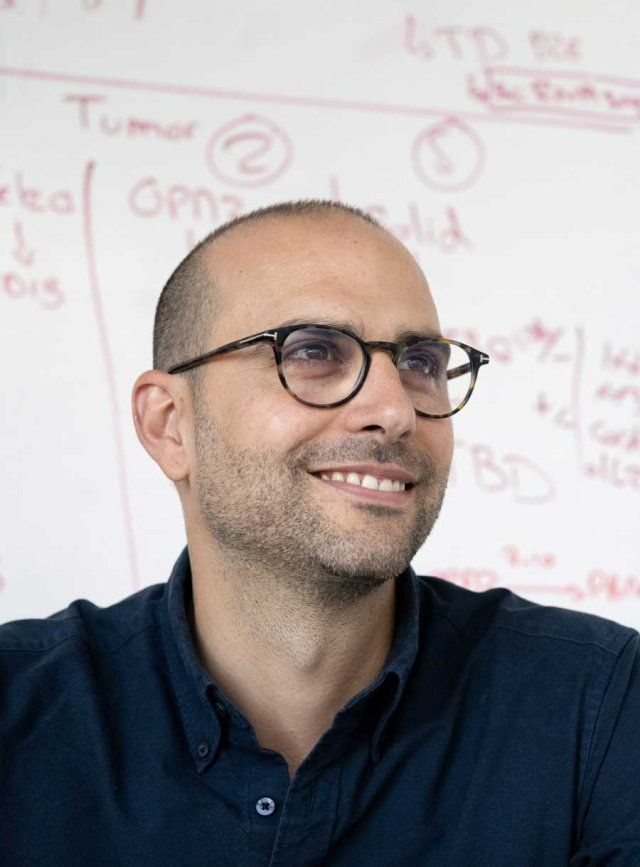
Cleared cancer in two weeks
The team, led by two postdocs — the co-first authors William Nyberg, PhD, and Pierre-Louis Bernard, PhD — tested their approach in mice with aggressive leukemia. A single injection of the two-particle system cleared all detectable cancer in nearly all the mice within two weeks. The engineered CAR-T cells made up as much as 40% of immune cells in some organs and successfully eliminated cancer from both the bone marrow and spleen.
The approach also worked against multiple myeloma and, strikingly, against a solid sarcoma tumor. Solid tumors have historically resisted CAR-T therapy, making this result particularly significant.
The T cells engineered inside the body also unexpectedly appeared to outperform those manufactured in the lab.
“What was especially remarkable was that the cells we’re generating in vivo actually look better than what we make in the lab,” Eyquem said. “We think that when cells are taken out of the body and grown in the lab, they lose some of their ‘stemness’ and proliferative capacity and that doesn’t happen here.”
Clinical trials will be needed to assess safety and efficacy. Eyquem and his collaborators have founded a company called Azalea Therapeutics to take the platform through clinical development.
“If we can translate this to humans, we could dramatically reduce costs, eliminate waiting times, and potentially allow community hospitals — not just major cancer centers — to offer these life-saving therapies,” he said. “That would truly democratize access to CAR-T cell therapy.”
Authors: Other UCSF authors include, Charlotte H. Wang, Allison Rothrock, Gina M. Borgo, PhD, Gabriella Kimmerly, Jae Hyung Jung, PhD, Vincent Allain, PhD, Sarah Wyman, Safwaan H. Khan, Yasaman Mortazavi, PhD, Mahmoud Abd Elwakil, PhD, Simon N. Chu, Hyuncheol Jung, PhD, Chang Liu, Devesh Sharma, PhD, Travis McCreary, Ansuman Satpath, MD, PhD, Julia Carnevale, MD, Rachel L. Rutishauser, MD, PhD, M. Kyle Cromer, PhD, and Kole Roybal, PhD; Wayne Ngo, PhD, Alisha Baldwin, Robert Stickels, PhD, Shanshan Lang, PhD, Donna Marsh, Niran Almudhfar, Catherine Novick, Shimin Zhang, Sidney Hwang, Zhongmei Li, Stacie E. Dodgson, PhD of the Gladstone-UCSF Institute of Genomic Immunology; Jennifer A. Doudna, PhD, and Jennifer R. Hamilton, PhD, of the Innovative Genomics Institute; and Jon Ark, PhD and Aravind Asokan, PhD, of Duke University.
Funding: The Parker Institute for Cancer Immunotherapy, the Pew Charitable Trust, The Alexander and Margaret Stewart Trust, the Grand Multiple Myeloma Translational Initiative, the Multiple Myeloma Research Foundation, the Baszucki Lymphoma Fund, CRISPR Cures for Cancer, and the Weill Cancer Hub West.
Disclosures: Multiple authors of the study are inventors on patent applications filed on the subject matters of this study. Eyquem is a compensated co-founder at Mnemo Therapeutics and Azalea Therapeutics and a compensated scientific advisor to Enterome, Treefrog Therapeutics. Hamilton is a co-founder of Azalea Therapeutics. Doudna is a scientific advisory board member at Isomorphic Labs, BEVC Management, Evercrisp, Caribou Biosciences, Scribe Therapeutics, Mammoth Biosciences, The Column Group and Inari. She is also an advisor for Aditum Bio, a Chief Science Advisor to Sixth Street, a Director at Johnson & Johnson, Altos and Tempus, and has a research project sponsored by Apple Tree Partners.