
Two UCSF Researchers Are Named Pew Latin American Fellows
The fellows will study how the experience of pain changes in pregnancy and how Zika affects the developing brain.
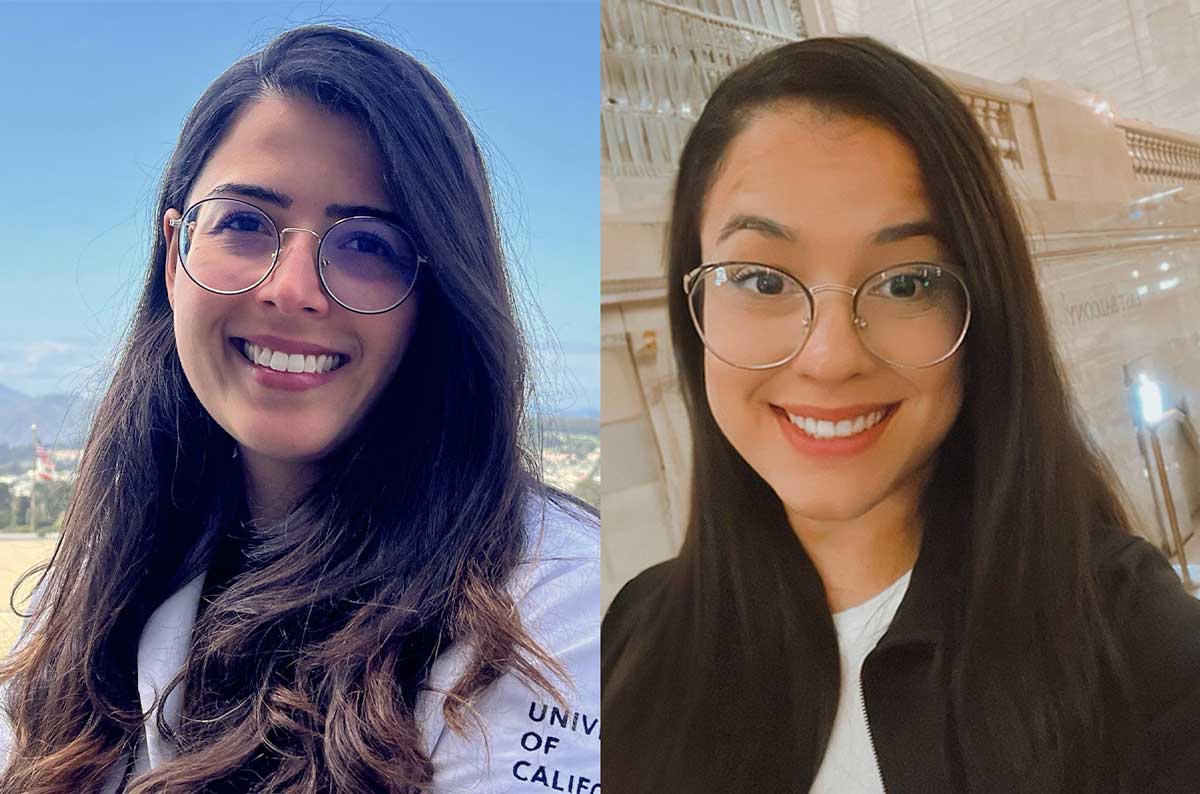
Two young scientists at UC San Francsico have been named Pew Latin American fellows. The Pew program seeks to advance science in the region by supporting postdoctoral research at leading research institutions in the U.S. and by providing additional funding if the fellows choose to start labs in their home countries.
The new fellows, Beatriz De Moraes, PhD, and Lilian Gomes de Oliveira, PhD, will each receive a $30,000 annual stipend for two years to support their work at the crossroads of immunology and neuroscience. If they return to Latin America and establish labs, Pew will provide them with another $70,000 for equipment and supplies.
De Moraes hails from the small Brazilian town of São Roque and has been interested in biology since she was young. The first in her family to attend graduate school, she realized her dream of becoming a scientist with a PhD in Biochemistry and Molecular Biology at the University of São Paulo. She found her calling, discovering new ways to control pain.
Working in the lab of pain researcher Allan Basbaum, PhD, De Moraes aims to understand why women with chronic pain often get better during pregnancy. She hopes to identify the immune cells responsible for this pain-killing effect and understand how pregnancy changes the behavior of pain-sensing neurons, insights that could lead to new therapies for chronic pain.
De Moraes plans to return to Brazil to build a research program focused on chronic pain and neuroimmunology. “I’m dedicated to improving health outcomes in my community and advancing the field of pain research in Brazil,” she said.
Tackling critical scientific questions
Growing up in São Paulo, Gomes de Oliveira experimented with mixing her mom’s cleaning products to see how they would react. In college, she became interested in the role of immunity in neurological disease. As a graduate student during the pandemic, she studied how SARS-CoV-2 infection triggers strong immune responses from brain cells.
In 2022, a Fulbright scholarship brought her to the lab of neuroscientist and stem-cell biologist Arnold Kriegstein, MD, PhD, in the UCSF Broad Stem Cell Center. There, she studied how Zika virus, which is spread largely by infected mosquitoes and can impact brain development when a pregnant woman contracts it.
The Pew Fellowship brings her back to Kriegstein’s lab to investigate how the immune system’s response to the Zika virus affects the developing human brain.
Gomes de Oliveira plans to establish a lab in Brazil that can respond quickly to new pathogens. “We’ll take on some of the country’s most pressing scientific questions,” she said. “The support from Pew deepens my sense of responsibility to contribute to Brazil’s scientific capacity.”
Gomes de Oliveira and De Moraes will join a community of nearly 300 biomedical scientists that Pew has supported since the program began in 1991, two-thirds of whom have returned to Latin America to establish their own research labs.