From Hiking to Meditating, This San Francisco Nature Gem is Thriving
Every day, runners, dog walkers, birdwatchers, cyclists, and families wind their way through the trails of the UC San Francisco Mount Sutro Open Space Reserve tucked behind the Parnassus Heights Campus. Some longtime visitors to the Reserve, which is owned and maintained by UCSF, have noticed more sunlight filtering through the canopy than they remember. Others see have seen hawks flying overhead. Still others stop at newly opened vistas overlooking San Francisco, spot new flowers and shrubs, or pause to listen to birdsong they haven’t heard here before.
The landscape is changing — and not by accident.
An urban oasis adjacent to residential homes and the iconic Sutro Tower, the reserve features five and a half miles of public, multi-use trails that welcome visitors year round.
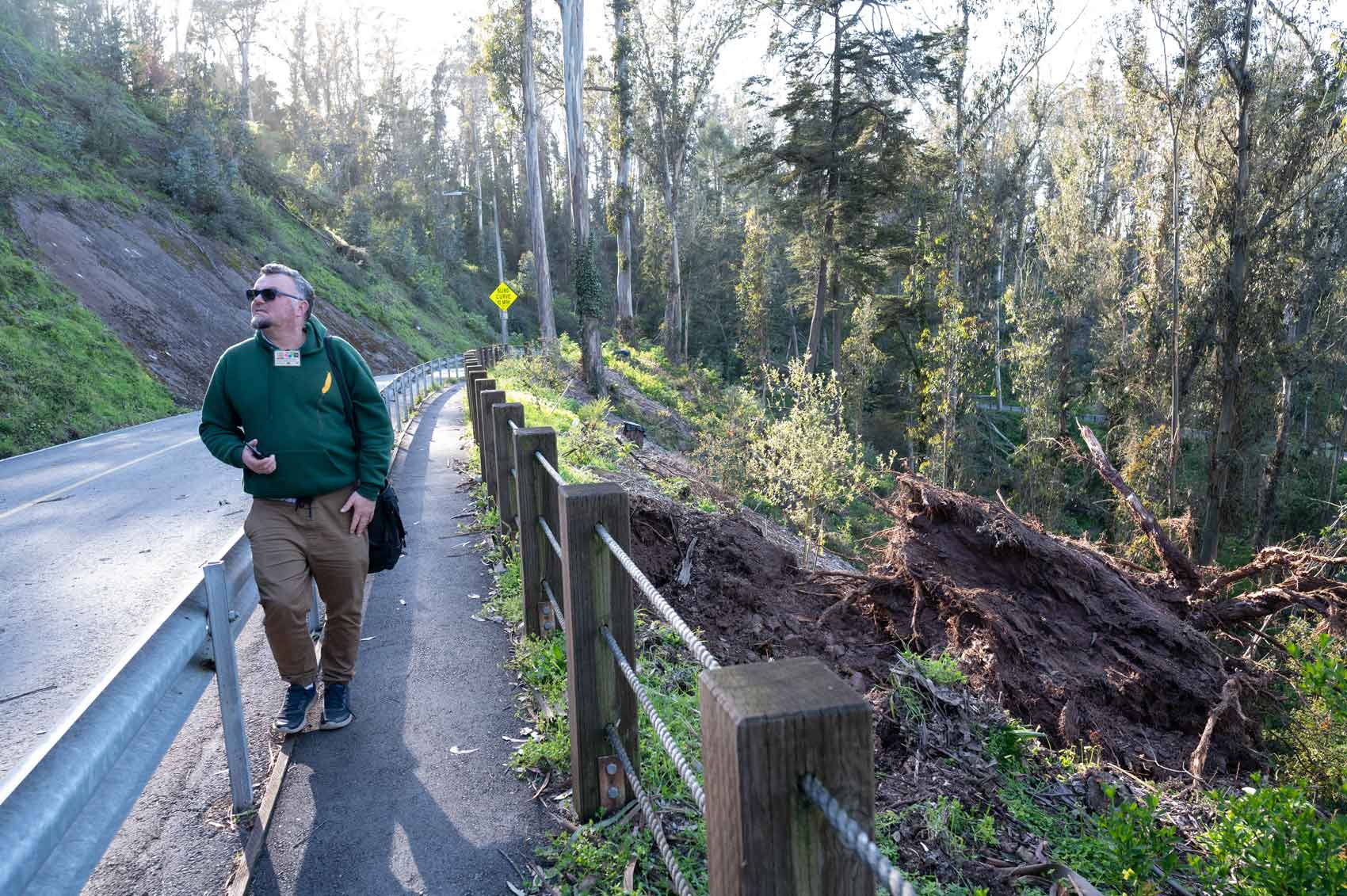
Over the past seven years, UCSF has been carefully implementing a 20-year vegetation management plan designed to preserve canopy cover by removing dead and dying trees, which helps increase biodiversity, restore native plants and wildlife, and make the reserve more resilient to drought, disease, and wildfire. Guided by research, local nonprofit partnerships, and informed by community input, the work is grounded in a scientific approach that reflects UCSF’s mission to make evidence-based decisions that benefit both people and the environment.
“It’s a transition. We’re moving the forest from one phase to another, using research and purposeful changes,” says UCSF’s Morgan Vaisset-Fauvel, associate director for landscape, integrated pest management, and Mount Sutro Reserve. “While some changes take a long time, other aspects of nature shift very quickly. And we’re already seeing a positive shift in the wildlife and foliage in the reserve, so we know what we’re doing is starting to work.”
The work began around the edges of the reserve, where dead and declining non-native eucalyptus trees posed the greatest risk during storms and wildfires and along heavily used trails. More recently, crews are moving farther into the interior, removing unhealthy trees while planting a diverse mix of native species, including coast live oak, California buckeye, bigleaf maple, Douglas fir, redwood, and native shrubs.
Birds, bees, and butterflies
As vegetation changes, surveyors are tracking how birds and butterflies respond.
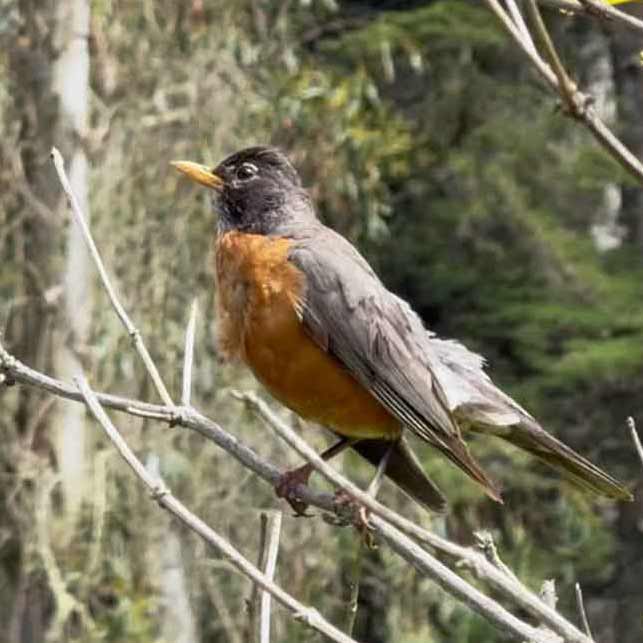
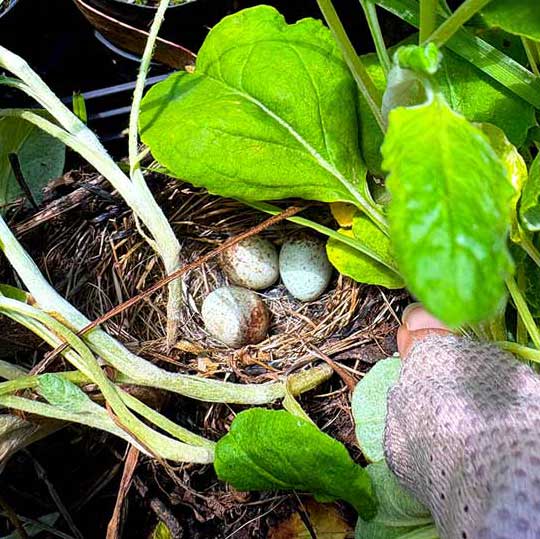
Since 2019, UCSF has partnered with the Golden Gate Bird Alliance to conduct comprehensive bird surveys twice each month throughout the year, monitoring both breeding and overwintering species. The long-term research provides more than anecdotal observations — it offers measurable evidence of how the ecosystem is changing.
“Birds are perfect ambassadors of their ecosystems,” says Whitney Grover, conservation director for the Golden Gate Bird Alliance. “They are relatively easy to track and reflect broader ecosystem changes over time. They also reflect what’s happening throughout the food web. If there are a large number of species of birds in the reserve, there are likely plenty of insect species to support all that avian life.”
Openings in the canopy allow more sunlight to reach the forest floor, giving native shrubs and wildflowers a chance to return while creating a wider variety of habitat for wildlife. As a result, the Bird Alliance research is finding more species and more abundance of birds on Mount Sutro since the vegetation management plan went into effect, says Grover.
The surveys show predictable and positive shifts given the changes in the reserve. Birds that prefer dense forests, such as Pacific wrens, have declined, while species that thrive in more diverse woodland habitats — including Allen’s hummingbirds — have increased significantly.
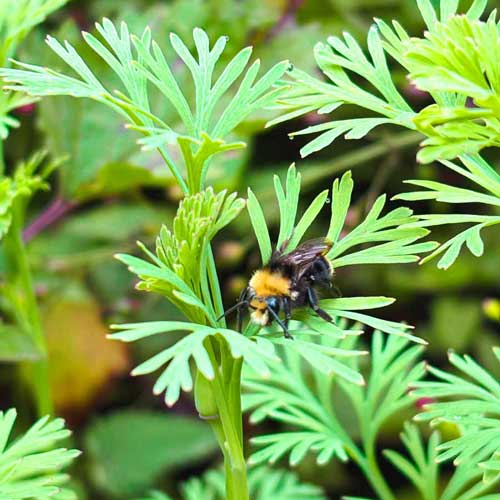
Monitoring butterflies provides another window into the Reserve’s changes, and butterfly surveys are conducted every three years. Early surveys found more butterfly species than researchers expected, and ecologists have observed some species taking advantage of newly opened habitat created through the forest restoration.
More than 3,000 hours restoring habitat
An improved reserve is yielding benefits well beyond the plants and wildlife. With healthier and more accessible trails, restored habitat, and new viewpoints, the reserve has become an even more welcoming destination for the surrounding community — and those community members play a key role in the improvements.
In addition to the dedicated UCSF forestry staff, the local conservation nonprofit Sutro Stewards has partnered with UCSF for decades to restore habitat, maintain the reserve’s 5.5 miles of trails, and care for thousands of native plants — planting about 10,000 of them over the past five years. Sutro Stewards’ volunteers contribute more than 3,300 hours restoring habitat, propagating native plants in the Sutro Stewards Nursery, and planting on Mount Sutro every year. Their educational programming includes public nature walks, the San Francisco youth naturalist certification program, and the urban ecology internships offering pathways to employment in the fields of habitat restoration and native plant propagation for underprivileged youth.
“Our community’s health is increased through the action of together caring for the land,” says Ildiko Polony, executive director of the Sutro Stewards. “You don’t install the plants and leave. We couldn’t do our work without UCSF and vice versa.”
UCSF has partnered with several organizations over the years to bridge the gap between the reserve and the community, including the Sutro Stewards, League of Urban Riders, and Bay Area Ridge Trail.
“We’re grateful for all the community organizations and volunteers who have worked alongside us for years to make the reserve accessible to our neighboring communities and the entire city,” says Ellie Rossiter, UCSF’s assistant vice chancellor, community relations and strategic partnerships. “The work of caring for Mount Sutro is ongoing, and these partnerships will continue to shape its future.”
The vegetation management plan is only about halfway complete, and researchers will continue tracking birds, butterflies, vegetation, and forest health for years to come.
“UCSF is proud to maintain an important part of San Francisco’s open spaces. The Reserve is truly one of San Francisco’s gems — a place of quiet, discovery, and connection with nature. Our stewardship doesn’t end when a project is completed, it continues season after season. It’s inspiring to see both the landscape and the community grow stronger together,” says Rossiter.
Total Annual Bird Species Observed at Mount Sutro Open Space Preserve
- 2025: 68
- 2024: 66
- 2023: 67
- 2022: 56
- 2021: 55
- 2020: 58
- 2019: 47
Source: Golden Gate Bird Alliance, Bird Abundance and Diversity Monitoring at Mount Sutro Open Space Preserve, San Francisco, 2025 Report