Latest Updates
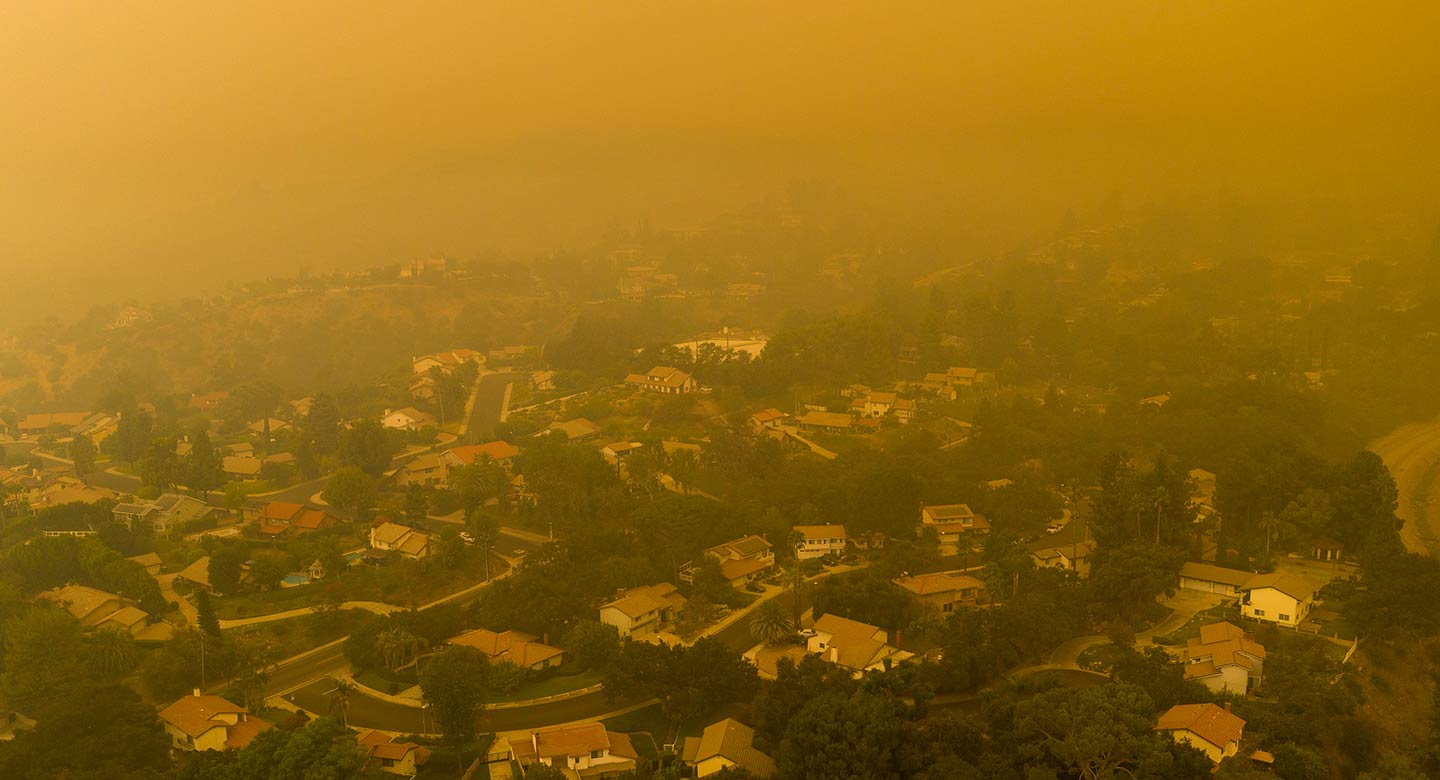
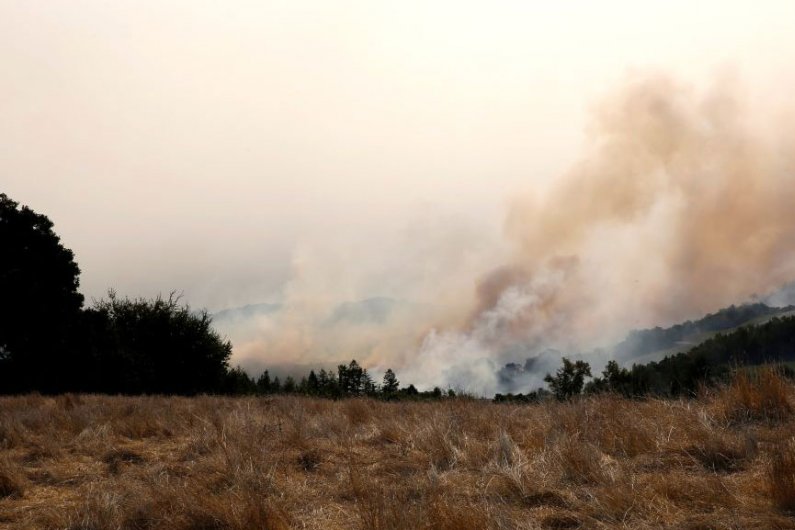
UCSF is currently monitoring wildfires and air quality issues. Please check here for any updates on UCSF’s operations or instructions for the UCSF community.
Frequently Asked Questions
General
- How will UCSF respond to changing air quality?
- Will UCSF provide N95 respirators to the UCSF community when the AQI is unhealthy?
- What is the best protection against airborne particulates generated by distant wildfires?
- What about UCSF employees who work outdoors?
- The air inside my building at UCSF smells like smoke. Is it safe to breathe?
- What should I do if there is a power outage and I am working from home?
- What should I do if I am evacuated from my house because my neighborhood is threatened by a wildfire?
- How can I support those impacted by the wildfires?
How will UCSF respond to changing air quality?
UCSF monitors air quality information provided by the U.S. Environmental Protection Agency’s (EPA) Air Quality Index (AQI) and the associated color-coded levels of severity to provide guidance, make decisions and take steps to protect the health of the UCSF community during wildfire events.
Members of the UCSF community are encouraged to check the AQI in their area by visiting the EPA’s AirNow website. This website includes a search box to check air quality by ZIP code, as well as maps identifying what actions are advised.
Will UCSF provide N95 respirators to the UCSF community when the AQI is unhealthy?
When AQI exceeds the unhealthy level of 151, everyone may experience health effects and should limit prolonged outdoor exertion. Supervisors of UCSF employees who work outdoors should provide alternate indoor activities wherever possible.
N95 masks for wildfire smoke-related purposes are prioritized for those in the following two groups:
- UCSF employees who work for prolonged periods of time outdoors, and
- UCSF employees and learners who have underlying medical conditions that make them vulnerable to the effects of wildfire smoke.
Supervisors will receive N95 respirators by their home department. Those with underlying medical conditions should consult with Occupational Health Services and UCSF Student Health and Counseling Services to request an N95 mask.
Please note that due to a limited supply of N95 masks, only one mask will be given per person, per incident. It is important to note that N95 masks are not appropriate for children and that anyone who uses an N95 mask should follow the instructions for their proper use.
The N95 respirators that UCSF is distributing in response to wildfire smoke are not suitable for use in clinical environments. UCSF Health, School of Dentistry, Buchanan Dental, and Student Health staff will continue to follow their department’s standards and protocols.
UCSF Health employees working inside of UCSF Health facilities must continue to follow UCSF Health masking protocols. The use of N95 masks in the clinical setting should remain limited to current clinical guidelines as noted on the Hospital Epidemiology and Infection Control website.
What is the best protection against airborne particulates generated by distant wildfires?
Experts recommend that you minimize the time you spend outdoors, especially doing strenuous outdoor activities. If work must be performed outdoors, N95s (or other similarly rated filtering face-piece respirator) may provide some benefit in minimizing exposure to wildfire smoke particulates.
What about UCSF employees who work outdoors?
N95 respirators will be made available to outdoor workers by their home department once the AQI exceeds 100.
The air inside my building at UCSF smells like smoke. Is it safe to breathe?
When the AQI exceeds 100, UCSF will begin spot monitoring indoor air quality.
While the indoor air may smell smoky, the building’s ventilation system is still filtering out harmful particulates. UCSF’s buildings will continue to circulate filtered air in accordance with industry guidelines and regulatory requirements. In a wildfire smoke event, UCSF’s building air ventilation systems are set to recirculate indoor air.
Please be sure that windows and exterior doors are kept closed whenever possible for those faculty, staff, and learners working or studying on campus.
If you have questions or concerns about the indoor air quality in your building at UCSF, please contact [email protected].
What should I do if there is a power outage and I am working from home?
Please visit PG&E’s website to see what steps you can take to reduce the impact of a power outage. Since rotating outages tend to occur in the evening, you may want to start working earlier in the day.
PG&E will have designated Community Resource Centers (CRCs), which will offer device charging, Wi-Fi and other resources.
An exception will be made for you to return to your original place of work if you cannot continue to work remotely due to a power outage. More information for employees and managers is available on HR’s People Connect website.
What should I do if I am evacuated from my house because my neighborhood is threatened by a wildfire?
Experiencing an evacuation can be very difficult. There are emotional and wellbeing resources that are available to you. In addition, please
- Follow evacuation local evacuation guidance.
- Discuss any need for time off with your manager/supervisor.
- Check the Voluntary Catastrophic Leave Sharing Program (VCLSP) for employees.
- Visit the UCnet website for emergency resources from UC’s benefits plan.
- Review the emotional and wellbeing resources available to you and discuss with your manager/supervisor/advisor about alternatives.
How can I support those impacted by the wildfires?
People affected by wildfires or other disasters rely on the generosity of members of our community during their time of need. Please consider giving to agencies, such as the American Red Cross, that provide hot meals and comfort kits filled with necessities for those who need them. Please consider donating online at the American Red Cross Wildfire Relief.
Air Quality Resources
POWER SHUTOFF RESOURCES
UCSF Resources