How Do Middle-Aged Folks Get Dementia? It Could Be These Proteins
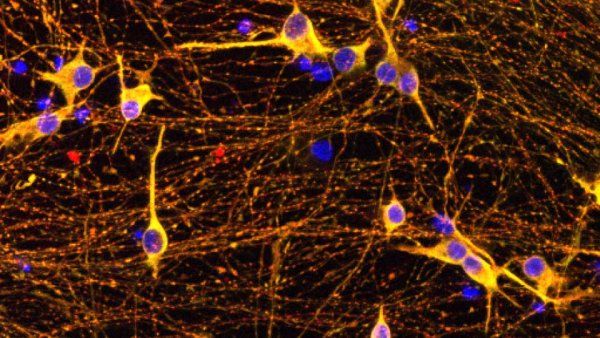
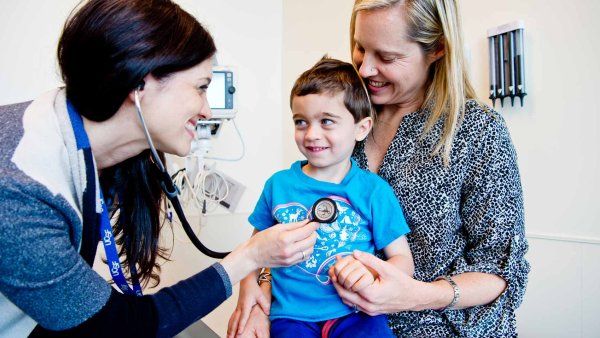
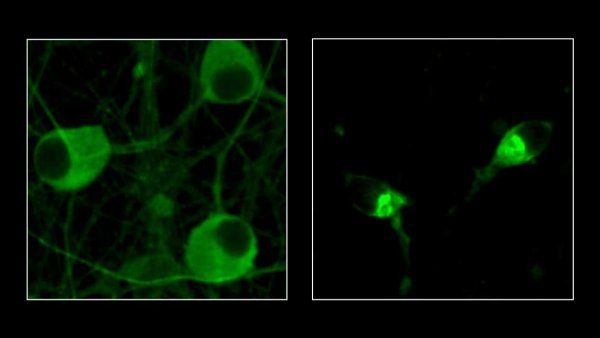
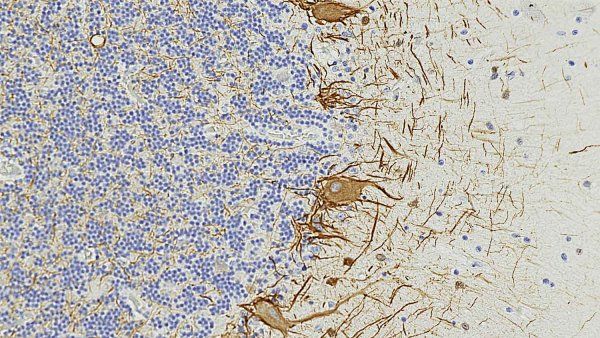
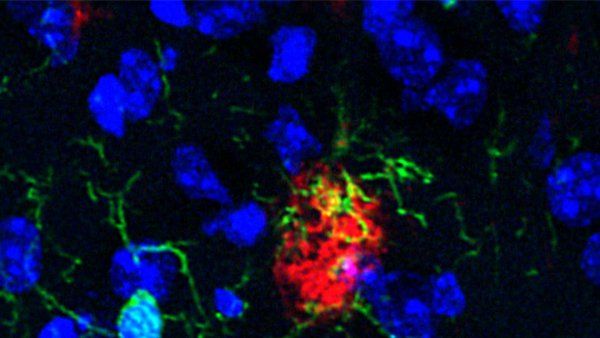
UCSF researchers have found clues about how frontotemporal dementia develops that could lead to new diagnostics and get more patients into clinical trials.
University of California San Francisco
Give to UCSFUCSF researchers have found clues about how frontotemporal dementia develops that could lead to new diagnostics and get more patients into clinical trials.
A first-of-its-kind study tested the safety of psilocybin on patients with mild to moderate Parkinson’s disease and found that patients experienced clinically significant improvements in mood, cognition, and motor function that lasted for weeks after the drug was out of their systems.
Neuro-immunologist Stephen Hauser, MD, whose maverick thinking transformed the treatment landscape for patients with multiple sclerosis (MS), has received the 2025 Breakthrough Prize in Life Sciences.
A study followed the sleep patterns of older female participants to see if specific patterns of change were associated with a higher risk of dementia. The participants, whose average age was 83, were monitored by wrist devices that track movement and time spent asleep.
UCSF received $815 million in awards from the National Institutes of Health (NIH) last year for research that will improve the lives of patients in the U.S. and around the world.
A paralyzed man was able to move a robotic arm and fingers simply by imagining himself doing so, with the help of brain signals decoded through a computer.
Martin Kampmann, PhD, and Anna Victoria Molofsky, MD, PhD, are the 2025 recipients of the Bowes Biomedical Investigator award, which supports scientists who take novel approaches and have the potential to make significant contributions to biomedicine. Recipients receive $1.25 million over five years.
How did humans evolve brains capable of complex language, civilization, and more? Scientists at UC San Francisco recently found that parts of our chromosomes have evolved at breakneck speeds to give us an edge in brain development compared to apes.
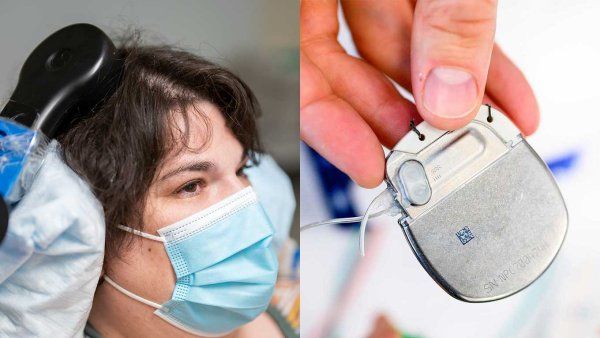
The FDA has approved an adaptive deep brain stimulation (aDBS) treatment for people with with Parkinson’s disease, making this groundbreaking technology available to people nationwide.
UCSF scientists have found that some cancers, like brain cancer, make unique, jumbled proteins that make them stand out. These newly recognized cancer-specific proteins, or antigens, could speed the development of potent immunotherapies that recognize and attack hard-to-treat tumors.
A study found that B12 requirements may be too low for some people, putting them at risk for cognitive decline.
A new EPA ban on TCE, a common industrial cleaning agent and contaminant, begins this year. UCSF’s Samuel Goldman, who led groundbreaking research to link TCE to Parkinson’s Disease, talks about the health risks.
Delayed REM sleep was found to be linked to higher Alzheimer’s risk. Healthy sleep habits and treatments may help mitigate risks.
A new study found that menopause can speed up the progression of multiple sclerosis (MS), affecting mobility and cognitive ability.
A digital twin of a human mind? It isn’t science fiction.
Nearly 50 UCSF researchers have been named to Clarivate’s list of most influential scientists for 2024.
A technique involving the use of light pulses to prevent seizure-like activity in neurons could one day become a new, non-invasive treatment for epilepsy.
An AI-based diagnostic system reveals cancerous tissue that may not otherwise be visible during brain tumor surgery. This enables neurosurgeons to remove it while the patient is still under anesthesia – or treat it afterwards with targeted therapies.
A decade-long effort has resulted in a new, rapid genomic test to diagnose rare infectious diseases in the brain and lungs.
In June, UCSF treated its first patient with E-SYNC, its first homegrown CAR-T therapy, one of the first to show promise in treating certain types of brain cancers. This story builds on previous coverage to provide an overview of CAR-T therapy, accessibility and future horizons of applications in cancer and other illnesses like HIV.
Poor sleep in midlife, like difficulty falling asleep or waking early, may accelerate brain atrophy linked to dementia, a UCSF study finds.
A clinical trial that will test three drugs concurrently, and could include more, represents new hope for patients with progressive supranuclear palsy (PSP), an incurable neurodegenerative disorder that usually kills within seven years after symptoms start.