UCSF Screens First Patients in Novel Alzheimer’s Trial
A study will test new drugs for early disease in an effort to prevent the buildup of toxic tau tangles that lead to cognitive decline.
University of California San Francisco
Give to UCSFA study will test new drugs for early disease in an effort to prevent the buildup of toxic tau tangles that lead to cognitive decline.
Researchers found that one in three men had minimal symptomatic benefits from tamsulosin, the most commonly prescribed medication for older men with a form of urinary tract infections, and suggest that they should be deprescribed of this medication.
A UCSF study followed Black kidney donors to see if they faced elevated risks for low kidney function, and found that many had a gene that meant it may be less safe in a small percentage.
Alcohol use disorder is a major cause of disease and premature death worldwide. For people with chronic liver disease (CLD), there is no safe level of alcohol consumption. Yet many patients with this
UCSF scientists discovered that a small change to a SARS-CoV-2 protein dictates whether the virus lives quietly in bats or causes disease in people. Understanding these changes could help scientists predict or prevent future pandemics.
Congenital heart disease is a condition primarily associated with infants and children, but that is changing. More adults than children now live with congenital heart disease (ACHD) in the U.S., an
Roarke Kamber earns funding for research that directs the immune system’s “big eaters,” macrophages, to eat tumor cells.
UC San Francisco researchers have developed a new form of deep brain stimulation (DBS) that adjusts in real time as a person walks, helping to improve gait and reduce falls in people with Parkinson’s
Researchers at UCSF developed a new way to build clinical prediction tools that combines the speed of artificial intelligence with the judgment of human experts.
A new UCSF study looks at the real reasons women with HIV are dying earlier than people without HIV, and finds these leading causes are largely missing from official death records.
UCSF Benioff Children’s Hospital Oakland has made recent updates to the application and outreach process for its Dr. Barbara Staggers Community Health and Adolescent Mentoring Program for Success (CHAMPS), a longstanding internship that introduces high school students to careers in health care.
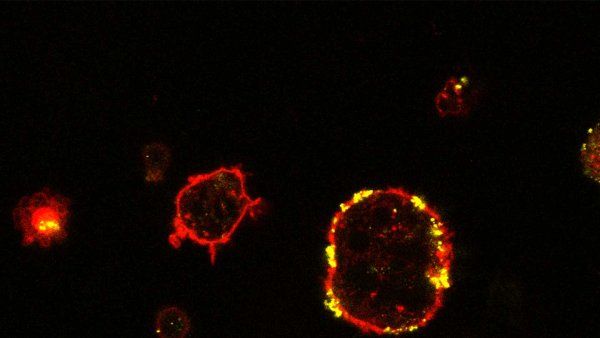
A UCSF team developed an automated system for seeing and understanding persister cells, the tumor cells that survive cancer treatment and regrow tumors.
Ethan Winkler, who studies aneurysms, discovered a dynamic between cells in the brain's blood vessels that explains why aneurysms burst. The findings describe a "life cycle" of an aneurysm and will likely change how physicians assess the risk for rupture and opportunities for personalizing treatment.
A new study of more than 16,000 people who sought help from a nationwide abortion and miscarriage hotline found demand for confidential clinical support surged both before and after the U.S. Supreme Court decision that overturned federal abortion protections.
A study looked at how ultraprocessed foods (UPFs), like Lunchables, are designed—and why they may lead to overeating and weight gain. Using internal company documents, the study showed that Lunchables were influenced by strategies from the tobacco industry, specifically Philip Morris, which once owned Kraft.
Using AI on mammograms can identify patients at highest risk for breast cancer and get them same-day follow up care, eliminating stressful waiting times.
UCSF research shows that international rules for biosimilars, mimics of biologic drugs like Ozempic and insulin, need to improve and match each another to encourage biosimilar development, testing, and approval. This would dramatically improve drug affordability just like generics has done.
About 6% of asymptomatic adults have a biomarker for Alzheimer's disease and are already showing very subtle signs of the disease that would not come to light in a standard cognitive test.
A team at UCSF developed a multitask deep learning framework that can effectively predict Alzheimer’s disease diagnosis, cognitive scores, and future cognitive decline using only baseline MRI and demographics.
Pairing vulnerable, low-income patients with asthma coaches can improve outcomes and may also reduce costs associated with avoidable health care use.
In the last few years, progress has been made in the fight against Alzheimer’s disease with a class of therapies called anti-amyloid antibodies (anti-Aβ). These anti-Aβ therapies, like lecanumab
Jody Baron and Gabi Fragiadakis discover why some people with chronic Hepatitis B are cured after they're taken off of antiviral drugs, despite falling severely ill when the drug regiment stops.
Joe Bondy-Denomy solves a CRISPR caper: this is how a viral protein stows itself on protein factories in bacteria, and destroys a CRISPR protein, designed to kill viruses, while it's being made.
UCSF has received a $100 million commitment from longtime supporters Kathy Chiao and Kenneth Hao to address its most urgent capital needs and accelerate innovation to advance human health.
Six pairs of UC San Francisco faculty members and their PhD students have been awarded funding through the W. M. Keck Foundation’s inaugural Scholar-Fellow Bridge Initiative, a program designed to
The University of California Board of Regents approved plans for the UCSF Bakar Ear & Hearing Institute, a new, state-of-the-art ear facility at UCSF’s Mission Bay campus, taking the first step to creating one of the world’s leading centers for advancing research and care for hearing and balance disorders.
A large team of scientists, found that a single dose of psilocybin created positive changes in the brain and well-being, one hour and one month after administration.
UCSF Health was named a top place to work by Becker's Healthcare.
UCSF Health is launching a special clinic for young adults with colorectal cancer, of which one in five cases now affects younger people, and is a leading cause of cancer death in people aged twenty to forty.
A $2.5 million gift by Ted W. Love and Joyce Y. Love to UCSF Benioff Children’s Hospitals will expand care for patients with sickle cell disease and support the building of new facilities at the campus.