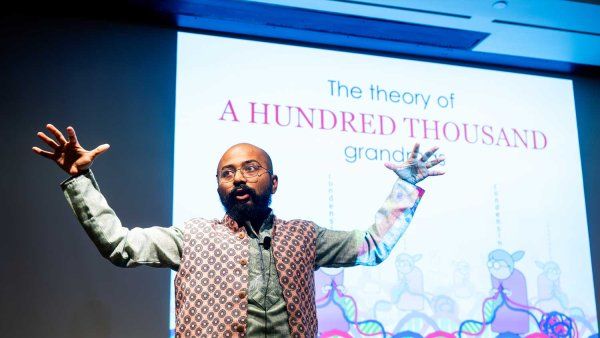
AIDS Conference Co-Chair Talks About Turning Tide on Disease
UCSF's Diane Havlir, co-chair of AIDS 2012, the XIX International AIDS Conference, talks about turning the tide on the disease as she heads to Washington, D.C. for the first meeting hosted by the United States since 1990. Read more
Early Treatment May Improve Socioeconomic Conditions for People in Rural Sub-Saharan Africa With HIV
Adults with HIV in rural sub-Saharan Africa who receive antiretroviral drugs early in their infection may reap benefits in their ability to work and their children's ability to stay in school, according to a first-of-its-kind clinical study in Uganda that compared socioeconomic outcomes with CD4+ counts — a standard measure of health status for people with HIV. Read more
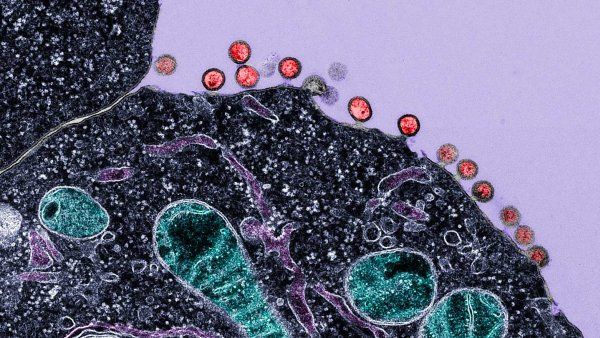
AIDS 2012 Declaration Draws Support to End Global AIDS Epidemic
More than 3,000 people around the world have shown their support for ending the global AIDS epidemic by signing an online declaration during the XIX International AIDS Conference. Read more
Warner Greene Authors HIV/AIDS Medicine Textbook for Developing World
Warner C. Greene, MD, a professor of medicine, microbiology and immunology at UCSFwho directs virology and immunology research at the UCSF-affiliated Gladstone Institutes, has joined with other global AIDS experts to release a locally affordable version of the world’s leading AIDS medical textbook. Read more
HIV/AIDS Prevention with Truvada: How Pregnant Women and Others May Benefit
The AIDS drug Truvada, approved this week for prevention of HIV infection in uninfected people at high risk, may benefit many uninfected women whose male partners have HIV, including pregnant women, who may be at higher risk. Read more
Related Stories
AIDS/HIV Briefing at UCSF Highlights International AIDS Conference Agenda
Read more
Experts Outline Steps Towards an AIDS-free Generation
Read more
San Francisco AIDS Walk Raises Money and Hope
Read more
30 Years of AIDS Package
Read more
Trauma Drives HIV Epidemic in Women
Read more
Confronting HIV in Oakland
Read more
Video Depicts Women With HIV
Read more
White House Names San Francisco HIV/AIDS Leader to National Post
Read more
Paul Volberding Takes Leading Roles with UCSF’s ARI, Global Health Sciences
Read more
Fighting Infections: Old Drug Reveals New Tricks
Read more
Tenofovir, Leading HIV Medication, Linked with Risk of Kidney Damage
Read more
Pathogenic Landscape of HIV
Read more
The Coming Dearth of Doctors who Specialize in HIV/AIDS
Read more
AIDS Prevention 2.0: A Historic Opportunity to Halt HIV
Read more
AIDS: The Struggle Continues
Read more
UCSF Team Takes Third Place in AIDS Walk San Francisco
Read more
Learning Lessons From an HIV Cure
Read more
SFGH Grand Rounds Explores Disease That First Defined AIDS
Read more
SFGH's Ward 86: Pioneering HIV/AIDS Care for 30 Years
Read more
UCSF Marks Three Decades of AIDS
Read more
Treatment is Key to Prevention of HIV/AIDS, Doctors Say
Read more
AIDS Virus May Accelerate Aging, Scientists Say
Read more
First AIDS Research Conference in Uganda Focuses on Building Collaborations Among African Investigators
Read more
Thirty Years of AIDS: A Timeline of the Epidemic
Thirty years into the fight against HIV/AIDS, UCSF has helped change the course of this deadly disease, which has claimed the lives of 33 million people worldwide. This timeline covers the highlights over the past three decades at UCSF, in the nation and around the world.
Editor's note: This timeline was updated on March 23, 2012.
1981
AIDS is detected in California and New York. The first cases are among gay men, then injection drug users.
UCLA’s Michael Gottlieb, MD, authored the first report to the US Centers for Disease Control (CDC) and Prevention on June 5 identifying the virus that would be known as AIDS.
UCSF’s Paul Volberding, MD, saw his first HIV-positive patient with Kaposi’s sarcoma, a rare cancer later linked to AIDS, on his first day at San Francisco General Hospital (SFGH) on July 1.
1982
The CDC establishes the term Acquired Immune Deficiency Syndrome (AIDS).
The City and County of San Francisco, working closely with health professionals at UCSF, SFGH, the San Francisco AIDS Foundation and others, develops the San Francisco “model of care,” which emphasizes home and community-based services.
US Congress convenes first hearings on HIV/AIDS.
1983
UCSF faculty physicians develop the country’s first outpatient AIDS clinic and inpatient ward at SFGH, which was the first unit of its kind in the US and remains a national model of care.
Three thousand AIDS cases are reported in the US; 1,000 people have died so far.
UCSF virologist Jay Levy, MD, co-discovers HIV; he and his colleagues go on to make many of the first observations in AIDS research, including demonstrating that HIV grew in cells other than in the lymphocytes and isolating the virus in the brain and the bowels.
1984
Ryan White, a 13-year-old hemophiliac from Indiana, becomes infected with HIV from a contaminated blood treatment.
1985
UCSF’s Donald Abrams, MD, is instrumental in establishing a network of Bay Area clinicians called Community Consortium, which pioneers a new model of community-based clinical trials.
The US Food and Drug Administration (FDA) licenses first HIV test for screening blood supplies.
Movie star Rock Hudson announces that he has AIDS and dies, becoming the first major celebrity to succumb to the disease.
The US Department of Health and Human Services and the World Health Organization (WHO) host the First International AIDS Conference in Atlanta. These annual conferences continue today.
Ryan White is barred from school and becomes a national spokesperson against AIDS stigma and discrimination.
American Foundation for AIDS Research is founded with the help of movie star Elizabeth Taylor.
1986
With the awarding of a National Institutes of Mental Health AIDS Center grant designed to boost AIDS prevention research, UCSF’s Center for AIDS Prevention officially opens its doors under the direction of Stephen Hulley, MD.
The San Francisco AIDS Foundation launches the San Francisco AIDS Walk to raise funds for patient care, research and education. UCSF participates in the walk from the start. UCSF participates in the walk from the start.
More than 38,000 cases of AIDS are reported from 85 countries.
Elected in late 1980, President Ronald Reagan first mentions the word AIDS in public.
National Academy of Sciences report is critical of US response to the epidemic and calls for $2 billion investment to combat the disease.
The first clinical trials of antiviral drug azidothymidineor AZT begin.
US Surgeon General Everett Koop, MD, issues report on AIDS calling for education and condom use.
Institute of Medicine report calls for expanding education campaign and creating the National Commission on AIDS... Read more